Vienna looks like a city that should be expensive — imperial palaces, white-tablecloth coffee houses, opera in evening dress — and it can be, if you let it. But spend a few days here the local way and a different Vienna appears: standing-room opera for €13, palace gardens that cost nothing, €5 sausage-stand dinners, and a transport pass that covers the whole city for the price of a coffee. This Vienna on a budget 2027 guide gives you real prices, free things to do, and a 3-day itinerary that keeps the grandeur and cuts the bill.
How much does Vienna actually cost? A careful budget traveler can manage on €55–85 a day: a hostel dorm (€22–40), bakery breakfasts and market lunches (€15–20), a 24-hour transport pass (about €10), and one or two paid sights. Mid-range travelers should plan €120–180 a day. The trick is that Vienna’s best experiences are often its cheapest — the city rewards walkers, early risers, and anyone willing to stand at the opera.
Vienna on a Budget 2027: Real Daily Costs
Budget traveler: €55–85 per day
- Sleep: Hostel dorm €22–40; budget hotel double from €70 (split between two).
- Eat: Bakery breakfast €4–6; lunch menu (Mittagsmenü) €7–10; Würstelstand dinner €5–8.
- Move: 24-hour transit pass about €10; a 7-day pass about €29 — the best value for a longer stay.
- Do: Free gardens, churches, and parks; one paid museum €16–22; opera standing ticket €13–18.
A sample budget day: dorm (€30) + bakery breakfast (€5) + lunch menu (€9) + Würstelstand dinner (€6) + transport (€10) + one museum (€18) = €78. Skip the museum for a free-gardens day and you are under €60.
Mid-range traveler: €120–180 per day
- Sleep: 3-star hotel €90–140 per double room.
- Eat: Coffee house breakfast €12–15; restaurant dinner €25–35.
- Move: Weekly transit pass plus the occasional taxi.
- Do: Two paid sights plus a concert or opera seat.
Free Things to Do in Vienna (That Are Actually Good)
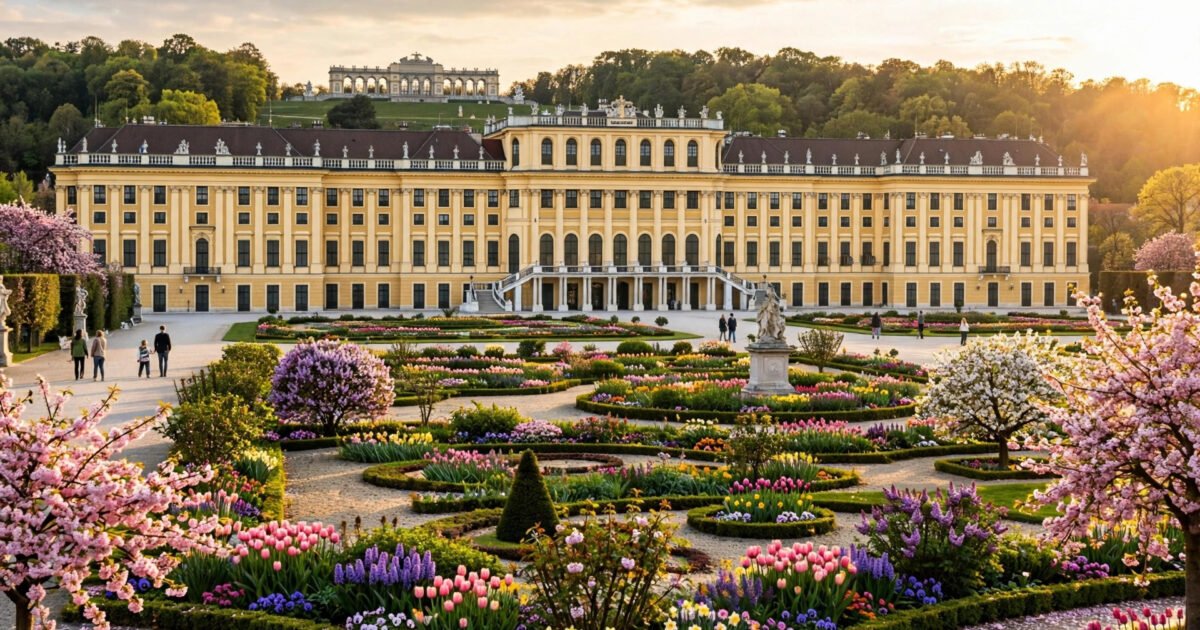
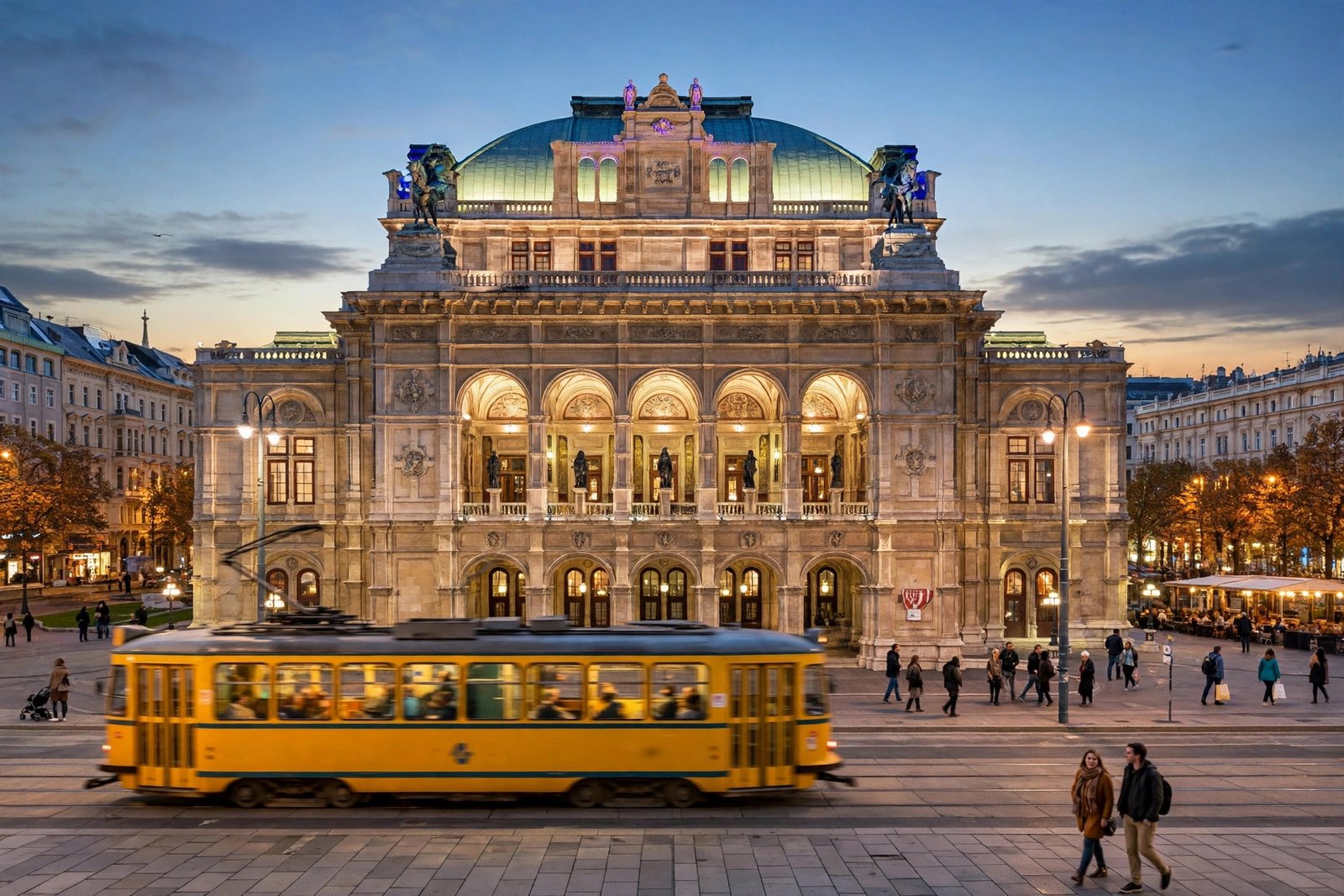
Vienna is unusually generous with free experiences. The Schönbrunn Palace gardens — vast, manicured, with the Gloriette viewpoint above them — cost nothing to wander. The same goes for the Burggarten, the Volksgarten’s rose beds, and the Augarten. The Ringstrasse, the grand boulevard circling the old town, is a free open-air museum of palaces, the Parliament, the Rathaus, and the State Opera.
Other genuinely free highlights: St. Stephen’s Cathedral (entry free, tower climb paid), the Hundertwasser House exterior, the Prater park grounds, the MuseumsQuartier courtyards, and the Donauinsel — a 21-kilometre Danube island that is the city’s summer beach, cycling track, and barbecue ground. Several federal museums are free for under-19s all year, and some offer free entry on the first Sunday of the month — check before you go.
Vienna’s Best Budget Wins
Opera standing tickets: €13–18
The Vienna State Opera sells standing-room tickets on the day of the performance for about €13–18 — the same performance others pay €200+ to sit for. Queue at the standing-room box office a couple of hours before curtain (earlier for popular operas), bring a scarf to mark your spot on the rail, and you will hear the world’s best opera house for the price of lunch. The Volksoper offers similar deals for operetta and musicals.
The lunch menu (Mittagsmenü)
Many Viennese restaurants offer a fixed two- or three-course lunch menu on weekdays for €7–12 — often half the evening à la carte price. Eat your main meal at lunch, then snack lightly in the evening, and your food bill drops dramatically.
Würstelstände: dinner for €5
Vienna’s sausage stands are an institution, not a fallback. A Käsekrainer or Bratwurst with mustard, a bread roll, and a drink costs around €5–7, and the stands by the Albertina and at Schwedenplatz stay open late. It is the most Viennese cheap dinner there is.
Tap water and coffee house culture
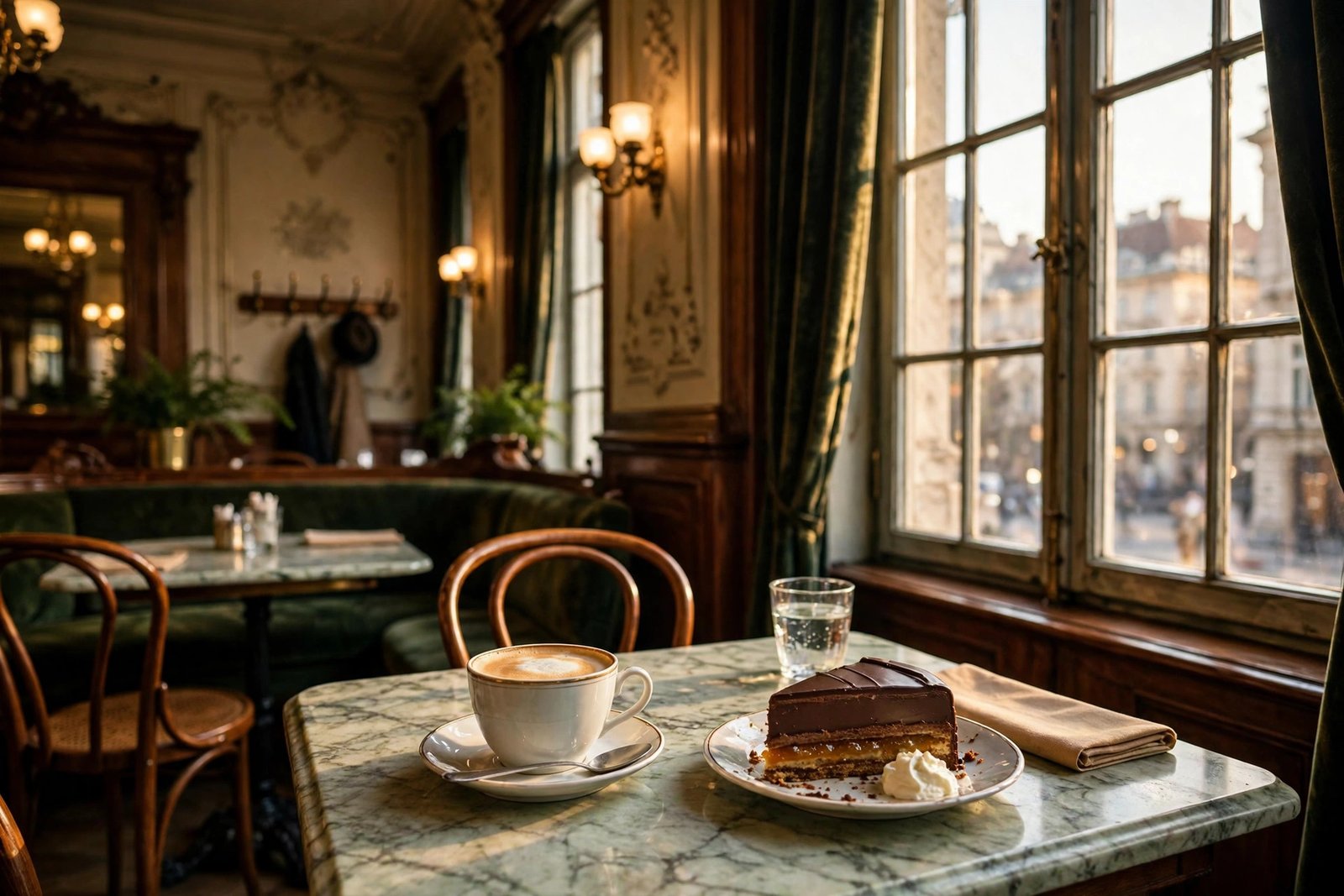
Vienna’s tap water comes from Alpine springs and is superb — carry a bottle and refill freely. In coffee houses, a €4.50–6 melange buys you the table for as long as you like: newspapers, water, and no pressure to leave. It is the cheapest luxury in the city.
Where to Stay on a Budget in Vienna
The Innere Stadt (old town) is the prettiest area but the priciest. Better budget bases: Neubau (7th district, arty and central), Margareten (5th, local and affordable), or Leopoldstadt (2nd, near the Prater and the Danube). Hostel dorms cluster around the Westbahnhof and Meidling areas, with good transport links.
Book early for weekends and the December market season, when prices spike. Apartments with kitchenettes — common in Vienna — save real money if you cook breakfast and a few dinners. A supermarket shop for a day’s food runs €10–15, against €30+ eating out for every meal.
Getting Around Vienna Cheaply
Vienna’s public transport is superb and cheap by Western European standards. A single ticket costs about €3, a 24-hour ticket about €10, and a 7-day ticket about €29 — all covering U-Bahn, trams, and buses across the city. Buy the 7-day pass if you stay four days or more; it pays for itself quickly.
From the airport, skip the €15 City Airport Train and take the S7 suburban train for about €5.50 (less with a valid city pass) — it takes only a few minutes longer. In the center, walk: the old town is compact, and the Ringstrasse loop is best done on foot or by the trams 1 and 2, which circle it for the price of a normal ticket.
Cycling is another bargain: the city has over 1,600 kilometres of bike paths, and rental bikes are cheap for short hops. Vienna is flat, safe for cyclists, and the ride along the Danube Canal is one of the city’s pleasures.
The Perfect 3-Day Vienna Itinerary on a Budget
Day 1 — The Ringstrasse and the old town. Walk the Ringstrasse in the morning (free), then explore St. Stephen’s Cathedral and the Graben. Lunch: a Mittagsmenü near the Naschmarkt. Afternoon: the Naschmarkt itself — Vienna’s biggest food market, free to browse, cheap to snack at. Evening: queue for opera standing tickets.
Day 2 — Schönbrunn and the coffee houses. Morning in the free Schönbrunn gardens and Gloriette viewpoint; pay for the palace apartments only if palaces are your thing (€28). Afternoon: a classic coffee house — melange and Sachertorte — then the free MuseumsQuartier courtyards. Evening: a Würstelstand dinner and a walk along the Danube Canal’s street art.
Day 3 — Museums, markets, and the Prater. Pick ONE paid museum (the Kunsthistorisches Museum or the Belvedere’s Klimt collection are the best value) rather than buying a pass you will not use. Afternoon: the Prater — free entry, pay per ride, and the Giant Ferris Wheel is worth the splurge once. Evening: a heuriger (wine tavern) in Grinzing, where local wine costs a few euros a glass.
What to Eat in Vienna Without Overspending
- Breakfast: Bakeries (Bäckerei) do coffee and a Topfenstrudel or Semmel for €4–6.
- Lunch: The Mittagsmenü (€7–12) or Naschmarkt stalls — falafel, kebab, and Austrian classics side by side.
- Dinner: Würstelstände (€5–8), Beisl (traditional pubs) with schnitzel from €14, or self-catered from a supermarket.
- Sweet treats: A coffee house melange (€4.50–6) with cake is a meal in itself — and an experience, not just food.
- Drinks: Supermarket beer and wine cost a fraction of bar prices; heurigen wine taverns are the cheapest way to drink well.
Day Trips from Vienna on a Budget
Vienna’s position makes cheap day trips easy. Bratislava, Slovakia’s capital, is an hour by bus or boat and noticeably cheaper — many visitors combine the two cities in one trip. The Wachau Valley, an hour west, offers Danube villages, vineyards, and cycling for the price of a train ticket. And in summer, the Danube island beaches and the Lobau wetlands are free escapes from the city heat.
If you are planning a wider Central Europe trip, Vienna pairs beautifully with Prague and Budapest — both cheaper, both reachable by comfortable bus or train for €15–30. See our cheap places to travel in Europe guide for how the costs compare.
Money-Saving Tips Most Visitors Miss
Vienna has a few quiet bargains that guidebooks often skip. First, the Vienna City Card is worth comparing against a plain weekly pass: it bundles transport with discounts at museums, restaurants, and shops, and for sight-heavy days it can beat paying separately — but only if you actually use the discounts, so do the maths before buying. Second, many museums run evening hours with reduced entry — the Albertina and others have offered cheaper late-evening tickets, so check opening times before paying full price.
Third, eat at university canteens and market halls. The Mensa kitchens near the university serve filling lunches at student prices, and the Brunnenmarkt in the 16th district — Vienna’s longest street market — is cheaper and more local than the famous Naschmarkt. Fourth, drink the local wine where it is made: the heurigen in Grinzing, Nussdorf, and Stammersdorf serve young local wine by the glass for a few euros, with cold platters of cheese and ham that make a full dinner for under €15.
Fifth, time your palace visits. Schönbrunn’s gardens and the Belvedere’s gardens are free year-round, and the Belvedere’s Upper Palace collection is the single best-value paid ticket in the city if you only choose one museum — Klimt’s The Kiss alone justifies it. Finally, walk the Danube Canal at night: the graffiti walls, riverside bars, and food stalls along the canal are free entertainment and a glimpse of young Vienna that the palace route never shows.
Vienna on a Budget: FAQs
Is Vienna expensive for tourists?
It can be, but it does not have to be. Hotels and palace tickets are the main costs; food, transport, and many of the best experiences (gardens, churches, opera standing room) are cheap or free. Budget travelers manage on €55–85 a day.
How many days do you need in Vienna?
Three days covers the highlights comfortably: the Ringstrasse, Schönbrunn, the coffee houses, one or two museums, and an opera evening. Four to five days lets you add day trips and slow down.
Is the Vienna Pass worth it?
Usually not for budget travelers. It only pays off if you visit four or five paid sights a day; most people visit two. Pay per sight and use the free attractions instead.
What is the cheapest way from Vienna airport to the city?
The S7 suburban train, about €5.50 one way (less with a city travel pass). It takes around 25 minutes to the center — only slightly longer than the €15 express train.
When is the cheapest time to visit Vienna?
January to March (excluding ball season peaks) and November offer the lowest hotel prices. Spring and autumn are the sweet spot: mild weather, moderate prices, and fewer crowds than summer or the Christmas markets.
Can you see the opera cheaply in Vienna?
Yes — standing-room tickets at the State Opera cost about €13–18, sold on the day of the performance. Queue early for popular productions, and you will hear world-class opera for the price of lunch.
Final Thoughts: Vienna Rewards the Smart Traveler
Vienna’s reputation for expense is half the story. The other half is a city that gives away its gardens, charges €13 for the opera, feeds you dinner for €5, and sells you the table in a grand coffee house for the price of a coffee. Travel like a local — walk the Ring, eat lunch as your main meal, stand at the opera — and Vienna becomes one of Europe’s great budget cities. It is grand, it is beautiful, and it is far cheaper than it looks.
Planning more of Europe? Compare costs in our cheap places to travel in Europe guide, dream bigger with the most beautiful places in the world, or add the Mediterranean with our Albania travel guide 2027. Happy travels!