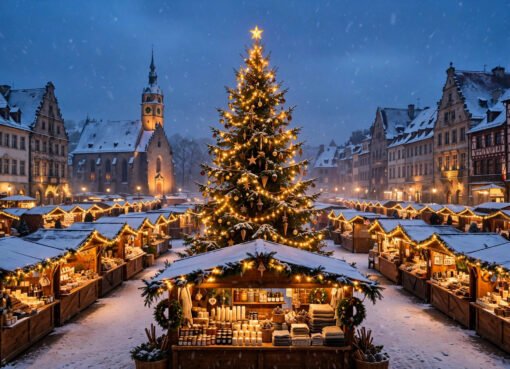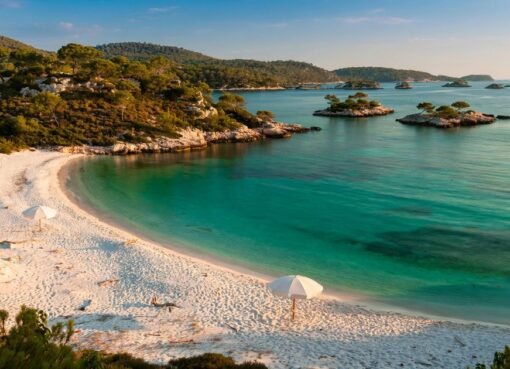
Venice now charges an entry fee. In Rome, you queue for timed slots to see things that used to be a stroll. In Florence, you wake at dawn for a crowd-free photo and still fail. Italy’s overtourism problem has not gone away — but Italy’s tourism board has an answer most travelers have missed: ENIT’s “Luminous Destinations 2026” project, which openly admits that “99% of Italy is still undiscovered” and is pushing visitors toward the regions the crowds never reach. Expedia’s Unpack ’27 report backs the shift, naming Perugia in Umbria among its 2027 Destinations of the Year and flagging lesser-known places as the year’s defining trend.
This guide follows that signal: 10 secret places in Italy with no crowds in 2027 — towns and corners where there are no turnstiles, no five-language tourist menus, and no queues, but the same Italy you dreamed of: whitewashed lanes, mountain villages, island lakes and cliffside coves. Each comes with what to do, what it costs, how to get there, and the best time to go.
Why Secret Italy, Why Now
Three forces are converging in 2027. First, the big three — Rome, Florence, Venice — keep adding fees, caps and timed entries, pushing the spontaneous traveler out. Second, Italy itself is promoting its overlooked regions, with L’Aquila crowned Italian Capital of Culture for 2026 and fresh attention on Puglia, Basilicata, Le Marche and Abruzzo. Third, the “destination dupe” traveler — the same instinct behind our places like Santorini but cheaper — is now hunting crowd-free originals rather than cheaper copies. Go in 2027 and you are early; wait until 2029 and these towns will have the queues you were escaping. If you still want the classics too, our best places to visit in Italy covers them — then use this guide for the second half of the trip.
1. L’Aquila, Abruzzo — The Comeback Capital
L’Aquila, rebuilt after the devastating 2009 earthquake, is Italy’s Capital of Culture for 2026 — and the energy is still electric in 2027. Baroque palaces restored with billions in investment, the 16th-century Spanish Fort, the pink-and-white Basilica of Santa Maria di Collemaggio, and the Gran Sasso mountains rising behind the city. The old town feels brand new yet ancient, and the crisp mountain air is a world away from Rome’s summer crush.
Budget: guesthouses €35–€55 a night, trattoria meals €12–€18, most churches free. Get there: bus from Rome Tiburtina, about 2 hours, under €15. Best time: May–June and September–October for mountain light and festivals.
2. Pacentro & Santo Stefano di Sessanio, Abruzzo — Villages Time Forgot
High in the Abruzzo mountains, Pacentro is a medieval village of towers and stone lanes with essentially zero crowds, while nearby Santo Stefano di Sessanio — a fortified hilltop hamlet slowly being restored — is the definition of a slow afternoon. Walk the ramparts, eat lamb and pecorino in a family trattoria, and sleep in a restored stone house.
Budget: €40–€60 a night in an albergo diffuso (scattered hotel), meals €10–€15. Get there: bus or car from L’Aquila or Sulmona; a car makes the mountain villages far easier. Best time: late spring and early autumn, when the mountains are green and the air is cool.
3. Castelmezzano, Basilicata — The Village in the Sky
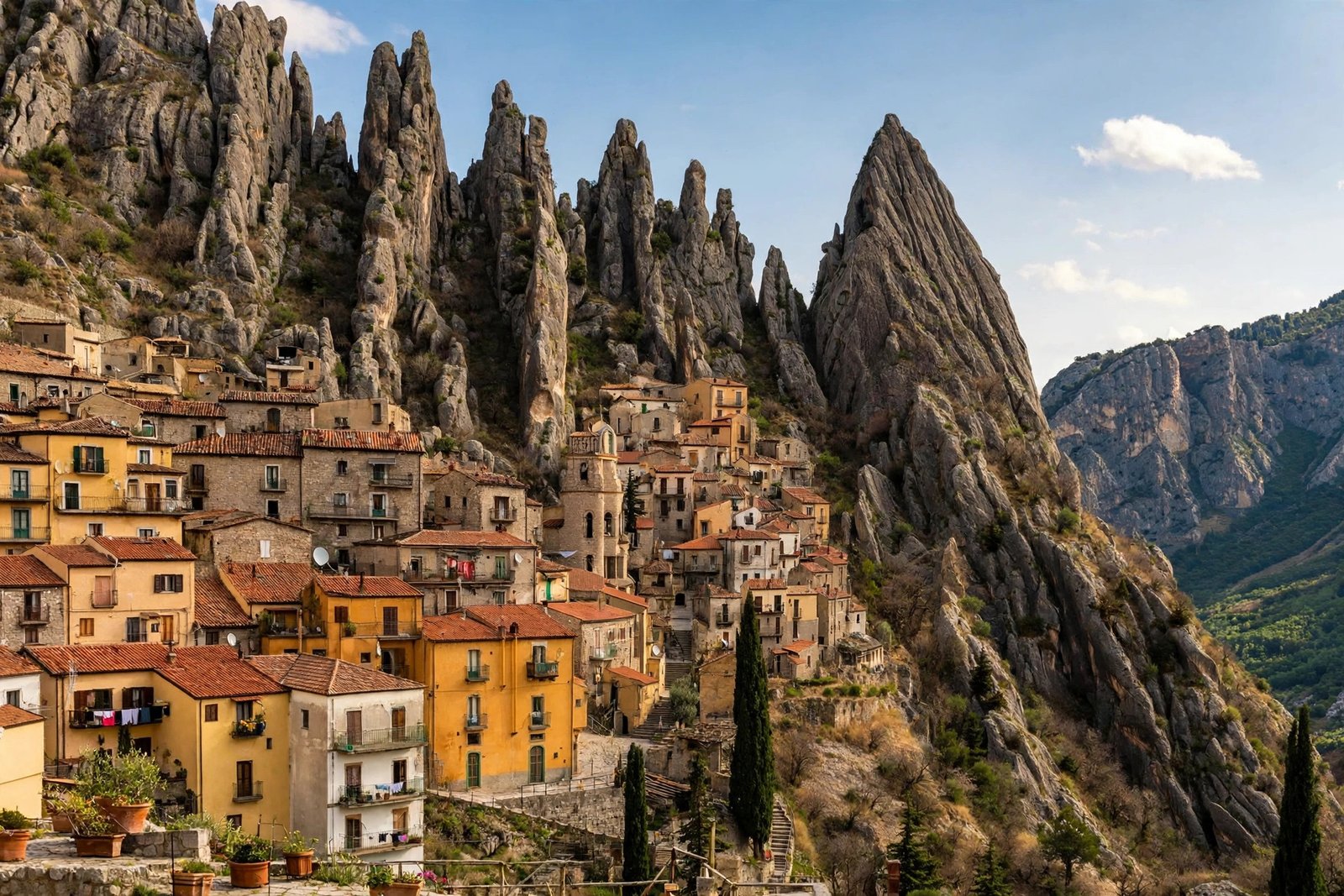
Castelmezzano clings to the jagged Dolomiti Lucane peaks like something from a fantasy film — stone houses wedged between rock spires, a Norman castle ruin above, and the famous Volo dell’Angelo (Flight of the Angel) zipline to neighboring Pietrapertosa for thrill-seekers. It is one of the most photographed villages in Italy and still almost empty on a weekday.
Budget: B&Bs €35–€55, meals €10–€16, zipline around €40. Get there: bus from Potenza (about 1 hour) or car from Naples in under 2 hours. Best time: May–September for the zipline; October for golden mountain color.
4. Locorotondo, Puglia — The White Circle
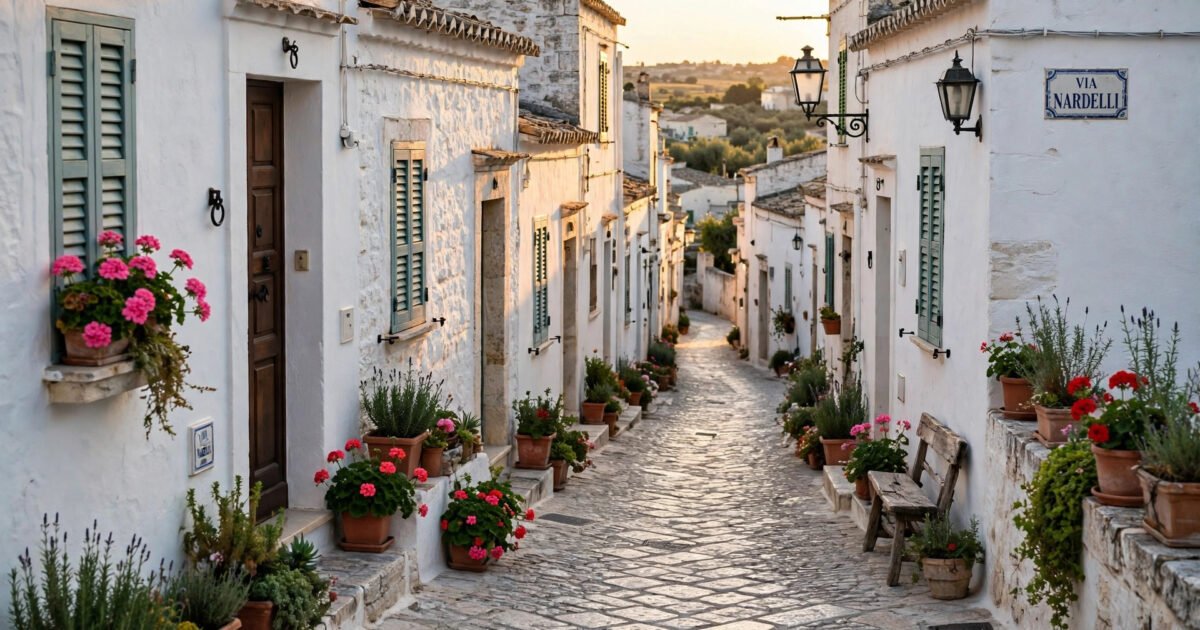
Locorotondo is Puglia at its quietest: a circular whitewashed old town on a hilltop, flower-draped lanes, and views over the Valle d’Itria’s trulli-dotted countryside. It sits minutes from Alberobello’s famous cone houses but gets a fraction of the visitors — come for a slow lunch of orecchiette and local white wine, then walk the lungomare of nearby Polignano a Mare at sunset.
Budget: B&Bs €40–€60, meals €12–€20, wine by the glass €3–€5. Get there: train from Bari to Locorotondo via Martina Franca, about 1.5 hours. Best time: April–June and September, when Puglia is warm but not scorched.
5. Lake Orta, Piedmont — Como’s Secret Sister
Lake Como has the celebrities; Lake Orta has the silence. A small, romantic lake an hour west of Milan, with the island of San Giulio — a tiny monastery island you reach by a 5-minute boat — and the lakeside town of Orta San Giulio, all pastel facades and quiet piazzas. It is the lake Italians go to when they want to escape the lake crowds.
Budget: lakeside B&Bs €50–€75, boat to San Giulio around €5 return, meals €14–€22. Get there: train from Milan to Orta-Miasino, about 1.5 hours. Best time: May–September; September is the sweet spot for warm water and empty promenades.
6. Chioggia, Veneto — Venice Without the Crowds
Chioggia is what Venice was before the cruise ships: a working fishing town on the southern lagoon, with canals, colorful houses, a daily fish market, and seafood restaurants where fishermen eat. It is less than an hour from Venice by bus and boat, yet most Venice visitors never hear of it. Come for the morning fish auction, a cicchetti crawl, and a lagoon sunset with no selfie sticks in frame.
Budget: hotels €45–€65, seafood meals €12–€20, vaporetto-style lagoon boats a few euros. Get there: bus from Venice Piazzale Roma, about 1 hour, or ferry via Pellestrina. Best time: May–June and September for market life and mild weather.
7. Corinaldo, Le Marche — The Fairytale Walls
Le Marche is Italy’s least-visited mainland region, and Corinaldo is its fairytale: a walled hilltop town with intact 14th-century ramparts you can walk, a famous “lover’s stair” (La Piaggia, with its 100 steps), and views over sunflower fields to the Adriatic. The nearby Frasassi Caves — vast underground caverns — are one of Italy’s great natural wonders and still mercifully uncrowded.
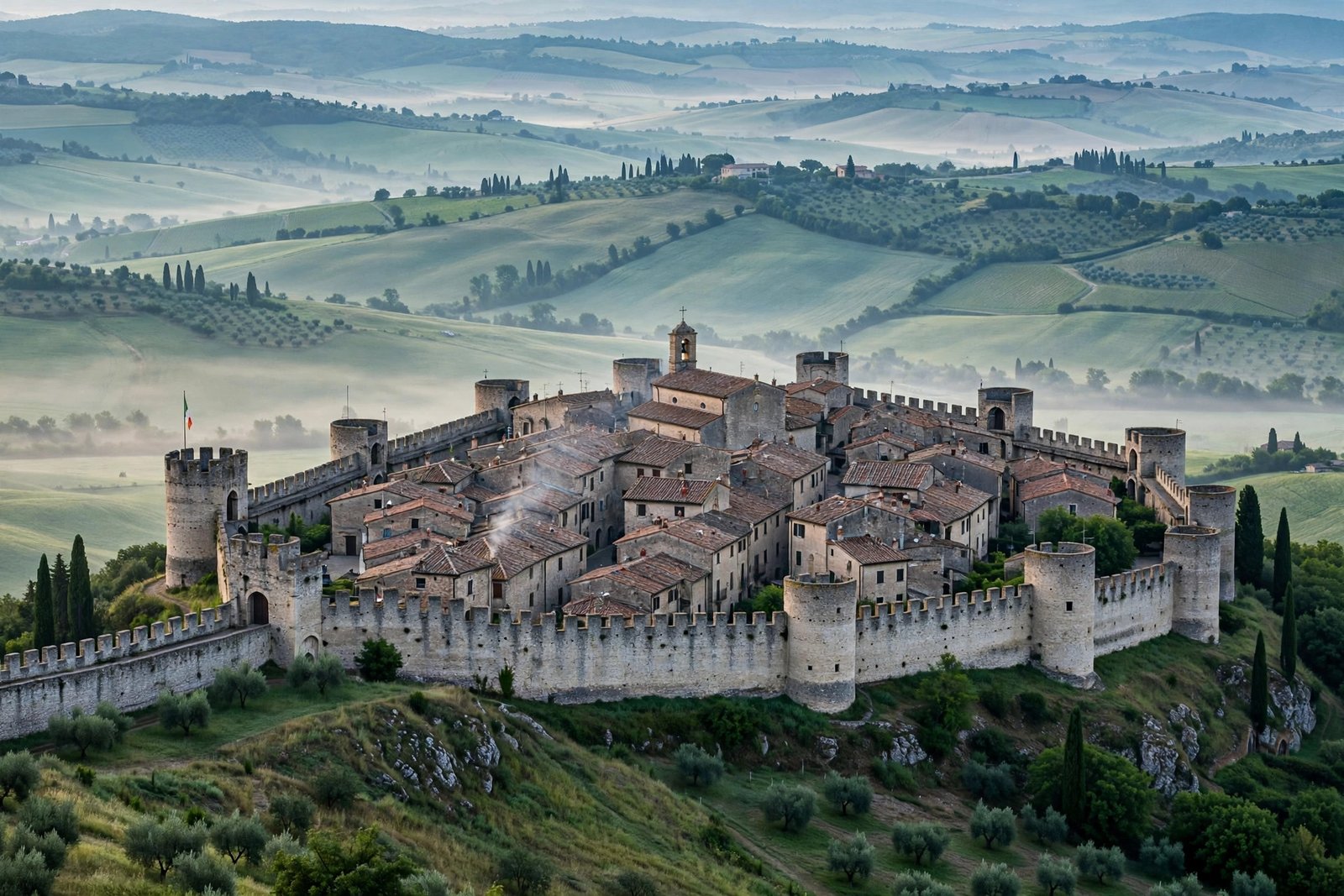
Budget: B&Bs €35–€55, meals €11–€17, Frasassi Caves entry around €15. Get there: train from Ancona to Senigallia, then a short bus inland. Best time: May–June for sunflowers, September–October for harvest festivals.
8. Urbino, Le Marche — The Renaissance Hilltop
Urbino is a UNESCO-listed Renaissance jewel that somehow stays off every first-timer’s list: the Ducal Palace (Palazzo Ducale) holds one of Italy’s great art collections — Piero della Francesca, Raphael’s birthplace is here — and the university keeps the town young and affordable. The views from the fortress over the rolling Montefeltro hills are worth the climb alone.
Budget: hotels €40–€60, student-priced trattorias €10–€15, Ducal Palace entry around €12. Get there: bus from Pesaro (about 1 hour) on the Adriatic coast. Best time: April–June and September–October; avoid August, when the university empties and some kitchens close.
9. Tropea, Calabria — The Cliff Town
Tropea is Calabria’s postcard: a clifftop old town, the Santa Maria dell’Isola monastery perched on its own rock above a white-sand beach, and the Tyrrhenian’s clearest water. It is famous in Italy and still barely known abroad — and the local red onions (cipolle di Tropea) are so sweet they appear in ice cream. Come for beach days without Amalfi prices: a full seafood dinner here costs what a cocktail costs in Positano.
Budget: B&Bs €40–€65, meals €12–€20, beaches mostly free. Get there: train along the Tyrrhenian coast from Lamezia Terme (about 1 hour) or Naples. Best time: May–June and September for warm seas and empty sands.
10. Gibellina, Sicily — The Art Town You Can Live In
Gibellina is the strangest, most wonderful entry on this list: after an earthquake destroyed the old town in 1968, artists rebuilt it as an open-air museum, crowned by the Cretto di Burri — a giant white concrete artwork covering the footprint of the old town like a cracked labyrinth you can walk. In 2026 it was named the world’s first Capital of Contemporary Art. Sleep in a design-led B&B, eat couscous (a Sicilian-Arab legacy) in the evening, and wonder why nobody told you sooner.
Budget: B&Bs €35–€55, meals €10–€16, Cretto entry free. Get there: bus from Palermo (about 1.5 hours) or car from Trapani. Best time: April–June and September–October; Sicily’s summer heat is brutal inland.
Three Ready-Made Secret Italy Routes
- The South (7 days): Bari → Locorotondo → Castelmezzano → Tropea, with a Matera detour if you want one famous name. Trains and buses connect everything; a car makes it effortless.
- The Adriatic (5 days): Ancona → Corinaldo → Urbino → Chioggia, finishing with a single night in Venice — which you will appreciate far more after the quiet towns.
- The Mountains & Lakes (5 days): Rome → L’Aquila → Pacentro → Lake Orta, ending in Milan. Culture, mountains and a secret lake in one trip.
All three routes run €50–€80 a day including stay, food and transport — comfortably inside the budget-travel range we map in our cheap places to travel in Europe guide.
Practical Tips for Secret Italy
- Rent a car for the villages. Buses serve the bigger towns, but Pacentro, Castelmezzano and Santo Stefano di Sessanio are car country. A small rental from €25 a day split between two travelers is the best money you will spend.
- Learn ten words of Italian. In these towns, English is limited — and a “buongiorno” and a “grazie” will get you invited places no guidebook reaches.
- Book the B&B, not the hotel. Family-run B&Bs are cheaper, better fed (breakfast is often homemade cake and local cheese), and the owners are your best guides.
- Go in the shoulder season. May–June and September–October give you warm weather, open restaurants and empty streets; August brings Italian holidaymakers even to secret towns.
- Check Sunday and Monday hours. Small-town museums and restaurants often close one weekday — plan the big sight for Saturday, not Monday.
Secret Places in Italy FAQs
Is it safe to visit small towns in Italy?
Yes — these towns are among the safest places in Europe. Normal precautions apply (watch bags in stations), but violent crime against visitors is rare, and locals in small towns are famously welcoming to the rare foreign visitor.
Do I need a car for secret Italy?
For the hilltop villages (Pacentro, Castelmezzano, Santo Stefano di Sessanio), a car is strongly recommended. For Locorotondo, Lake Orta, Chioggia, Urbino, Corinaldo, Tropea and L’Aquila, trains and buses work fine.
When is the best time to visit secret Italy in 2027?
May–June and September–October. You get warm weather, open attractions, harvest festivals and a fraction of summer prices. Winter works for L’Aquila and Urbino (culture, food, low prices) but many coastal businesses close.
Is secret Italy cheaper than Rome, Florence and Venice?
Significantly. Expect €50–€80 a day all-in versus €120–€180 in the big three — cheaper rooms, €10–€15 trattoria meals, free churches and viewpoints, and no entry-fee queues.
Which secret place is best for a first trip?
Locorotondo and Puglia: easy trains from Bari, the friendliest food scene, and Alberobello and Polignano a Mare nearby if you want one famous sight. For culture lovers, Urbino is the single best pick.
Will these places stay secret?
Not forever — that is the point of going in 2027. ENIT’s promotion, Expedia’s 2027 trends and the Capital of Culture spotlight are already pointing at them. The window for crowd-free Puglia, Abruzzo and Le Marche is open now, and it will narrow.
Final Thoughts: See the Italy Italians Keep for Themselves
The Italy of the postcards is real — but it is no longer the whole story, and in 2027 it is not even the best story. The better story is a whitewashed lane in Locorotondo at golden hour, a mountain village where the bar owner remembers your order on day two, a lake island with no queue for the boat. Go while the secret holds. Pair this guide with our most beautiful places in the world for your next trip, and with our best places to visit in Italy if you want to add one classic to the route. Buon viaggio.