
A bowl of pho for about $1.50, a sleeper train through the mountains, and a bay full of limestone islands that looks too good to be real — Vietnam is the country where a tight budget buys you a rich trip. This Vietnam on a budget 2027 guide gives you real daily costs, the best places from Hanoi to Ho Chi Minh City, how to get around, the best time to go (including a warning about Tet), a 10-day itinerary, and the money-saving tricks that actually work.
Vietnam has become Southeast Asia’s best-value destination — cheaper than Thailand, far cheaper than Japan, and packed with variety: a thousand-year-old capital, a UNESCO bay, imperial cities, lantern towns, beaches, and misty mountain terraces. Prices below are late-2026 figures, using roughly 26,000 Vietnamese dong (VND) to the US dollar, and they exclude international flights.
Vietnam on a Budget 2027: Why It Still Wins
Three reasons Vietnam keeps topping every budget list:
- The food is the attraction. A bowl of pho or a banh mi from a street stall costs 30,000–60,000 VND (roughly $1.20–2.30) and is not a compromise — it is the best meal you will eat all week. Eating where locals eat keeps food to around 250,000–400,000 VND ($10–15) a day.
- The range is unmatched. Hanoi’s old quarter, Ha Long Bay’s karsts, Hue’s imperial citadel, Hoi An’s lanterns, and Da Nang’s beaches — no other budget destination packs that much variety into one 90-day e-visa stay.
- Transport is part of the adventure. Sleeper trains, budget flights, and Grab rides make independent travel easy and cheap. Vietnam is one of the cheapest places to travel in Asia in 2027.
Best Places to Visit in Vietnam
Hanoi: The Chaotic, Charming Capital
Start in Hanoi, where a thousand years of history meets motorbike chaos and some of the best street food on the planet. Wander the Old Quarter’s 36 streets, eat bun cha at a plastic-stool restaurant, and watch the morning tai chi around Hoan Kiem Lake. Don’t miss the Temple of Literature and Train Street. Hanoi is also the cheapest big city in the region for hotels — give it at least three nights.
Ha Long Bay: Limestone Islands on Emerald Water
Vietnam’s most famous sight earns the hype. Around 1,600 limestone islands rise out of the emerald bay, and the classic way to see them is an overnight cruise. Budget-tier cruises start from around $80–120 per person, including meals, kayaking, and a cave visit — book through a reputable operator or your hostel, and check exactly what is included. A day cruise costs roughly half that. For a quieter, cheaper alternative, look at Bai Tu Long Bay or Lan Ha Bay, which share the same scenery with far fewer boats.
Ninh Binh: “Ha Long Bay on Land”
Two hours south of Hanoi, Ninh Binh is where limestone karsts rise out of rice paddies instead of the sea. Rent a bicycle (around 50,000–100,000 VND a day), climb the 500 steps of Hang Mua for the valley view, and take a rowing-boat trip through the caves at Tam Coc or Trang An (around 150,000–250,000 VND). It is one of the best-value days in Vietnam and an easy trip from Hanoi.
Hue: The Imperial City
Hue was Vietnam’s imperial capital, and its citadel is the country’s grandest historic site. Entry to the Imperial City costs 200,000 VND (around $8), and it is worth a full half-day: palace halls, the Forbidden Purple City, royal tombs, and the Thien Mu Pagoda on the Perfume River. Try bun bo Hue, the spicy beef noodle soup the city is named for. Hue sits roughly halfway between Hanoi and Ho Chi Minh City, a natural stop on the north-to-south route.
Hoi An: Lanterns, Tailors, and the Old Town
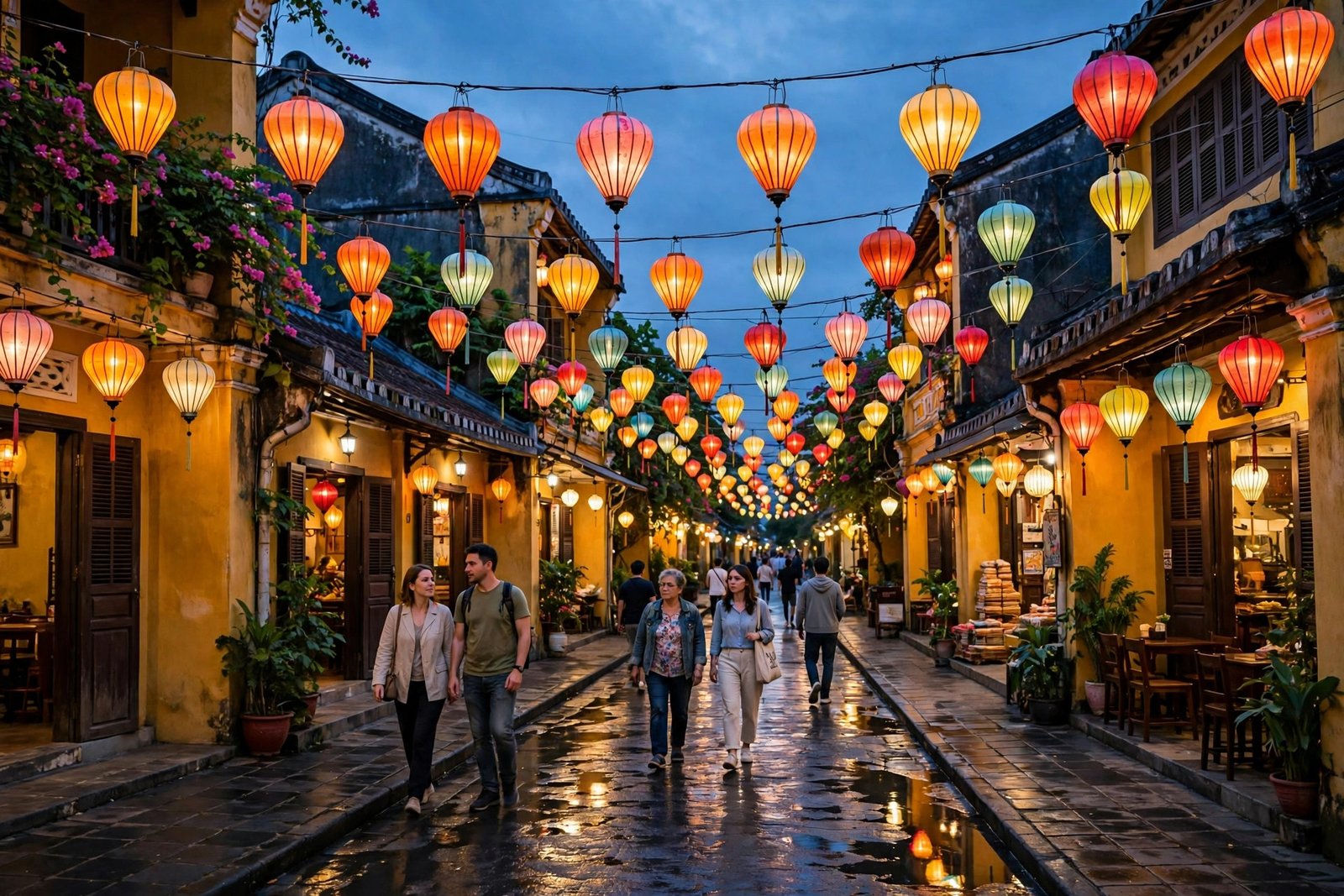
Hoi An is Vietnam’s prettiest town — a UNESCO-listed old town of yellow shophouses, tailor shops, and hundreds of silk lanterns that glow after dark. An Ancient Town ticket costs 120,000 VND (around $5) and covers five heritage sites, including the Japanese Bridge. Ride a bicycle to An Bang Beach, take a cooking class (around 500,000–800,000 VND), or have something tailored — a made-to-measure shirt or dress typically costs $30–60 and is ready in a day or two. Hoi An is also one of the places like Bali but cheaper for a slow, beautiful base.
Da Nang: Beaches and a Modern City
Thirty minutes up the coast from Hoi An, Da Nang is Vietnam’s most liveable city — a long sandy beach, a modern skyline, and the famous Dragon Bridge that breathes fire on weekend nights. Base yourself here for My Khe Beach and the Marble Mountains (entry around 40,000 VND). Da Nang is also central Vietnam’s transport hub, with the airport and railway station connecting north and south.
Ho Chi Minh City: Energy, History, and the Best Food Scene
Saigon, as locals still call it, is Vietnam at full volume — 10 million people, endless scooters, rooftop bars, and a street-food scene that rivals Hanoi’s. Visit the War Remnants Museum, the Reunification Palace, and Ben Thanh Market, then take a half-day trip to the Cu Chi Tunnels (tours from around 300,000–500,000 VND). The city is the gateway to the Mekong Delta and the cheapest place for international flights out — the smartest place to end your trip.
Sapa: Rice Terraces in the Clouds
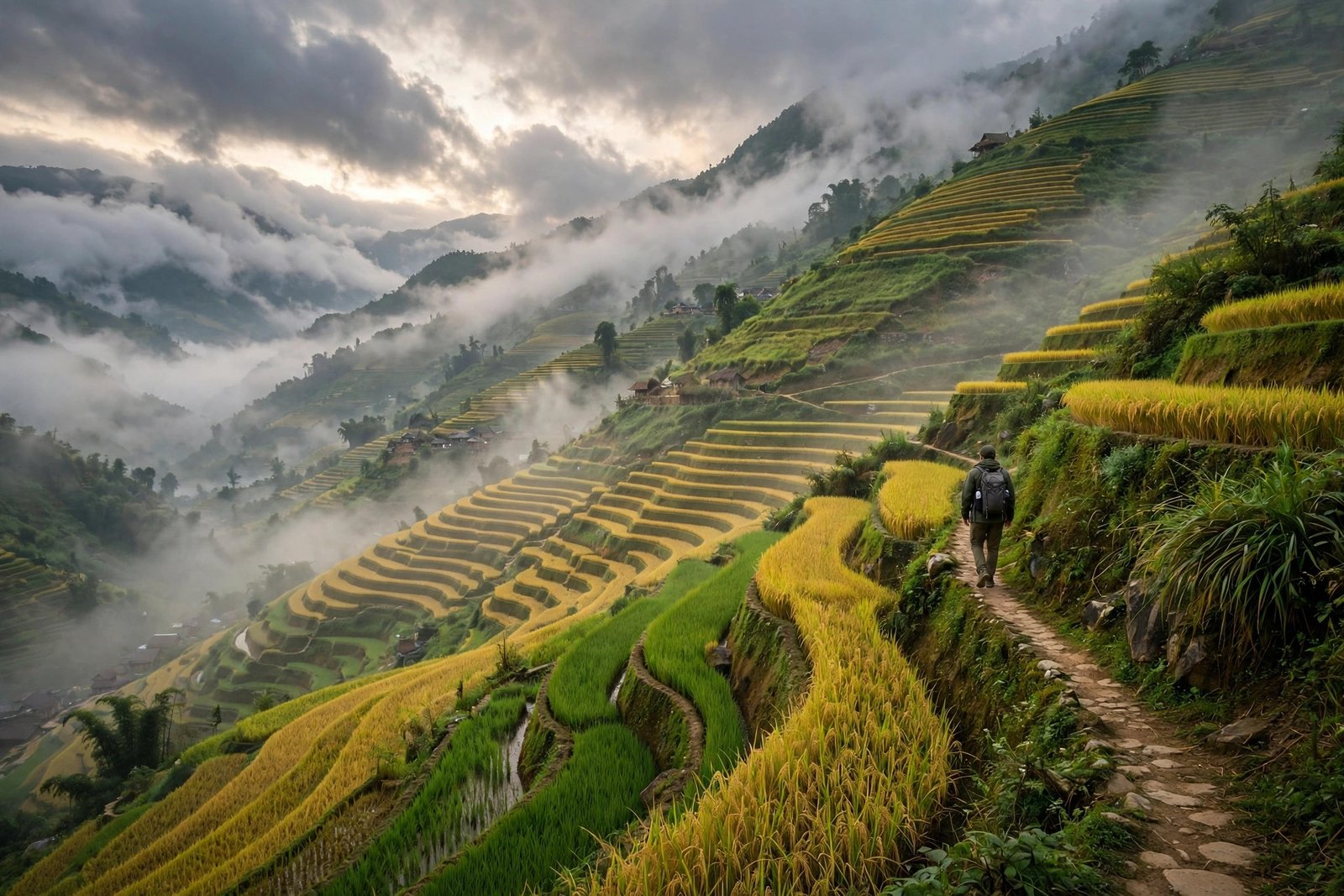
High in the northern mountains near the Chinese border, Sapa is Vietnam’s trekking capital. Terraced rice fields cascade down misty valleys, and homestay treks with local Hmong and Dao guides cost around 400,000–700,000 VND a day including food and a village stay. The overnight train from Hanoi to Lao Cai plus a one-hour bus is the classic way in — and it saves a hotel night. Go in September or October for golden harvest-season terraces, or March to May for green fields and clear skies.
How Much Does Vietnam Cost in 2027? Real Daily Budgets
All figures use the late-2026 exchange rate of roughly 26,000 VND to the US dollar, and exclude international flights.
Budget Traveler: $30–50 Per Day
- Sleep: Hostel dorms 150,000–300,000 VND ($6–12) a night; simple private guesthouse rooms from 300,000–500,000 VND.
- Eat: Street food and markets around 250,000–400,000 VND ($10–15) a day — pho or banh mi 30,000–60,000 VND.
- Move: Grab motorbike rides 20,000–50,000 VND in cities; local buses 7,000–15,000 VND a ride.
- Do: Most sights 20,000–200,000 VND entry; beaches, old-town walks, and markets free.
A budget day: dorm bed (200,000 VND) + three street-food meals (300,000 VND) + transport (50,000 VND) + one sight (100,000 VND) = ~650,000 VND ($25).
Mid-Range Traveler: $70–120 Per Day
- Sleep: Comfortable 3-star hotel or boutique guesthouse 600,000–1,200,000 VND ($23–46) a night (double room — couples effectively halve this).
- Eat: Restaurant meals 150,000–350,000 VND; a nice seafood dinner 300,000–600,000 VND; a local beer 15,000–40,000 VND.
- Move: Occasional Grab car rides, a domestic flight or two, and a private driver for a day trip.
- Do: A Ha Long Bay cruise ($80–120), a cooking class, or a guided tour.
A 10-day trip covering Hanoi, Ha Long Bay, Hue, Hoi An, and Ho Chi Minh City works out at roughly $500–700 per person on a budget or $900–1,300 mid-range on the ground, including one domestic flight and a Ha Long Bay cruise — among the very best cheap vacation ideas under $50 a day anywhere in the world.
What Things Actually Cost (Quick Reference)
- Pho from a street stall: 30,000–60,000 VND ($1.20–2.30)
- Hoi An Ancient Town ticket (5 sites): 120,000 VND (~$5)
- Hue Imperial City entry: 200,000 VND (~$8)
- Ha Long Bay overnight cruise: ~$80–120 per person (budget tier)
Best Time to Visit Vietnam in 2027
Vietnam is a long, thin country, so there is no single best month — the north, center, and south have different weather. The dry season from November to April is the best window for the north and center, which is why Vietnam ranks among the cheapest winter sun destinations for 2027.
- November–April: The dry season in the north and center. Hanoi is cool (15–25°C), Ha Long Bay is clear, and Hoi An is sunny; the south is warm and dry too. This is peak season, so book rooms 4–6 weeks ahead, especially over Christmas and New Year.
- February–April: One of the best windows overall — dry, mild, and green, with the best beach weather in Da Nang and Hoi An. See our best places to travel in February 2027 and best places to travel in April 2027 guides.
- May–October: Rainy season in the south and center, with hot, humid weather and afternoon downpours. The north is green and lush, Sapa’s terraces are at their most vivid, and prices drop 20–40% — the cheapest time to visit if you don’t mind rain.
Warning: Tet (Lunar New Year) 2027
Tet falls on Saturday 6 February 2027, with the official public-sector holiday running Thursday 4 to Wednesday 10 February 2027 — and it changes everything about traveling in Vietnam that week. Around 80% of small shops, street-food stalls, and family-run restaurants close as owners head home, domestic flights cost 2.5–3.5 times their normal price, and trains and buses sell out weeks ahead. Tet is also Vietnam’s biggest celebration — cities fill with flowers and fireworks — and it is a once-in-a-lifetime cultural experience if you plan for it. If you travel over Tet, book flights and hotels at least two months early, stock up on cash before the holiday (ATMs can run dry), and base yourself in a big city like Hanoi or Ho Chi Minh City, where more stays open.
How to Get to Vietnam — and Around It
Visa: The 90-Day E-Visa
Most nationalities — including US, UK, EU, Canadian, and Australian citizens — can apply for a Vietnam e-visa online through the official portal at evisa.gov.vn. It costs $25 for a single entry, and the 90-day e-visa is now available for most nationalities. Apply at least a week before departure and only use the official portal — third-party sites charge far more for the same visa.
Sleeper Trains, Buses, and Budget Flights Inside Vietnam
The overnight sleeper train from Hanoi to Da Nang or Hue is a classic budget journey — a soft berth costs less than a hotel night and you wake up in central Vietnam. The full Hanoi to Ho Chi Minh City express takes around 30–35 hours, so most travelers fly that leg. Budget flights on Vietjet Air and Bamboo Airways routinely cost 1,000,000–2,500,000 VND when booked 4–6 weeks ahead. Sleeper buses are the cheapest option of all for shorter hops like Hanoi to Sapa or Ho Chi Minh City to the Mekong Delta.
Getting Around Cities
Grab is Southeast Asia’s Uber and the easiest way to move around Vietnamese cities — fixed prices, no haggling, and motorbike taxis for short hops that cost a fraction of a car. Use Grab instead of street taxis, which routinely overcharge tourists. Renting a scooter (100,000–200,000 VND a day) is tempting, but it is the single biggest cause of traveler injuries in Vietnam — wear a helmet and get proper travel insurance.
The Perfect 10-Day Vietnam Itinerary (Budget Version)
Days 1–3 — Hanoi. Explore the Old Quarter: Hoan Kiem Lake at dawn, the Temple of Literature, a street-food tour on day two, and a day trip to Ninh Binh on day three. Stay near the Old Quarter to keep transport cheap.
Day 4 — Ha Long Bay overnight cruise. Transfer to Ha Long City, board by midday, kayak between karsts, and watch sunset from the deck. Sleep on the boat.
Day 5 — Ha Long Bay to Hue. Morning cave visit and brunch on board, then back to Hanoi for the overnight sleeper train south to Hue.
Day 6 — Hue. The Imperial City in the morning, royal tombs and the Perfume River in the afternoon.
Days 7–8 — Hoi An. Train or bus over the Hai Van Pass to Da Nang, then on to Hoi An. Lantern-lit old town on day one, a bicycle ride to An Bang Beach and a cooking class on day two.
Day 9 — Da Nang and fly south. Morning at My Khe Beach or the Marble Mountains, then an afternoon budget flight south.
Day 10 — Ho Chi Minh City. War Remnants Museum and Reunification Palace in the morning, Ben Thanh Market and a rooftop drink at sunset, and a late flight home — or add two days for the Mekong Delta.
Total on-the-ground cost for this route: roughly $500–700 per person on a budget, including the cruise and one domestic flight. Vietnam undercuts a similar Thailand on a budget trip by a few dollars a day — and it is roughly half the cost of a comparable Japan on a budget trip. See our Bali on a budget guide and the best places to travel in 2027 for the full regional picture.
Money-Saving Tips for Vietnam
Eat Where the Plastic Stools Are
The cheapest and best food in Vietnam is sold from street stalls with tiny plastic stools — pho, banh mi, bun cha, and com tam for 30,000–60,000 VND. Tourist restaurants on the main drags charge double for worse food.
Travel Overnight and Book Flights Early
Sleeper trains and sleeper buses save a hotel night every time you use them, and domestic flights are cheapest 4–6 weeks out. Avoid flying over Tet, when fares jump 2.5–3.5 times.
Withdraw Cash Smartly
Vietnam runs on cash. ATMs charge around 20,000–50,000 VND per foreign-card withdrawal, so take out larger sums less often. Cards work at hotels and larger restaurants, but markets, street stalls, and buses are cash-only. Carry small notes: 500,000 VND notes are hard to break at a street stall.
Stay in the Old Quarter — and Haggle Gently
In Hanoi and Hoi An, family-run guesthouses in the old quarters are often cheaper than hostels once you split a private room — and they include local advice for free. At markets, haggle with a smile and be ready to walk away; the first price quoted to a tourist is usually double the real one. For more ideas, see our 21 ways to travel cheaper in 2027.
Vietnam Travel FAQs
Is Vietnam cheap in 2027?
Yes — a budget traveler can live well on $30–50 a day, and a 10-day trip costs around $500–700 on the ground excluding international flights. Street food runs $1–2 a meal and dorm beds $6–12.
How many days do you need in Vietnam?
Ten days covers Hanoi, Ha Long Bay, Hue, Hoi An, and Ho Chi Minh City comfortably. Two weeks lets you add Sapa without rushing. With only 5–7 days, pick either the north or the center and south — not the whole country.
Do I need a visa for Vietnam in 2027?
Most nationalities can apply for a 90-day e-visa online through the official portal at evisa.gov.vn. It costs $25 for a single entry. Apply at least a week before departure and use only the official portal.
What is the best month to visit Vietnam?
February to April is the best all-round window: dry in the north and center, mild temperatures, and good beach weather in Da Nang and Hoi An. Avoid Tet week (4–10 February 2027) unless you have booked well ahead.
Is Vietnam safe for solo travelers?
Yes — Vietnam is one of the most popular solo destinations in Asia, with a huge hostel scene and well-trodden routes. Violent crime against visitors is rare. The main risks are petty theft, taxi and tour scams, and scooter accidents. Use Grab, keep valuables in your room safe, and wear a helmet if you ride.
Is Vietnam cheaper than Thailand or Bali?
Roughly yes. A budget day in Vietnam runs $30–50, while a similar day in Thailand runs $26–53 and in south Bali $30–50 — but Vietnam’s street food, guesthouses, and transport are consistently a few dollars cheaper. See our guides to places like Bali but cheaper and the cheapest places to travel in Asia.
Final Thoughts: Book Vietnam Now, Thank Yourself in February
Vietnam in 2027 is in a rare sweet spot: the dry season is starting, the 90-day e-visa makes slow travel easy, and a 10-day trip for $500–700 on the ground is still real. Just remember the one date that matters — Tet falls on 6 February 2027, so book early if you travel that week, or slip in just before or after it. Pick your dates, apply for your e-visa, and go. The $1.50 pho is waiting.
Ready to plan? Compare Vietnam with the rest of the region in our cheapest places in Asia guide and 20 best places to travel in 2027, and see the full set of cheap vacation ideas under $50 a day for your next adventure. Happy travels!