Japan has a reputation as an expensive destination — and if you eat omakase every night and ride the bullet train everywhere, it is. But travel Japan the smart way and it is one of the best-value trips of 2027: convenience-store breakfasts for a few dollars, capsule hotels and business hotels from $30 a night, and free experiences — temples, gardens, neon streets, mountain views — that cost nothing at all. This Japan on a budget 2027 guide gives you real daily costs, the honest JR Pass math after the October 2026 price rise, the best places from Tokyo to Kyoto, the best time to go, and a 10-day itinerary that keeps the total under control.
Why 2027 specifically? Two things changed recently. The Japan Rail Pass got more expensive on 1 October 2026 — a 7-day ordinary pass now costs ¥50,000 online (¥53,000 through overseas agents) — which means the old “just buy the pass” advice is now wrong for most itineraries. And Japan’s cherry blossom season, the country’s biggest travel event, falls in late March to early April 2027, with the first official forecasts landing in January. Book now and you catch the cheapest fares before the sakura surge.
Japan on a Budget 2027: Why It Is Cheaper Than You Think
Three reasons Japan works on a budget:
- The yen is still on your side. Even after recovering somewhat from its 2022–23 lows, the yen keeps Japan affordable for US, UK, Canadian, and Australian visitors. A mid-range hotel in Tokyo that would have cost a fortune a decade ago now runs ¥12,000–18,000 a night.
- Cheap food is genuinely good food. A ¥500 convenience-store onigiri and coffee, an ¥800 bowl of ramen, a ¥1,000 conveyor-belt sushi lunch — Japan’s budget food is better than most countries’ restaurant food.
- The free stuff is the best stuff. Senso-ji Temple at dawn, the bamboo grove in Arashiyama, the neon canyons of Shinjuku, the view from a mountain trail — Japan’s most memorable moments mostly cost nothing.
Japan is not Southeast Asia cheap — expect roughly double a Thailand daily budget — but for a developed country with this much to see, it is remarkable value. Compare the numbers with our cheapest places to travel in Asia in 2027 to see where Japan sits.
Best Places to Visit in Japan
Tokyo: Neon, Temples, and Free Views
Give Tokyo at least four nights. Start in Asakusa — Senso-ji Temple and the Nakamise shopping street are free and best before 9 AM. Spend an afternoon in Harajuku and Shibuya (cross the famous scramble at dusk), an evening eating your way through a Shinjuku alley, and a morning at the Tsukiji outer market for breakfast sushi. The best views in the city are free: the Tokyo Metropolitan Government Building observatory in Shinjuku costs nothing, unlike the Skytree. Stay near a Yamanote Line station — Ueno and Asakusa are the budget sweet spots, with dorms and business hotels well below Shinjuku prices.
Kyoto: Temples, Bamboo, and Old Japan
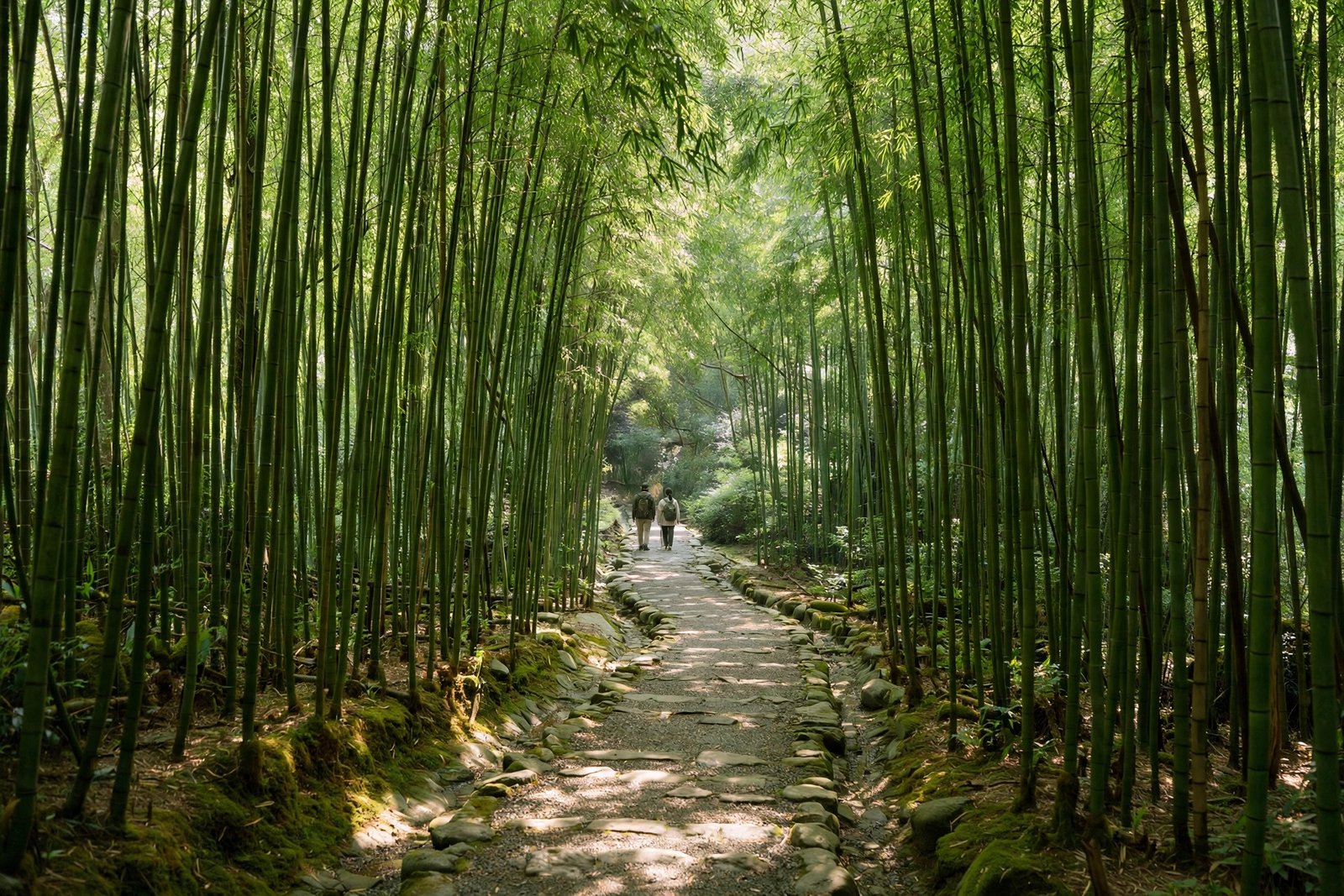
Kyoto is Japan’s cultural heart and its most rewarding budget destination — if you plan around the crowds. Fushimi Inari’s 10,000 vermilion gates are free and open 24 hours: go at sunrise and you will have the upper trails to yourself. Arashiyama’s bamboo grove is free too, and the riverside walk costs nothing. Kiyomizu-dera and Kinkaku-ji (the Golden Pavilion) charge ¥400–500 entry — worth it once each. Eat in the Nishiki Market area, where ¥500–800 buys a proper lunch. Note that Kyoto now charges an accommodation tax of ¥200–1,000 per person per night depending on your room rate, and the city is tightening rules on tourist behavior in the Gion district — be respectful and stay on the main streets.
Osaka: Japan’s Kitchen, and Cheaper Than Tokyo
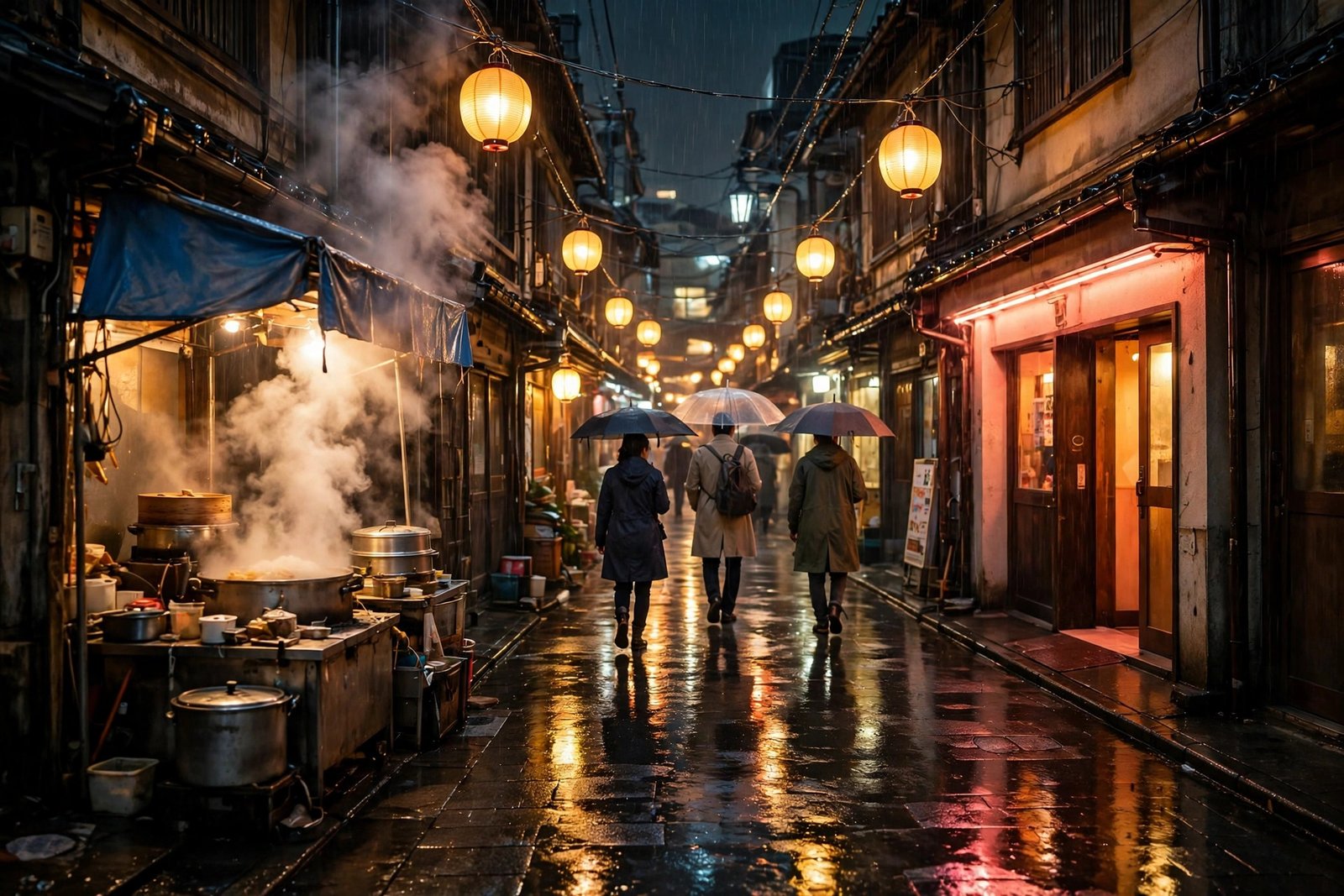
Osaka is the food capital and the budget base for the Kansai region. Dotonbori’s neon canal, takoyaki and okonomiyaki for ¥500–800 a plate, and Osaka Castle’s park (free grounds, ¥600 for the tower) make a full day. Osaka’s hotels run noticeably cheaper than Tokyo or Kyoto, and the city sits 15 minutes from Nara (free-roaming deer, Todai-ji’s Great Buddha, ¥600) and 30 minutes from Kobe. If you are only visiting Kansai, skip the nationwide JR Pass entirely — a Kansai Thru Pass (¥5,200 for 3 days) covers buses, subways, and private railways far more efficiently.
Mount Fuji and Hakone: The Classic Day Trip
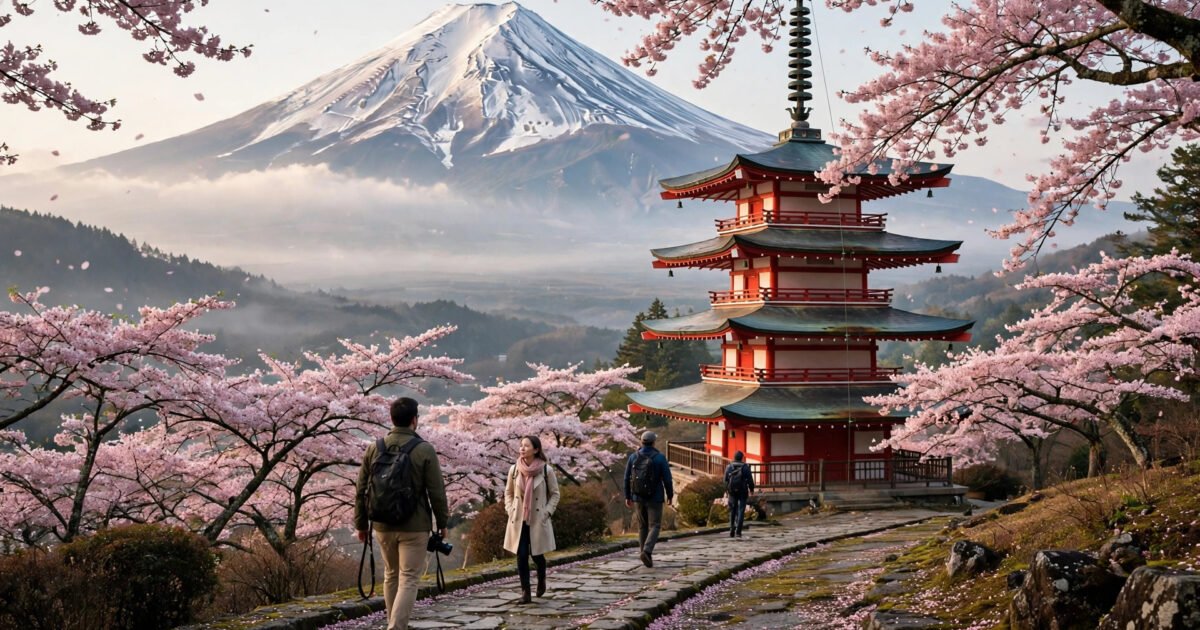
From Tokyo, the Fuji Five Lakes area is the best-value Fuji experience. The Chureito Pagoda viewpoint — the red pagoda with Mount Fuji behind it — is free and most beautiful in cherry blossom season (late March to early April) or autumn colors (mid-November). Staying overnight in Kawaguchiko costs far less than a Hakone ryokan, though a Hakone onsen day trip with the mountain views is worth one splurge. Fujikawaguchiko now charges a ¥2,000 per-person day-visitor fee on certain access routes, so check the current rules before you go.
Hiroshima and Miyajima: History and One of Japan’s Best Views
Hiroshima’s Peace Memorial Park and Museum (¥200 entry) is one of the most moving places in Japan, and the city itself is compact, friendly, and cheaper than Tokyo. A 45-minute ferry ride away, Miyajima’s floating torii gate at high tide is the single most beautiful sight in the country — and the island is free to wander, with wild deer and a cable car to Mount Misen’s summit views. Hiroshima is also the city where the JR Pass math finally starts working, since it is a long shinkansen ride from Kyoto.
How Much Does Japan Cost in 2027? Real Daily Budgets
All figures use roughly ¥150 to the US dollar. Prices exclude international flights and shinkansen tickets unless stated.
Budget Traveler: ¥9,000–12,000 ($60–80) Per Day
- Sleep: Hostel dorms ¥3,000–5,000; capsule hotels ¥3,000–5,000; budget business hotels from ¥6,000–8,000.
- Eat: Convenience stores ¥500–800 a meal; ramen or gyudon ¥800–1,200; conveyor-belt sushi ¥1,000–1,500.
- Move: City subways ¥200–400 a ride; day passes ¥800–1,000 in Tokyo and Kyoto.
- Do: Most temples and shrines are free or ¥300–600; museums ¥500–1,000.
A budget day: dorm bed (¥4,000) + convenience-store breakfast (¥500) + ramen lunch (¥900) + sushi dinner (¥1,200) + transport (¥800) + one sight (¥500) = ~¥7,900 ($53) — before any shinkansen travel.
Mid-Range Traveler: ¥20,000–32,000 ($133–213) Per Day
- Sleep: Business hotel or good guesthouse ¥10,000–18,000 a night (double room — couples effectively halve this).
- Eat: Sit-down restaurants ¥1,500–3,000 a meal; a nice izakaya evening with drinks ¥3,000–5,000.
- Move: Shinkansen legs and regional passes, taxis occasionally.
- Do: A tea ceremony (¥2,000–4,000), a day trip, or a ryokan night with kaiseki dinner (¥15,000–25,000).
A mid-range week in Tokyo and Kyoto with the shinkansen comes to roughly ¥202,000 ($1,350) per person, plus international flights, based on prices checked in October 2026.
What Things Actually Cost (Quick Reference)
- Onigiri and coffee from 7-Eleven: ~¥500
- Bowl of ramen: ¥800–1,200
- Conveyor-belt sushi lunch: ¥1,000–1,500
- Draft beer in an izakaya: ¥500–800
- Tokyo subway day pass: ~¥800–900
- Tokyo–Kyoto shinkansen (Nozomi, reserved): ~¥14,170 one way
- Kyoto–Nara day trip return: ~¥1,440
- Temple entry (Kiyomizu-dera, Kinkaku-ji): ¥400–500
- Capsule hotel night: ¥3,000–5,000
The JR Pass in 2027: The Honest Math
This is the most important money decision on a Japan trip, and the October 2026 price rise changed the answer. A 7-day ordinary pass now costs ¥50,000 bought on the official website (¥53,000 through overseas agents); 14 days is ¥80,000/¥84,000 and 21 days ¥100,000/¥105,000. The pass does not cover Nozomi or Mizuho shinkansen — the fastest trains — so you ride the slower Hikari or Kodama instead.
For the classic Tokyo–Kyoto–Osaka loop, single tickets are usually cheaper: Tokyo to Kyoto (~¥14,170), Kyoto to Osaka (~¥570), Osaka to Tokyo (~¥14,700), plus local JR day trips (~¥2,500) totals roughly ¥31,800 — about ¥18,000 less than the 7-day pass. Skip the pass and save the money.
The pass only pays for itself on genuinely long itineraries — four or more long shinkansen legs in 7 days, for example Tokyo–Kyoto–Hiroshima–Tokyo plus day trips. If you are staying in one region, buy a regional pass instead: the JR Tokyo Wide Pass (¥15,000, 3 days) or the Kansai Thru Pass (¥5,200, 3 days) usually win. Do the spreadsheet math for half an hour before you buy — it is worth real money. For more on cutting transport costs everywhere, see our 21 ways to travel cheaper in 2027.
How to Get to Japan — and Around It
By Air
Tokyo Haneda is the most convenient airport (30 minutes to the city); Narita is cheaper for budget carriers but 60–90 minutes out. From the US West Coast, return fares run $700–1,100 in low season; from the UK, £500–800; from Australia, $600–900. The cheapest fares for cherry blossom season (late March 2027) are on sale right now — book before January, when the first official bloom forecasts push prices up. The Black Friday and Travel Tuesday sales (27 November–1 December 2026) are the best remaining window — see our Black Friday travel deals guide.
Getting Around Cities
Buy an IC card (Suica or Pasmo, or the tourist Welcome Suica) on arrival and tap everywhere — trains, subways, buses, even convenience stores. Tokyo’s subway day passes (~¥800–900) pay off on busy sightseeing days. In Kyoto, city buses are the main transport, but they are slow and crowded at peak times — rent a bicycle (¥1,000–1,500 a day) for the flat eastern districts instead. Taxis are expensive (starting fare ¥500, and they add up fast) — use them only late at night.
Best Time to Visit Japan in 2027
- Late March–early April (cherry blossom): The most beautiful and most expensive weeks. Based on 1991–2020 averages, Tokyo reaches full bloom around 31 March and Kyoto around 4 April; the first official 2027 forecasts arrive in January. Book hotels 3–4 months ahead — see our cherry blossom 2027 guide for the full bloom calendar.
- Late May–early June: The budget sweet spot. Warm, green, and far cheaper than sakura season, with comfortable temperatures and smaller crowds — though June brings the rainy season (tsuyu), mostly in short showers.
- October–November (autumn colors): The second peak. Kyoto’s maples turn red from mid-November, and the weather is crisp and clear. Prices rise again, but not to sakura levels.
- Late January–February: The cheapest months. Cold but clear, with the best hotel deals of the year and snow festivals in the north — Sapporo Snow Festival runs 4–11 February 2027. The coldest weeks are also the quietest at the big temples.
For the classic first trip, aim for late May or late October: good weather, reasonable prices, and no need to book months ahead. If cherry blossom is the dream, commit now — fares and rooms only get more expensive from January.
The Perfect 10-Day Japan Itinerary (Budget Version)
Days 1–4 — Tokyo. Asakusa and Senso-ji at dawn, Harajuku and Shibuya, a Shinjuku alley dinner, Tsukiji outer market breakfast, and a free-view evening from the Metropolitan Government Building. Stay in Ueno or Asakusa to keep room costs down, and use subway day passes.
Day 5 — Mount Fuji day trip. Early train to Kawaguchiko, Chureito Pagoda viewpoint, a lakeside walk, and back to Tokyo for the night. Or continue straight to Kyoto — the shinkansen from the Fuji area connects via Mishima or Odawara.
Days 6–8 — Kyoto. Fushimi Inari at sunrise, Arashiyama bamboo grove and river walk, Kiyomizu-dera and the Gion district in the evening, and a day trip to Nara (deer park, Todai-ji, ¥600) — one of the cheapest and most charming day trips in Japan.
Days 9–10 — Osaka and home. Osaka Castle park, Dotonbori food crawl (budget ¥2,000 for a full evening of takoyaki, okonomiyaki, and kushikatsu), and a final shopping walk in Shinsaibashi. Fly home from Kansai International Airport, or take the shinkansen back to Tokyo.
Total on-the-ground cost for this route: roughly ¥110,000–150,000 ($730–1,000) per person on a budget, including the Tokyo–Kyoto and Osaka–Tokyo shinkansen legs bought as single tickets. Add one ryokan night (¥15,000–25,000) if you want the classic Japanese inn experience — it is the one splurge that is genuinely worth it.
Practical Tips for Japan
Money: The Yen
Japan uses the yen (JPY). Cash is still important — many small restaurants, temples, and rural shops are cash-only — so withdraw from 7-Eleven ATMs (they accept foreign cards and charge no local fee) or use an IC card for most city spending. Credit cards work at hotels, department stores, and chain restaurants. Japan’s departure tax is ¥3,000 per person, included in your airfare since 1 July 2026.
Visa and Arrival
US, UK, EU, Canadian, and Australian citizens enter visa-free for up to 90 days — Japan needs only a passport. Fill in the Visit Japan Web arrival card online before you fly to speed up immigration. There is no visa cost and no arrival fee for a 2027 trip; a proposed tourist entry fee (¥1,500–3,000) has only been confirmed for fiscal 2028 at the earliest.
Food, Wi-Fi, and Luggage
Three budget lifelines: convenience stores (7-Eleven, Lawson, FamilyMart) sell genuinely good meals for ¥500–800; free Wi-Fi is common in stations, cafes, and convenience stores, but a pocket Wi-Fi rental or eSIM (~¥500–800 a day) is worth it for maps and translation; and luggage forwarding (takuhaibin, ~¥2,000–2,500 a bag) lets you send bags between hotels so you can ride trains hands-free — a small cost that transforms a multi-city trip. If you are traveling light, see our cheap vacation ideas under $50 a day for more packing-light strategies.
When to Book for the Best Prices
International fares are cheapest 8–12 weeks out for off-peak trips, and the Black Friday/Travel Tuesday window (27 November–1 December 2026) is the best remaining chance for cheap spring 2027 fares. Hotels in Kyoto and Tokyo for cherry blossom season should be booked by December — rooms near the main sights sell out first and prices rise sharply in January once bloom forecasts are published. For winter trips (January–February), fares and rooms are cheapest of all, so you can book as late as 4–6 weeks out.
Japan Travel FAQs
Is Japan expensive in 2027?
Less than its reputation. A budget traveler can manage on ¥9,000–12,000 ($60–80) a day, and a mid-range week in Tokyo and Kyoto runs about ¥202,000 ($1,350) per person including shinkansen. The big costs are hotels and long-distance trains — control those two and Japan is very affordable for a developed country.
Is the JR Pass worth it in 2027?
Only for long itineraries. The 7-day pass now costs ¥50,000 online (¥53,000 via agents), and the classic Tokyo–Kyoto–Osaka loop costs only ~¥31,800 in single tickets. Buy the pass only if you are taking four or more long shinkansen legs in a week; otherwise use single tickets plus regional passes.
How many days do you need in Japan?
Ten days covers Tokyo, Kyoto, and Osaka with a Fuji day trip. Two weeks lets you add Hiroshima and Miyajima, or slow down in the countryside. With only 5–7 days, pick Tokyo plus one other city — not the whole country.
When is cherry blossom season in 2027?
Based on long-term averages, Tokyo reaches full bloom around 31 March and Kyoto around 4 April, with Sapporo not until early May. The first official 2027 forecasts are published in January. Bloom dates vary by a week or more each year, so build flexibility into your trip — or plan for late March and accept that you may catch opening bloom rather than full bloom.
Do I need a visa for Japan in 2027?
No — US, UK, EU, Canadian, and Australian citizens enter visa-free for up to 90 days with just a passport. Fill in the Visit Japan Web arrival card online before you fly. No visa fee, no arrival fee for 2027 travel.
Is Japan safe for solo travelers?
Japan is one of the safest countries in the world for solo travel, including for solo women. Trains run on time, streets are safe at night, and the hostel scene in Tokyo, Kyoto, and Osaka is excellent. It is also one of the best solo travel destinations on a budget — eating alone at a ramen counter is completely normal here.
Final Thoughts: Japan Rewards the Planner
Japan in 2027 is a trip where planning pays off in hard cash: single tickets beat the JR Pass on the classic route, convenience-store breakfasts free up money for the experiences that matter, and booking cherry blossom travel before January saves hundreds. The country is not cheap by Southeast Asia standards — but for what you get, it is one of the best-value developed destinations on earth. Book the flights now, learn five words of Japanese, and go.
Ready to plan? Pair this guide with our cherry blossom 2027 guide for bloom dates, see where Japan fits in the year with our 20 best places to travel in 2027, and compare costs with our cheapest places in Asia. Happy travels!


