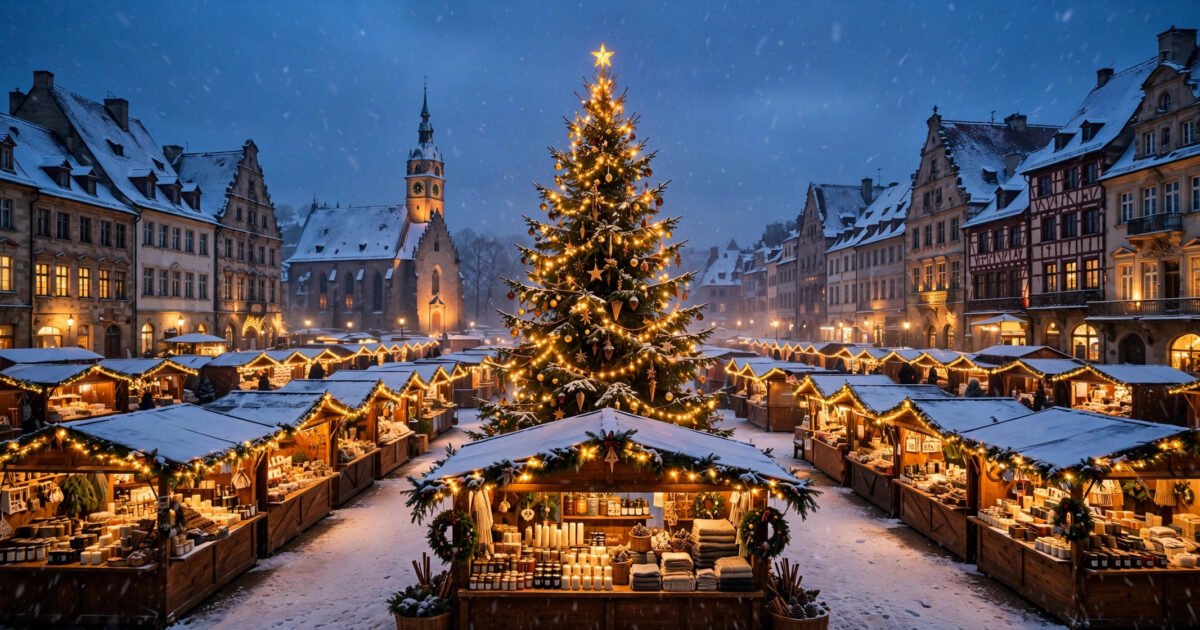
Europe does Christmas like nowhere else. This guide to the best Christmas markets in Europe 2026 covers the 12 markets worth a winter trip: honest dates, realistic daily budgets, and one money-saving tip per stop — from Vienna’s imperial squares to Tallinn’s medieval lanes to the cheapest Glühwein in Kraków.
Date note: as of late September 2026, Vienna, Nuremberg, Munich, Brussels, and Copenhagen have officially confirmed their 2026 dates. For the remaining markets the expected window (based on 2025 dates) is clearly labeled as such — always double-check the official city site before booking non-refundable flights.
12 Best Christmas Markets in Europe 2026: Dates, Costs & Planning Tips
Here they are, west to east — each with 2026 dates, what makes it special, a realistic daily budget (mid-range traveler: decent hostel or 3-star hotel, market food, public transport), and a money-saving tip that actually works.
1. Vienna, Austria
2026 dates: 13 November – 26 December (confirmed, official). The Schönbrunn Palace market runs even longer: 6 November 2026 – 6 January 2027.
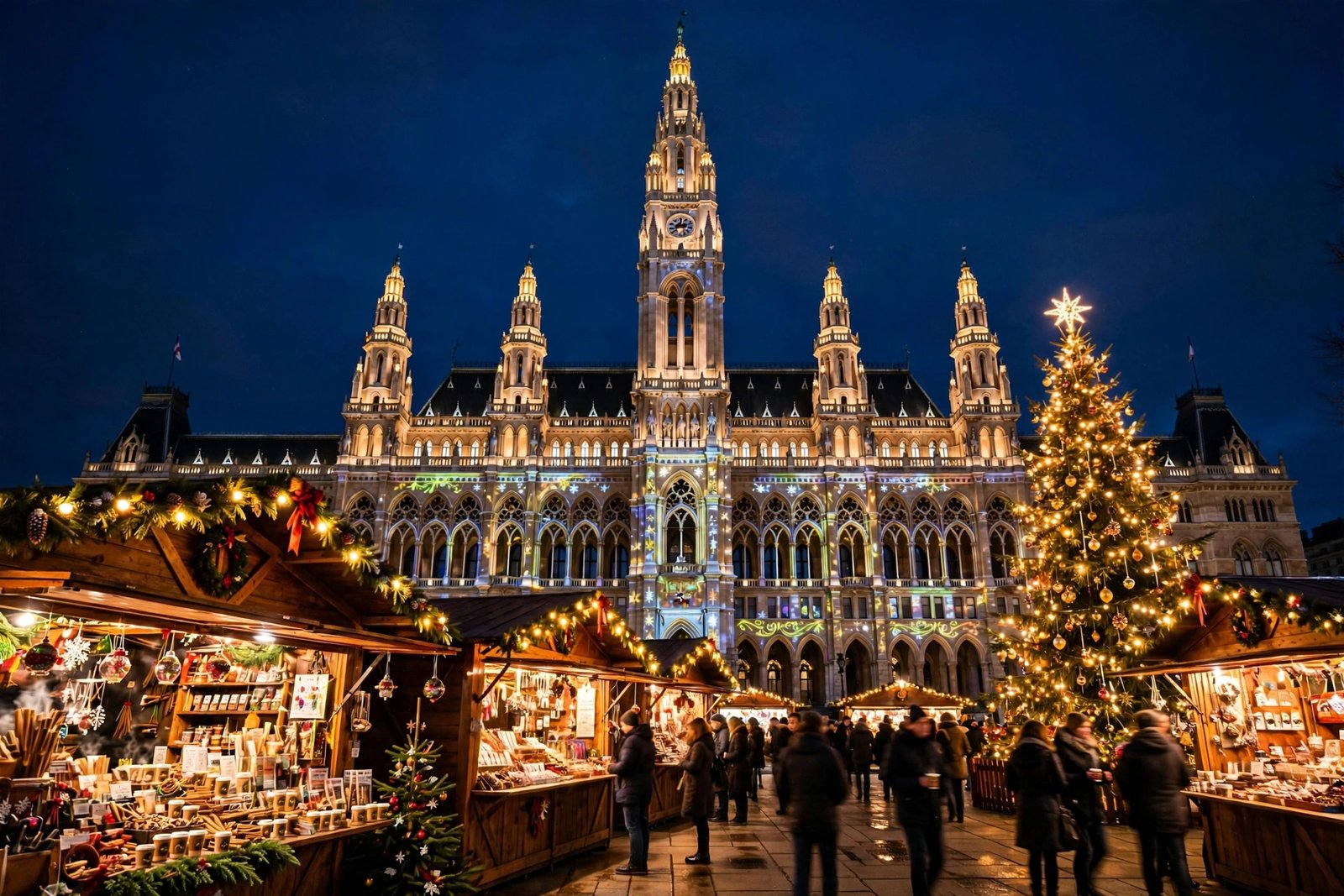
What makes it special: The classic: 150+ stalls in front of the glowing neo-Gothic Rathaus, a giant tree, and the Vienna Ice Dream skating rink next door. The city has 20+ markets — the smaller ones at Spittelberg and Karlsplatz are where locals go. Pair it with our guide to the best places to visit in Austria for a full winter itinerary.
Budget tier: Mid-range — expect €110–150 per day. Glühwein costs €4–5.50, and December hotels book out early.
Money-saving tip: Eat and drink at the smaller local markets (Spittelberg, Karlsplatz) where prices are lower; visit Rathausplatz for the lights. Skate the Ice Dream on weekday mornings when entry is cheapest.
2. Strasbourg, France
2026 dates: Expected 26/27 November – 24 December (based on 2025 dates — not yet officially announced).
What makes it special: The self-declared “Capital of Christmas” has run a market since 1570. Around 300 stalls spread across the Grande Île, a giant tree on Place Kléber, and Alsatian food worth the trip alone: vin chaud, bredele biscuits, tarte flambée. Among tourist attractions in France, few feel as magical in December.
Budget tier: Upper mid-range — €120–160 per day. Central hotels spike hard in December.
Money-saving tip: Stay in Kehl, just across the German border, and take the tram into Strasbourg — hotels there can cost half the price.
3. Nuremberg, Germany
2026 dates: 27 November – 24 December (confirmed, official).
What makes it special: Germany’s most famous market, running since 1628. The opening ceremony — the Christkind delivering the prologue from the Frauenkirche balcony — is genuinely moving. Come for the tiny Nürnberger Rostbratwürste and Lebkuchen gingerbread: one of the essential best places to visit in Germany in winter.
Budget tier: Mid-range — €100–140 per day.
Money-saving tip: Buy Lebkuchen and edible souvenirs at supermarkets — even German discounters sell excellent ones — instead of market stalls. Same quality, half the price.
4. Cologne, Germany
2026 dates: 16 November – 23 December (provisional — the organizer notes these may shift; also closed Sunday 22 November for Totensonntag, a day of remembrance).
What makes it special: Seven themed markets in one walkable center, all in the cathedral’s shadow. The Cathedral market is the showpiece; the Harbor Market by the Rhine and the Angels’ Market are the local favorites.
Budget tier: Mid-range — €100–140 per day.
Money-saving tip: You’ll pay a €3–4 Pfand (deposit) on every Glühwein mug. Return the mug to any stall of the same market for your money back — or keep it as a free souvenir. Either way, don’t mistake the deposit for the drink price.
5. Prague, Czech Republic
2026 dates: Expected 28 November 2026 – 6 January 2027 (based on 2025; widely reported but not yet officially confirmed).
What makes it special: The most photogenic on this list: the Old Town Square market wraps around a huge tree with the Týn Church spires on one side and the Astronomical Clock on the other. Unlike the German markets, it runs into January — perfect for a New Year trip.
Budget tier: Budget-friendly — €60–90 per day. Svařák (Czech mulled wine) costs around €3.
Money-saving tip: Skip the tourist-trap trdelník on Old Town Square and walk 15 minutes to the Náměstí Míru market in Vinohrady — same magic, lower prices, almost no crowds.
6. Budapest, Hungary
2026 dates: Expected mid-November 2026 – 1 January 2027 (based on 2025 dates — not yet announced).
What makes it special: Two standout markets — Vörösmarty Square and the Advent Basilica, with its nightly light show projected onto St. Stephen’s Basilica — plus the unbeatable combo of stalls by day and thermal baths by night.
Budget tier: Budget-friendly — €55–85 per day, among the cheapest in Central Europe.
Money-saving tip: Book an evening session at Széchenyi Baths. It’s cheaper than daytime entry, and soaking in steaming outdoor pools while the cold air bites is pure magic after a day at the markets.
7. Tallinn, Estonia
2026 dates: Expected 20 November 2026 – 6 January 2027 (based on the 2025 pattern — not yet announced).
What makes it special: Tiny, medieval, and refreshingly crowd-free. The market fills the Town Hall Square beneath a giant tree on the spot where, in 1441, Tallinn raised one of Europe’s first public Christmas trees. Snow is likely, prices are low, the whole old town glows.
Budget tier: Budget-friendly — €65–95 per day. Hõõgvein (Estonian mulled wine) costs around €3–4.
Money-saving tip: Eat dinner at the Balti Jaam market hall behind the train station — proper Estonian food at half the old-town price.
8. Kraków, Poland
2026 dates: Expected 27 November 2026 – 1 January 2027 (organizer planning dates; closing day still provisional).
What makes it special: The cheapest major market on this list. Stalls ring the vast Rynek Główny around the Cloth Hall: grilled oscypek (smoked sheep’s cheese), mulled wine, amber jewelry. Zero pretension, full flavor.
Budget tier: Cheapest — €50–80 per day. A mug of mulled wine costs around €3, and a filling market dinner stays under €10.
Money-saving tip: Stay in Kazimierz (the historic Jewish Quarter) instead of the Old Town — excellent hostels and food, a 10-minute walk from the square, and noticeably cheaper.
9. Brussels, Belgium
2026 dates: 27 November 2026 – 3 January 2027 (confirmed, official).
What makes it special: Winter Wonders stretches nearly 2 km through the center with 200+ chalets, a Ferris wheel, an ice rink, and the famous sound-and-light show on the Grand Place — one of Europe’s most beautiful squares.
Budget tier: Mid-range — €110–150 per day.
Money-saving tip: Frites, waffles, and beer are cheaper from the city’s friteries and bars than from market stalls. Snack at the market, eat properly elsewhere.
10. Munich, Germany
2026 dates: 20 November – 24 December (confirmed, official).
What makes it special: The big Bavarian one: 130+ stalls beneath the New Town Hall on Marienplatz, with Advent choirs on the town-hall balcony. Don’t miss the medieval-themed market at Odeonsplatz for something completely different.
Budget tier: Pricey — €130–180 per day. Munich is Germany’s most expensive market city.
Money-saving tip: Many stalls run affordable lunch specials (Mittagsangebote). Eat your main market meal at midday rather than at 8 pm and you’ll save noticeably.
11. Copenhagen, Denmark (Tivoli Gardens)
2026 dates: 13 November 2026 – 3 January 2027 (confirmed). Note: Tivoli is closed on Christmas Eve and Christmas Day.
What makes it special: Christmas inside a 19th-century amusement park: Tivoli Gardens draped in Nordic lights, with gløgg, æbleskiver (pancake balls), and rides running in the cold. The only market here that charges entry — and it’s worth it.
Budget tier: Most expensive — €150–200+ per day. Tivoli entry runs around €20, and gløgg costs €7–9.
Money-saving tip: Buy your Tivoli ticket online in advance — it’s cheaper than at the gate — and eat at the Torvehallerne food hall nearby instead of inside the park.
12. Zagreb, Croatia
2026 dates: Expected 28 November 2026 – 7 January 2027 (based on 2025 dates — not yet announced).
What makes it special: Voted Europe’s best Christmas market multiple times: 25+ locations across the center, live music everywhere, and a local, lived-in feel the bigger cities have lost. It also runs into January.
Budget tier: Budget-friendly — €60–90 per day.
Money-saving tip: The ice-skating park at King Tomislav Square is essentially free entertainment, and a shot of rakija (local brandy) from the stalls costs a fraction of what Glühwein goes for further west.

How Much Do Christmas Markets Cost in 2026?
Good news: 11 of the 12 markets here are free to enter — you only pay for what you eat, drink, and buy. (Tivoli Copenhagen is the exception.) Realistic 2026 market prices:
- Glühwein / vin chaud / gløgg: €3–6 (Copenhagen: €7–9)
- Bratwurst or grilled sausage: €3.50–6
- Chimney cake, crêpes, or langos: €4–7
- Filling market dinner: €10–18
- Handmade souvenirs: €5–20
Watch for the Pfand (deposit) system in Germany and Austria: €3–4 extra per mug, refunded when you return it. Not part of the drink price — or keep the mug as a free souvenir.
As a rule of thumb for a full day (bed, food, transport, market treats):
- Budget tier — Kraków, Budapest, Prague, Tallinn, Zagreb: €50–95/day
- Mid-range tier — Vienna, Nuremberg, Cologne, Brussels: €100–150/day
- Pricey tier — Strasbourg, Munich: €120–180/day
- Splurge tier — Copenhagen: €150–200+/day
The biggest lever isn’t the Glühwein — it’s accommodation and flights. Book by October, travel on weekdays, and target late November or early December for the lowest rates. For more ideas, see our roundup of cheap places to travel in Europe.
A Sample 7-Day Christmas Market Itinerary (Budget Route)
Want to string several markets into one trip? This Central Europe loop keeps travel times short and costs low:
- Days 1–2: Vienna. Fly in — Vienna is often the cheapest major airport to reach in winter. Spend one evening at Rathausplatz and another at Schönbrunn Palace market.
- Days 3–4: Budapest. Take the Railjet train (about 2.5 hours, roughly €20–30 booked ahead). Markets by day, Széchenyi Baths by night.
- Day 5: Kraków. FlixBus or train south. The Rynek Główny market plus the cheapest sleeps and meals of the trip.
- Days 6–7: Prague. RegioJet bus (about 4.5 hours, roughly €15). Old Town Square market, then fly home — or stay into January, since Prague’s markets run until 6 January.
Estimated total: €700–950 for the week traveling budget-style (hostels or budget private rooms, market food, advance train tickets). Prefer the west? Strasbourg → Cologne → Brussels makes an excellent 5–6 day alternative.
FAQ: Christmas Markets in Europe 2026
When do European Christmas markets open in 2026?
Most open mid-to-late November. Vienna and Tivoli Copenhagen open earliest, on 13 November 2026. German markets typically open the last week of November and close 23–24 December. Prague, Budapest, Tallinn, and Zagreb stay open into early January 2027 — ideal for New Year trips.
Which is the cheapest Christmas market in Europe?
Kraków: a full day — bed, food, transport, market treats — costs €50–80. Budapest, Zagreb, and Prague follow at €55–90 a day. Copenhagen’s Tivoli is the priciest on this list.
Are Christmas markets free to enter?
Almost all of them, yes — you only pay for what you eat, drink, and buy. The exception on this list is Tivoli Gardens in Copenhagen, which requires a paid entry ticket (around €20). A few markets elsewhere in Europe, like Berlin’s Gendarmenmarkt, also charge a small entry fee.
How many days do you need for a Christmas market trip?
Two to three nights per city is the sweet spot: one evening for the main market, another for smaller local markets and sightseeing. A long weekend covers one or two cities; a full week covers three or four if you stick to one region.
What should I pack for Christmas markets?
Warm layers, waterproof boots with grip, gloves, and a hat — you’ll spend hours standing outside. Bring cash: many smaller stalls still don’t take cards.
Is it cheaper to visit in November or December?
Late November is cheapest for hotels and flights, and the stalls are fully stocked with the shortest lines. The first two weeks of December are the sweet spot for atmosphere versus price. Prices peak on the weekends right before Christmas — and once Christmas Day passes, the markets that stay open get calmer and cheaper.
Final Thoughts: Which Market Should You Pick?
First Christmas market trip? Start with Vienna or Strasbourg — the most complete experiences. Tight budget? Kraków or Budapest deliver the magic for half the price of Munich or Copenhagen. Chasing snow? Tallinn. Kids? Tivoli Copenhagen. New Year? Prague or Zagreb, open into January.
Ready to plan your winter escape? Start with our guide to cheap places to travel in Europe for more budget-friendly winter destinations — then pick your market, book early, and go hungry. That’s the whole strategy.