Egypt has always been a bucket-list destination, but 2027 is shaping up to be the best year to go. The Grand Egyptian Museum — twenty years in the making — is now fully open beside the Giza Pyramids. This egypt travel guide 2027 edition covers what budget travelers actually need: verified prices, honest cost comparisons, and a 9-day itinerary that fits the Pyramids, Luxor, Abu Simbel, and the Red Sea into one trip.
Egypt remains one of the great value destinations on earth. Hostel beds run $8–15, a filling local meal costs $2–5, and even headline attractions — Pyramids, Valley of the Kings, Abu Simbel — charge $10–25 each. Plan well and a full week lands at $35–50 a day on a budget, $80–120 for midrange comfort.
Egypt Travel Guide 2027: Why This Is the Year to Go
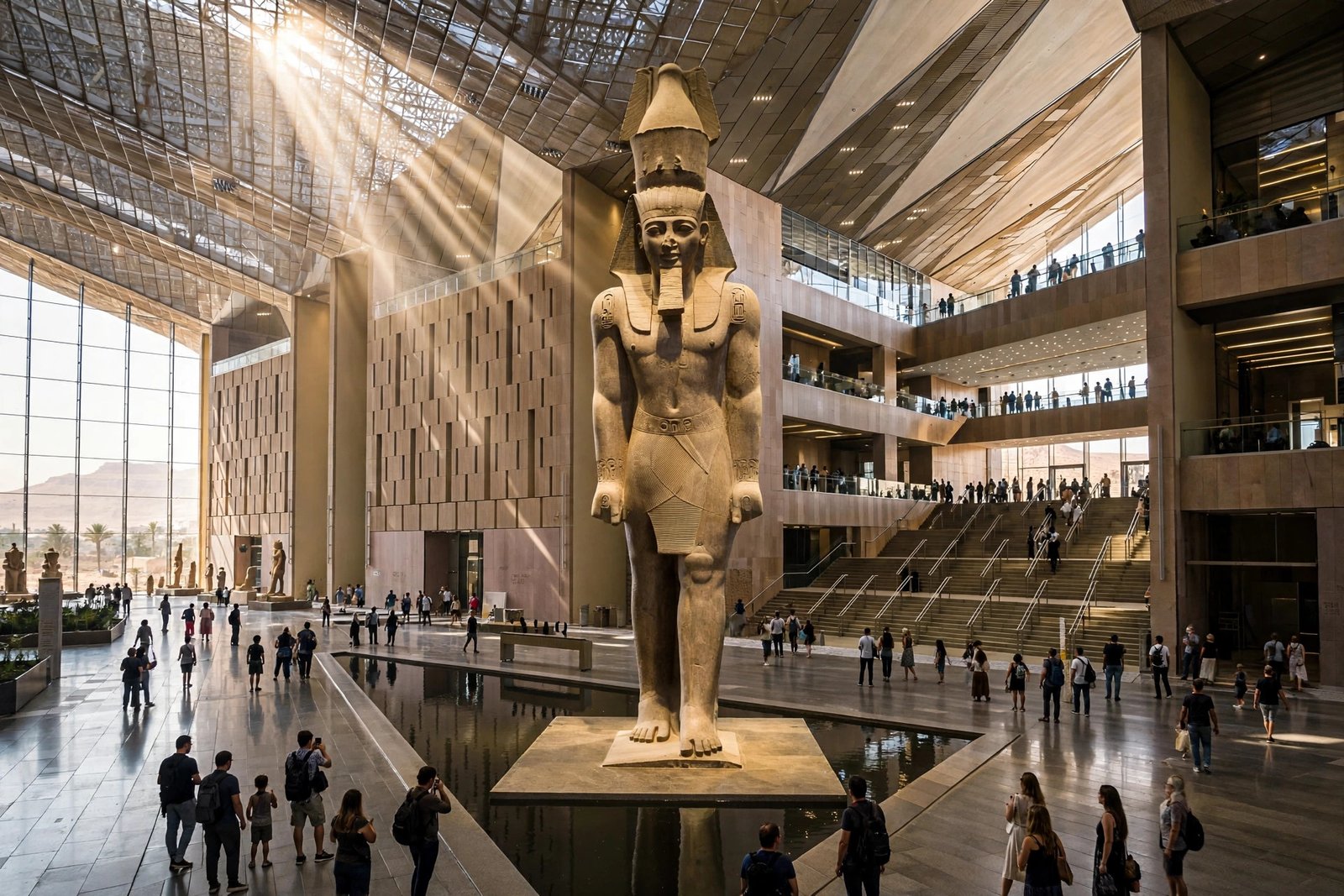
For years, the advice was to “wait for the Grand Egyptian Museum to open.” That wait is over. The museum officially opened on 1 November 2025, welcomed over 6.5 million visitors in its first months, and made TIME’s World’s Greatest Places list for 2026. In 2027 you get the polished, fully operational version: bookable tickets at gem.eg, the complete Tutankhamun collection (all 5,398 objects displayed together for the first time since 1922), and easy combo days with the Pyramids, 2 km away.
Allow 4–6 hours for the museum, or a focused half day hitting the Grand Atrium (the colossal Ramses II statue), the Grand Staircase, and the Tut galleries. Tickets run about 1,200 EGP (~$24) for the main galleries and roughly 1,400 EGP (~$28) including Tutankhamun. Book online — the museum draws 15,000–20,000 visitors daily, and walk-up queues are long in peak season.
The Giza Plateau got its own overhaul too: a new main entrance on the Fayoum Highway, private cars banned inside, and free electric shuttle buses between viewpoints. Older travel advice about entering near the Sphinx is now flat-out wrong — this guide is current.
Pyramids of Giza & the Sphinx: Planning Your Visit
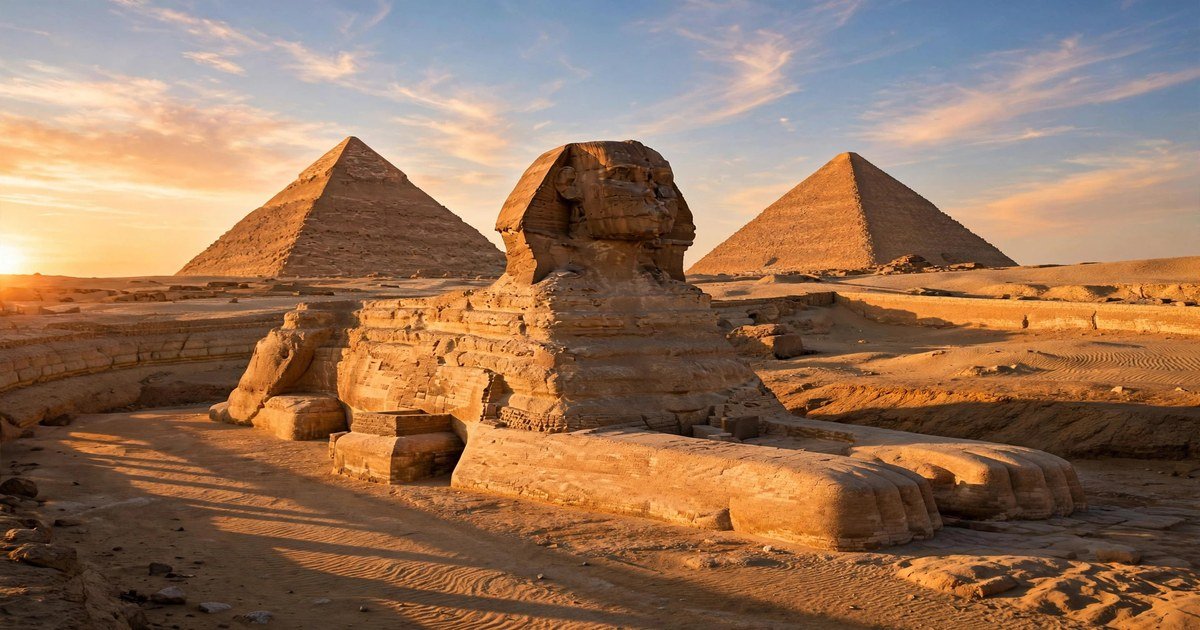
Standing in front of the Great Pyramid of Khufu — the only surviving Wonder of the Ancient World, 4,500 years old — is genuinely overwhelming. Watching the sun drop behind it belongs on any list of the most beautiful places in the world. Gates open at 7:00 AM; the first two hours have the best light and the fewest crowds.
Tickets & Prices
- General plateau ticket: 700 EGP (~$14) — Sphinx and the exteriors of all three pyramids
- Inside the Great Pyramid of Khufu: 1,500 EGP (~$30) extra — narrow, hot tunnels; book online, daily slots are limited
- Inside Khafre’s pyramid: 300 EGP (~$6) extra
- Payment: card only (Visa/Mastercard) at the main gate — cash won’t help you here
Insider Tips
- Pyramids in the morning, Grand Egyptian Museum in the afternoon — air-conditioned and 2 km away.
- Skip $50+ camel “packages”; agree any ride price before getting on — 300–800 EGP for 30–60 minutes is the going range.
- The plateau is exposed desert: water, hat, sunscreen.
- “La, shukran” (no, thank you) ends 90% of tout conversations.
Luxor: Valley of the Kings, Karnak & the West Bank
Luxor is Egypt’s open-air museum, and many travelers rank it above the Pyramids. The East Bank holds Karnak and Luxor Temple; the West Bank holds the Valley of the Kings and Hatshepsut’s temple. Give it two full days.
Valley of the Kings
Sixty-three tombs are numbered here; around 18–20 are open at a time. The standard ticket (750 EGP / ~$15) includes three tombs of your choosing — Ramesses III, Ramesses IX, and Ramesses VI are the favorites for their painted ceilings. Tutankhamun’s tomb costs an extra 700 EGP (~$14): small, but standing in the actual burial chamber is worth it. Arrive at 6:00–6:30 AM before the tour buses; photography inside tombs is prohibited.
Karnak & Luxor Temple
- Karnak Temple: 600 EGP (~$12) — the Great Hypostyle Hall’s 134 columns are staggering. Go mid-morning.
- Luxor Temple: 500 EGP (~$10) — visit at sunset and stay into the evening; it’s floodlit until 9:00 PM with fewer crowds and better photos.
- Hatshepsut’s Temple: 440 EGP (~$8.50) — a terraced masterpiece cut into the cliffs.
- Colossi of Memnon: free photo stop. If time allows, Medinet Habu is usually empty and gloriously painted.
Aswan & Abu Simbel: Egypt’s Golden South
Aswan is Egypt’s most relaxed city — Nubian culture, granite islands, and a slow Nile lined with feluccas. Wander the souk, visit Philae Temple, and take a sunset felucca ride for a few dollars.
Abu Simbel Day Trip
Four 20-meter colossi of Ramesses II carved from a single cliff above Lake Nasser, 280 km south of Aswan. Entry runs roughly 750–822 EGP (~$15–17) and covers both temples. Go on the 3:00–4:00 AM shared minibus (hostels arrange it for ~$20–30) or fly EgyptAir when fares are low. On 22 February and 22 October, the Sun Festival sends sunlight down the temple axis — tickets cost more (~1,272 EGP / ~$25) and sell out months ahead. On normal days, the 6:00 AM opening means the colossi nearly to yourself.
Red Sea on a Budget: Hurghada & Dahab
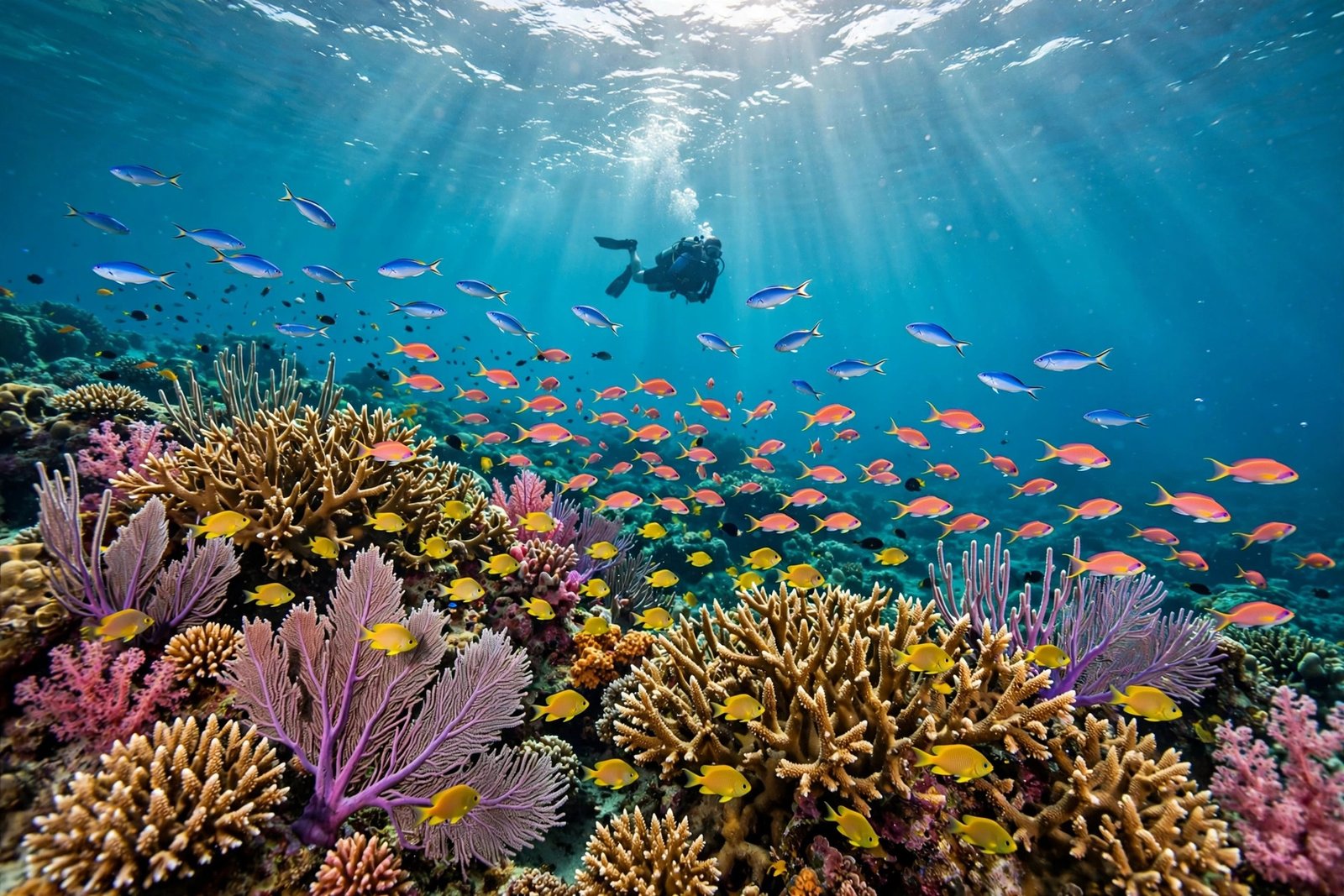
After a week of temples, the Red Sea is Egypt’s best bargain — world-class diving at developing-world prices, diveable year-round (21°C in winter, 28°C in summer).
Hurghada: Cheapest Boat Diving
A full-day boat trip with two dives runs roughly 1,900–3,200 EGP (~$38–65), often including lunch, transfers, and equipment — less than a single dive boat trip in most countries. Snorkeling day trips run $17–25. Giftun Island’s reefs and occasional dolphin encounters are the highlights.
Dahab: The Backpacker Diving Capital
Two hours from Sharm El Sheikh, Dahab is cheaper and more relaxed than Hurghada’s resort strip. The Blue Hole, the Canyon, and Eel Garden are dived straight from the beach, so two shore dives cost around €55. A PADI Open Water course here is one of the cheapest in the world at roughly 14,000–19,000 EGP (~$280–380).
Nile Cruise vs Independent Travel: Honest Cost Comparison
- Felucca (traditional sailboat): $80–200 per person for 2–3 nights Aswan–Luxor, sleeping on deck under the stars. Cheapest way to sail the Nile — book through Aswan hostels, not station touts.
- Budget cruise ship: $200–440 for a 3-night Luxor–Aswan cruise with cabin, meals, and guided temple stops.
- 5-star cruise ship: $400–700 per person for 3–4 nights — the floating-hotel experience.
- Dahabiya (small sailboat): $890–2,500 for 4–7 nights, 6–12 guests, moored in spots big ships can’t reach.
Independent travel (trains + hotels + per-site guides) costs about the same as a budget cruise for the Luxor–Aswan stretch, but you control the pace and skip the shopping “factory visits.” The sleeper train Cairo–Luxor runs ~$80 (saving a hotel night); day trains are much cheaper. Internal flights run $30–80 on EgyptAir and Nile Air booked ahead.
Our take: short on time, take the 3-night budget cruise — the best value concentration of temples in Egypt. With 10+ days, go independent: slower, cheaper per day, no forced carpet stops.
Best Time to Visit Egypt
October to April is the sweet spot: 20–28°C in Cairo, comfortable temple weather in Luxor and Aswan, calm Red Sea. December–February is peak season — book ahead and expect the highest prices.
May to September is brutally hot in Upper Egypt (40–45°C in Luxor and Aswan) but fine on the Red Sea coast, with lower prices. Combining Egypt with cheap places to travel in Europe? Summer is when Cairo–Athens and Cairo–Istanbul budget flights are cheapest — shoulder months (May, October) get you the best of both.
Flying via the Gulf? A 24–48 hour stopover is easy — see our things to do in Dubai guide if your connection allows a city taste.
Realistic Daily Budget Breakdown
Daily ranges, excluding international flights:
- Budget ($35–50/day): hostel dorm $8–15, street food $5–10, metro/Uber $3–5, one or two paid sites $10–20, water and snacks $2–3.
- Midrange ($80–120/day): 3-star hotel or Airbnb $30–50, restaurant meals $15–25, transport amortized $15–20, sites and guides $15–25.
Entry fees are the budget killer if you do everything: Pyramids ($14) + GEM ($24–28) + Valley of the Kings ($15) + Karnak ($12) + Luxor Temple ($10) + Abu Simbel ($15–17) totals around $90–100 per person over the trip. Students with a valid international card pay roughly half at most sites — bring it. Eat where Egyptians eat: a $3 koshary bowl beats a $15 hotel dinner.
9-Day Sample Itinerary for Egypt
- Day 1 — Cairo: Land, visa ($30 e-visa or on arrival), Giza-side guesthouse, sunset at Khan el-Khalili.
- Day 2 — Giza: Pyramids and Sphinx at 7:00 AM, Grand Egyptian Museum in the afternoon.
- Day 3 — Cairo to Luxor: Fly or day train south; evening at floodlit Luxor Temple.
- Day 4 — West Bank: Valley of the Kings at 6:00 AM, Hatshepsut’s temple, Colossi of Memnon. Optional sunrise hot air balloon (~$40–60).
- Day 5 — East Bank: Karnak in the morning, afternoon train/bus to Aswan (3.5–4 hours, cheap).
- Day 6 — Abu Simbel: 3:00 AM minibus, back mid-afternoon, sunset felucca ride.
- Day 7 — Aswan to Red Sea: Bus or flight to Hurghada (or Sharm, then Dahab). Beach afternoon.
- Day 8 — Diving: Two-tank dive day ($38–65 in Hurghada, ~€55 shore dives in Dahab) or snorkeling boat trip.
- Day 9 — Departure: Beach morning, fly home via Cairo or Hurghada.
Short on time? Fold Day 5 into Day 4’s afternoon and skip the Red Sea — 7 days of temples (Cairo–Luxor–Aswan) is the classic budget route. Got 12+ days? Add a 3-night Nile cruise and two extra Red Sea days.
Safety & Cultural Tips
- Safe in the tourist corridor — Cairo, Giza, Luxor, Aswan, Hurghada, and Sharm El Sheikh have heavy tourist-police presence. Avoid North Sinai.
- Dress modestly — cover shoulders and knees, especially at mosques and in Upper Egypt.
- Tipping (baksheesh) is a real budget line: keep 10–20 EGP notes handy.
- Drink bottled water — cheap everywhere; avoid ice at street stalls.
- Scams: the “my shop is closed” routine, inflated taxi fares (use Uber/Careem in Cairo), the “free” camel photo. Agree prices first.
- Ramadan: quieter days, festive evenings, lower prices if your 2027 trip overlaps.
Egypt Travel FAQ
Is Egypt safe to visit in 2027?
Yes for the standard route — Cairo, Giza, Luxor, Aswan, the Nile corridor, Hurghada, and Sharm El Sheikh all have strong tourist-police presence. Avoid North Sinai and check your government’s advisory before booking.
How many days do you need in Egypt?
Seven days covers the essentials (Cairo/Giza, Luxor, Aswan/Abu Simbel). Nine to ten adds the Red Sea. Under five days, pick Cairo + Giza or Luxor alone.
What does the Grand Egyptian Museum cost?
Around 1,200 EGP (~$24) for the main galleries, roughly 1,400 EGP (~$28) with the Tutankhamun galleries. Book at gem.eg — fully open since 1 November 2025, up to 20,000 visitors a day.
Is a Nile cruise worth it on a budget?
A 3-night budget cruise ($200–440) is genuinely good value. The ultra-budget play is a 2–3 night felucca ($80–200); independent train travel gives more control for a similar total.
Can you drink alcohol in Egypt?
Yes — tourist hotels, Nile cruises, and Red Sea resorts serve freely; bars exist in Cairo. It’s pricier than expected due to import taxes.
What’s the cheapest way to get around Egypt?
Trains between Cairo, Luxor, and Aswan — day trains are cheap, the sleeper (~$80) saves a hotel night. Uber/Careem in Cairo, metered taxis elsewhere.
Final Thoughts: Egypt in 2027 Is the Trip
A fully open Grand Egyptian Museum, a modernized Giza Plateau, $40 dive days on the Red Sea, and a week of world wonders for under $400 on the ground — Egypt in 2027 is one of the best value trips on the planet. Book museum tickets early, travel October–April if you can, and let the Nile set the pace.
Planning your route? See how Egypt stacks up in our most beautiful places in the world roundup, and if your flights connect through the Gulf, our things to do in Dubai guide covers the perfect 48-hour stopover. Questions about the itinerary? Drop them in the comments — we answer every one.