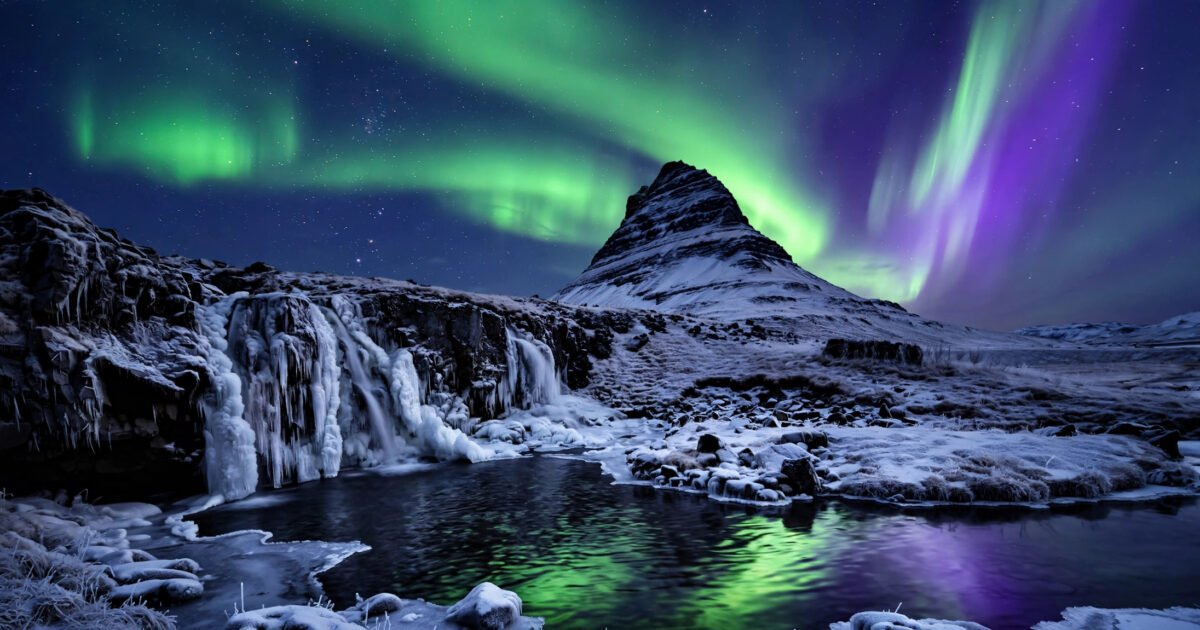
Let’s be honest: an Iceland winter itinerary for 7 days is not cheap — Iceland is one of the most expensive countries on earth. But winter is also the smartest time to go. Fewer tourists, lower rental car rates, and — most importantly — the only season you can walk inside a blue ice cave and watch the northern lights dance over a frozen waterfall. This 7-day Iceland winter itinerary packs fire, ice, and auroras into one week, with realistic budgets and every money-saving trick that actually works.
Your Iceland Winter Itinerary: 7 Days at a Glance
- Route: Reykjavik → Golden Circle → South Coast → Vik → Vatnajökull → Jökulsárlón → Reykjavik
- Total driving: ~1,400 km (870 miles)
- Best window: November to early March (ice caves open ~October–April; aurora season peaks in deep winter)
- Daylight: 5–7 hours in Dec/Jan, 9–10 hours by March
- Budget (per person, two sharing): ~$1,200–$1,500 excluding flights
One golden rule: keep every day flexible. Weather can close roads, flip aurora plans, or cancel tours — check forecasts daily, and Iceland will reward your patience.
The Full 7-Day Winter Itinerary, Day by Day
Day 1: Arrival in Reykjavik — Settle In and Chase the Lights
Land at Keflavik International Airport (KEF), pick up your rental car, and drive 45 minutes into Reykjavik. Hit Bónus or Krónan — Iceland’s cheapest supermarkets — and stock up on skyr, bread, cheese, fruit, and snacks.
Stretch your legs downtown: Hallgrímskirkja church, the Sun Voyager sculpture, and Harpa concert hall. For lunch on a budget, grab a hot dog at Bæjarins Beztu Pylsur — roughly 500 ISK (under $4) and a genuine rite of passage.
If the sky is clear, drive 15–20 minutes out of town for the aurora — the Grotta Island lighthouse is a favorite dark-sky spot.
Day 2: The Golden Circle — Þingvellir, Geysir, and Gullfoss
The Golden Circle is Iceland’s most famous day loop — about 300 km. Start early to use the limited daylight:
- Þingvellir National Park: walk between the North American and Eurasian tectonic plates in the Almannagjá rift valley. Parking (750–1,000 ISK) is the only cost.
- Geysir geothermal area: Strokkur erupts every 5–10 minutes, shooting boiling water up to 20 meters high. Free.
- Gullfoss: a massive two-tiered waterfall thundering into a canyon, half-frozen and steaming in winter. Free, and majestic.
Budget tip: pack a supermarket sandwich for lunch. On the way back, stop at the Secret Lagoon in Flúðir (around 4,500 ISK) — Iceland’s oldest swimming pool, far cheaper than the big lagoons.
Day 3: South Coast — Seljalandsfoss and Skógafoss
Now the real road trip begins. Drive Route 1 east toward Vik. First stop: Seljalandsfoss, the 65-meter waterfall you can famously walk behind in summer. In winter the path is usually closed (ice — too dangerous), but the falls framed in snow and ice are just as spectacular, with a fraction of the crowds.
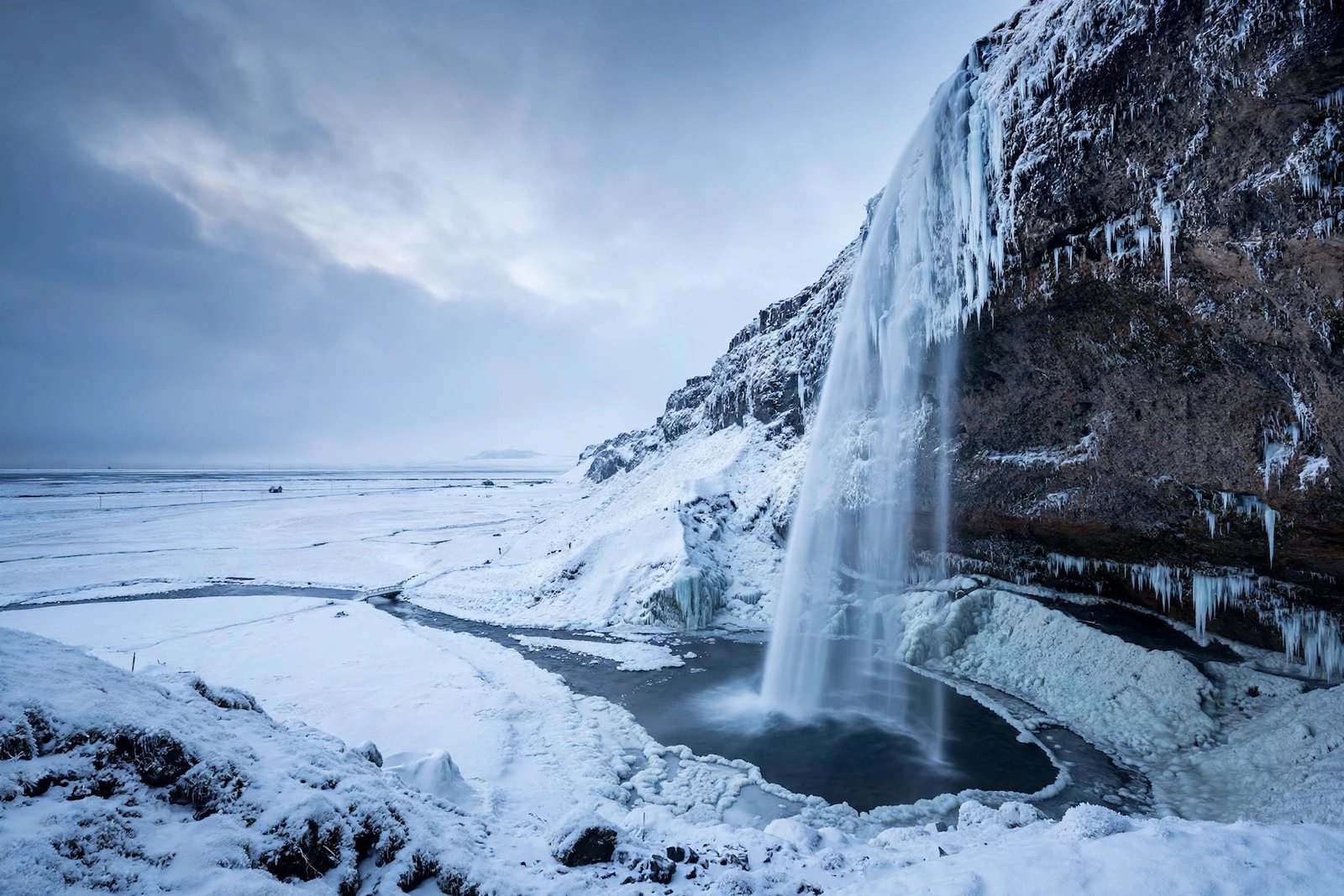
Twenty-five minutes further east lies Skógafoss, a thundering 60-meter curtain of water 25 meters wide — climb the 527 steps for the coastal view. These two giants earn their reputation among the greatest waterfalls in the world, and winter drapes them in ice the summer crowds never see.
Overnight in Vik — eat from your grocery stash or treat yourself to one restaurant meal (around 3,500 ISK / $26+) as a splurge.
Day 4: South Coast — Reynisfjara Black Beach and Vik
A shorter driving day — perfect for the morning light at Reynisfjara black sand beach. The hexagonal basalt columns and Reynisdrangar sea stacks are iconic, but sneaker waves are a real, documented hazard: never turn your back on the ocean, keep well back from the waterline, and read the warning signs.
In the afternoon: the Vikurkirkja church viewpoint, Dyrhólaey promontory with its natural sea arch, or the Sólheimasandur plane wreck (a 4 km flat walk each way — only in good weather). The free Seljavallalaug geothermal pool is reachable with a short hike. Vik’s dark skies are superb for aurora hunting.
Day 5: Vatnajökull — Blue Ice Cave Tour Day
Today’s the big one: a guided blue ice cave tour inside Vatnajökull, Europe’s largest glacier. This is the most weather-dependent activity of the trip — natural ice caves form only in winter (roughly October to April), and each year’s caves are scouted fresh by guides in autumn. Book in advance; winter slots sell out.
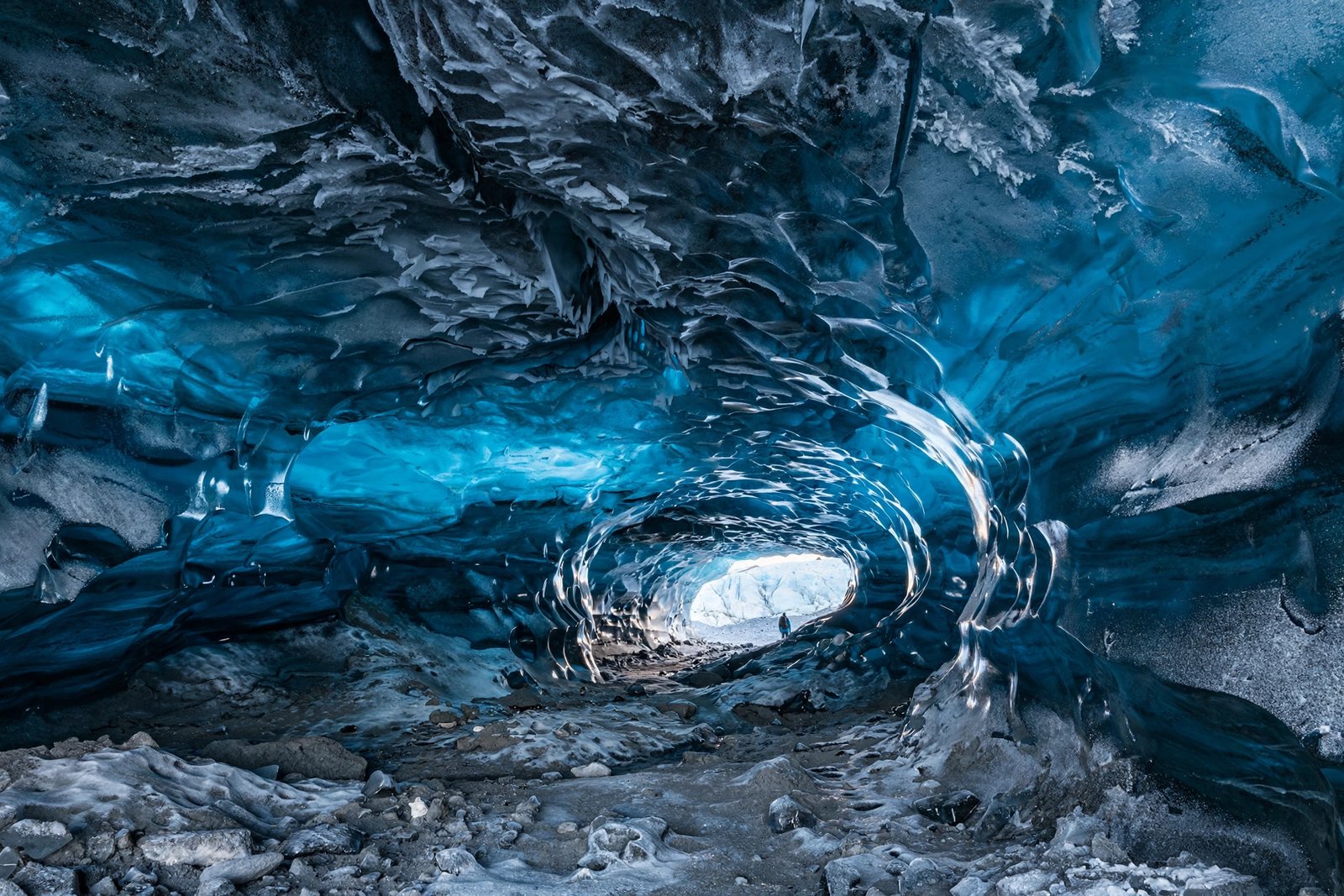
Expect a 2.5–3 hour tour: a super-jeep ride onto the glacier, crampons and helmets provided, and about an hour inside the cave. The 2026–27 going rate is roughly 23,900 ISK (~$170) per person booked direct with a local operator. It’s the biggest single splurge of this itinerary — and worth every penny. Overnight in the Höfn area.
Day 6: Jökulsárlón Glacier Lagoon and Diamond Beach
Drive west back along Route 1 to Jökulsárlón, the glacier lagoon where thousand-year-old icebergs calve off Breiðamerkurjökull and drift past seals toward the sea. This is one of the most beautiful places in the world, full stop.
Cross the bridge to Diamond Beach (Fellsfjara), where those icebergs wash up on black volcanic sand and glitter like scattered diamonds — morning light is best. On the return drive, stop at Skaftafell in Vatnajökull National Park for a short glacier-view hike. Overnight around Vik or Kirkjubæjarklaustur.
Day 7: Return to Reykjavik — Blue Lagoon or Sky Lagoon
Drive back to Reykjavik (~2.5–3 hours from Vik) for a final geothermal soak. Two flagship options:
- Blue Lagoon: the milky-blue icon in a black lava field, 20 minutes from the airport — perfect before an evening flight. Comfort admission starts around 11,990 ISK (~$95) and includes a silica mask, towel, and one drink. Book a timed slot in advance — popular hours sell out.
- Sky Lagoon: 15 minutes from downtown, with an ocean-view infinity edge and the 7-step Skjól bathing ritual included. The Saman pass starts around 14,990 ISK (~$125). Minimum age is 12, so families with younger kids should pick Blue Lagoon.
Budget alternative: Reykjavik’s municipal geothermal pools (around 1,500 ISK) or the free Nauthólsvík geothermal beach — locals swear by them.
Northern Lights Hunting: How to Actually See Them
Seven winter nights give you strong odds — if you hunt smart:
- Season: September–March, when nights are dark. November–February offers the longest darkness; February–March balances auroras with more daylight.
- Forecast: you need solar activity and clear skies. Check the aurora forecast (KP index — 3+ is good, 5+ is spectacular) plus the cloud forecast at vedur.is. Lights usually appear between 9 PM and 2 AM.
- Get dark. Drive 15–20 minutes from town lights — Grotta lighthouse near Reykjavik and the beaches near Vik are excellent.
- Be patient. The aurora can explode and vanish in minutes. Give it 1–2 hours per outing.
- Dress for standing still in sub-zero wind: thermal layers, windproof shell, insulated boots, hat, gloves.
- Photography: tripod, manual focus on a bright star, ISO 1600–3200, widest aperture, 5–15 second exposures.
If the Nordic lights get under your skin, the best places to visit in Norway offer another world-class aurora hunting ground for a future trip.
Driving in Iceland in Winter: Safety First
Read this section twice. Winter driving here is genuinely demanding — sudden whiteouts, icy two-lane roads, and winds that can rip car doors off their hinges (an actual insurance category).
- Rent a 4×4 with studded tires. Winter small cars run 6,000–8,000 ISK ($50–60)/day, but for this route a 4×4 at ~$65–90/day is the smart choice. Studded tires are standard on winter rentals.
- Check conditions every morning: road.is (road closures), vedur.is (weather and wind warnings), and safetravel.is (register your travel plan — free, and potentially life-saving).
- Respect wind warnings. If the forecast says don’t drive, don’t drive. Route 1 closures are common.
- Slow down. Limits are 90 km/h rural and 50 km/h in towns, but in winter drive well below when conditions demand it.
- Keep the tank above half — stations are sparse on the South Coast; a week’s fuel runs roughly €100–200.
- Keep Day 7 loose — a storm delay on the return leg is the most common trip-ruiner.
What to Pack for Iceland in Winter
Around 0°C (32°F) on average but far colder with wind. The rule: layers, no cotton, everything waterproof. Thermal base layers, fleece mid-layer, windproof/waterproof jacket and pants, insulated waterproof boots with grip, warm hat, buff, two pairs of gloves (thin + heavy), wool socks, swimsuit and quick-dry towel, headlamp (dark by 4–5 PM in midwinter), tripod, and a portable charger — cold drains batteries fast.
7-Day Iceland Winter Cost Breakdown (Per Person, Two Sharing)
An honest, realistic budget for this itinerary, based on 2026 pricing — per person, two travelers sharing a car and room:
- Flights: vary by origin — winter fares from Europe often start around $180–350 round-trip; from North America, $350–600.
- 4×4 rental (7 days): ~$250–320 per person (~$65–90/day split two ways)
- Fuel: ~$60–90
- Accommodation (7 nights): ~$385–525 — winter guesthouses and farm stays run $110–150/night for a double
- Food: ~$200–280 — mostly supermarket self-catering (€20–30/day), plus a few café meals
- Blue ice cave tour: ~$170
- Lagoon soak (Day 7): ~$95–125 (or ~$12 at a municipal pool)
- Parking and misc: ~$40–60
Total: roughly $1,200–$1,500 per person, excluding flights. Solo? Expect 30–40% more, since the car and room aren’t split. Hostel dorms and religious supermarket cooking can shave a few hundred off; $2,000+ buys nicer hotels and restaurant meals.
Money-Saving Tips That Actually Work in Iceland
- Shop at Bónus and Krónan. Iceland’s budget supermarkets — a full grocery run costs a fraction of one restaurant meal.
- Drink the tap water. Among the purest on the planet, free everywhere including restaurants. Never buy bottled water.
- Eat the famous hot dogs — a filling meal for a few hundred ISK at stands nationwide.
- Soak free. Seljavallalaug and the Reykjadalur hot river cost nothing; municipal pools run ~1,500 ISK.
- Travel in shoulder winter — November and March are cheaper than Christmas/New Year, with nearly the same aurora odds.
- Skip the alcohol or buy duty-free on arrival — a bar beer can cost $12–15.
- Share everything — cars and rooms split two or four ways are the biggest single saving.
Iceland Winter Itinerary: Frequently Asked Questions
Is 7 days enough for Iceland in winter?
Yes — it’s the sweet spot. Enough for Reykjavik, the Golden Circle, the full South Coast to Jökulsárlón, an ice cave tour, and a lagoon finale. You won’t reach the North or Eastfjords, but those bring harsher winter driving; save the full Ring Road for summer.
Can you see the northern lights in Iceland in winter?
Absolutely — winter is the only reliable season. You need dark skies (September–March), clear weather, and solar activity (KP 3+). Seven nights gives you multiple chances; most visitors who hunt on 3+ clear nights see them. No guarantees — it’s nature, not a theme park.
Is it safe to drive in Iceland in winter?
Yes, with the right vehicle and respect for conditions. Rent a 4×4 with studded tires, check road.is and vedur.is every morning, never drive into a wind warning, and keep plans flexible. This route stays on the main Ring Road — the best-maintained road in the country.
How much does a 7-day Iceland winter trip cost?
Roughly $1,200–$1,500 per person excluding flights, for two sharing: 4×4 rental and fuel (~$350), guesthouses (~$450), self-catered food (~$240), the ice cave tour (~$170), and a lagoon visit (~$100). Solo travelers should budget 30–40% more.
What is the best month for an Iceland winter itinerary?
February and March are the sweet spot: proper cold for ice caves, long dark nights for auroras, and lengthening daylight (8–10 hours) for sightseeing. December offers maximum darkness but only ~4–5 hours of daylight. November is a great budget pick with fewer crowds.
Do I need to book the ice cave tour in advance?
Yes — book weeks or months ahead for the 2026–27 season. Natural ice caves have limited daily capacity and small groups, and the best caves sell out, especially around holidays. The same applies to Blue Lagoon and Sky Lagoon timed entries. The waterfalls, beaches, and viewpoints need no booking at all.
Final Thoughts: Fire, Ice, and Lights Worth Every Króna
An Iceland winter itinerary of 7 days isn’t a budget trip by any normal definition — but it’s one of the highest-value weeks in travel. Walk between continents, stand under a half-frozen waterfall, descend into a glowing blue ice cave, and watch the sky catch fire with auroras, all in seven days. Start with flights and the ice cave booking — everything else falls into place around them. Clear skies!