Tacos for a dollar, a metro ride for 30 cents, pyramids older than the Roman Empire, and beaches that rival the Caribbean at a third of the price. That is Mexico in 2027 — the best-value country in the Americas, and the one US and Canadian travellers are booking in record numbers for the winter ahead. This Mexico on a budget 2027 guide gives you real daily costs, the best places from Mexico City to the Yucatán, how to avoid the tourist-trap prices, and a 10-day itinerary that keeps the bill down without missing the magic.
Mexico on a Budget 2027: Why It Is the Winter to Go
First, honesty: Mexico is not uniformly cheap. Tulum and Cancún’s hotel zone cost three to five times what Oaxaca or Guanajuato cost, and the big archaeological sites raised their foreign-visitor fees sharply in 2026. But step away from the resort strip and Mexico remains one of the cheapest winter sun destinations on the planet — a hostel dorm for $10–15, street tacos for $1–3, and a metro ride in the capital for 5 pesos.
What makes the winter of 2026–27 the moment to go? Three things:
- Flights are at historic lows. Intense competition between US, Canadian and Mexican carriers has pushed winter round-trip fares to Cancún as low as $240–347 from major US hubs for January–February 2027 departures — cheaper than flying to Florida. The Black Friday and Travel Tuesday fare window at the end of November is the time to lock them in.
- January is the value sweet spot. Christmas week resort rates more than double, then prices drop again in mid-January and stay stable through March. Travel in January or February and you get the same 28°C sunshine for far less.
- The peso still works for you. At roughly 17–18.5 pesos to the dollar, everyday prices — tacos, buses, museum entries — translate into small numbers for US, UK, Canadian and Australian visitors. A comfortable budget traveller spends $40–65 a day; a tight backpacker can get by on $25–40.
Best Places to Visit in Mexico on a Budget
Mexico City (CDMX): The World’s Best-Value Capital
Start in Mexico City, one of the great cities of the world and absurdly cheap for what it offers: the National Museum of Anthropology, the Aztec Templo Mayor, Frida Kahlo’s blue house in Coyoacán, and a food scene that runs from $1 street tacos to world-class restaurants. The metro costs 5 pesos (about $0.30) a ride on a rechargeable card, a dorm bed runs $10–14, and a three-course comida corrida lunch at a market fonda costs 60–100 pesos ($3.50–5.90). Give it four or five days — it earns every one of them. The best free move in the city: Chapultepec Park on a Sunday morning, when the museums, the lake and the castle hill fill with local families.
Oaxaca: The Food Capital
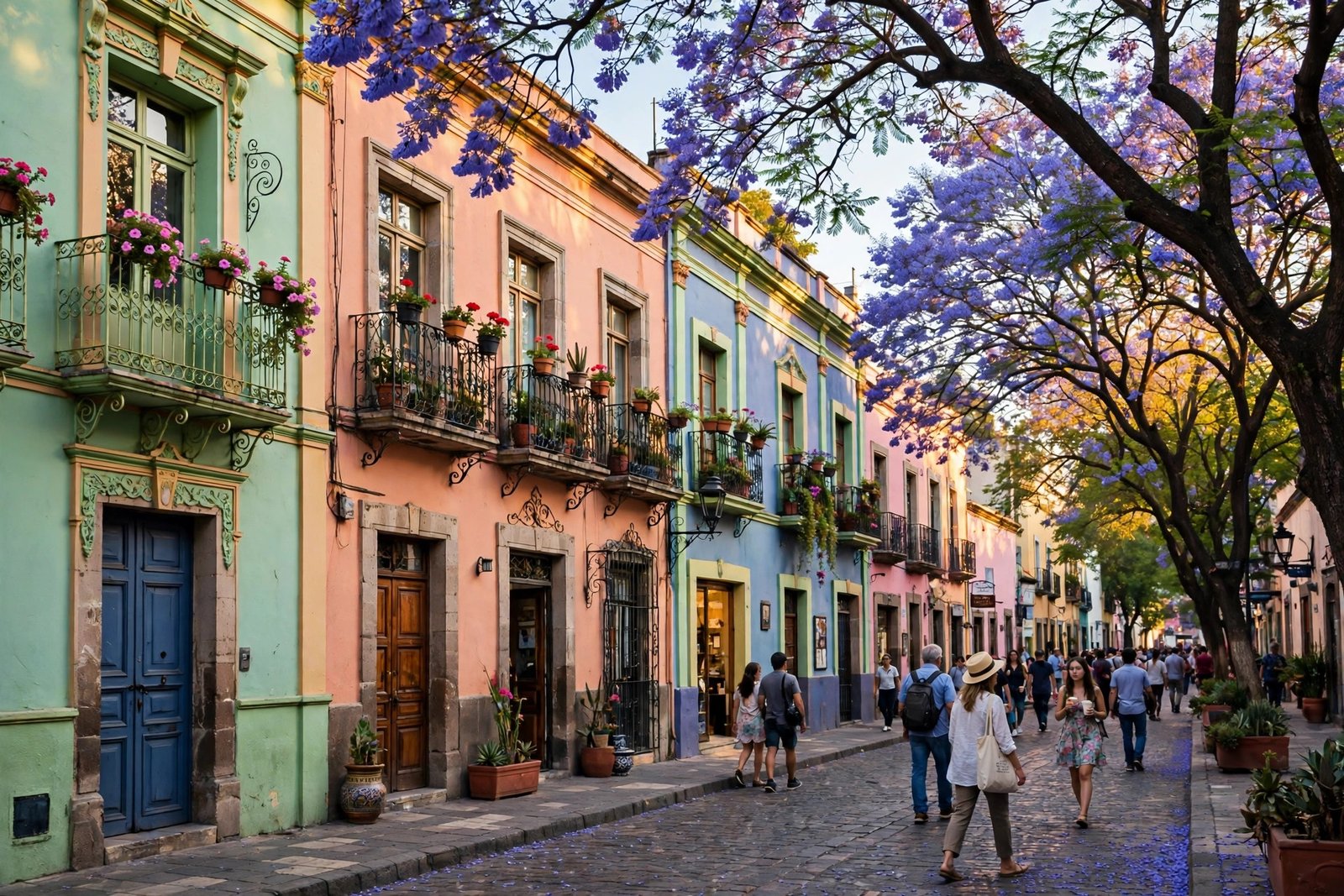
Oaxaca is the city food lovers dream about: seven moles, mezcal distilleries, markets piled with chillies and chocolate, and a colonial centre that glows at sunset. It is also one of Mexico’s cheapest cities — $25–38 a day on a budget, dorms $8–12. Day-trip to Monte Albán, the Zapotec mountaintop city (210 pesos for foreign visitors), and to Hierve el Agua, the petrified waterfalls. Come in late October for Day of the Dead if you can plan a year ahead; in any season, Oaxaca is the city that turns first-time visitors into Mexico evangelists.
Guanajuato: The Prettiest City in Mexico
Guanajuato is a UNESCO-listed maze of colourful houses, underground tunnels and steep callejones, built on silver-mining wealth and now one of Mexico’s great student cities — which keeps prices low and the nightlife lively. A budget of $22–35 a day covers a dorm ($7–12), street food and the funicular up to the Pipila viewpoint for the sunset over the rooftops. It is small enough to explore on foot in two days, and it pairs perfectly with nearby San Miguel de Allende, which is prettier but pricier — visit San Miguel as a day trip and sleep in Guanajuato.
San Cristóbal de las Casas: The Cheapest Base in Mexico
High in the Chiapas mountains, San Cristóbal is Mexico’s cheapest city for travellers — $20–30 a day, dorms $6–10 — and one of its most atmospheric: indigenous markets, colonial churches, cool mountain air and coffee country all around. Use it as a base for the Sumidero Canyon boat trip and the lakes of Montebello, then take the bus on to Palenque, the jungle Maya city, where the ruins rise out of the rainforest and howler monkeys shout from the trees.
Mérida and the Yucatán: Cenotes, Ruins and the Safest City in Mexico
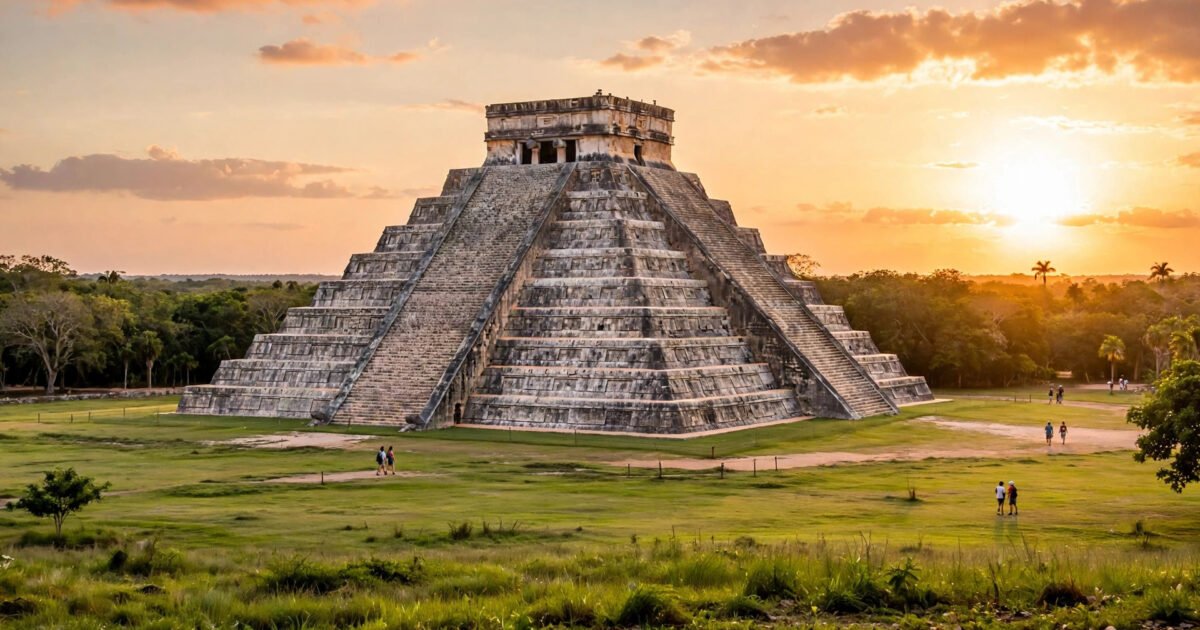
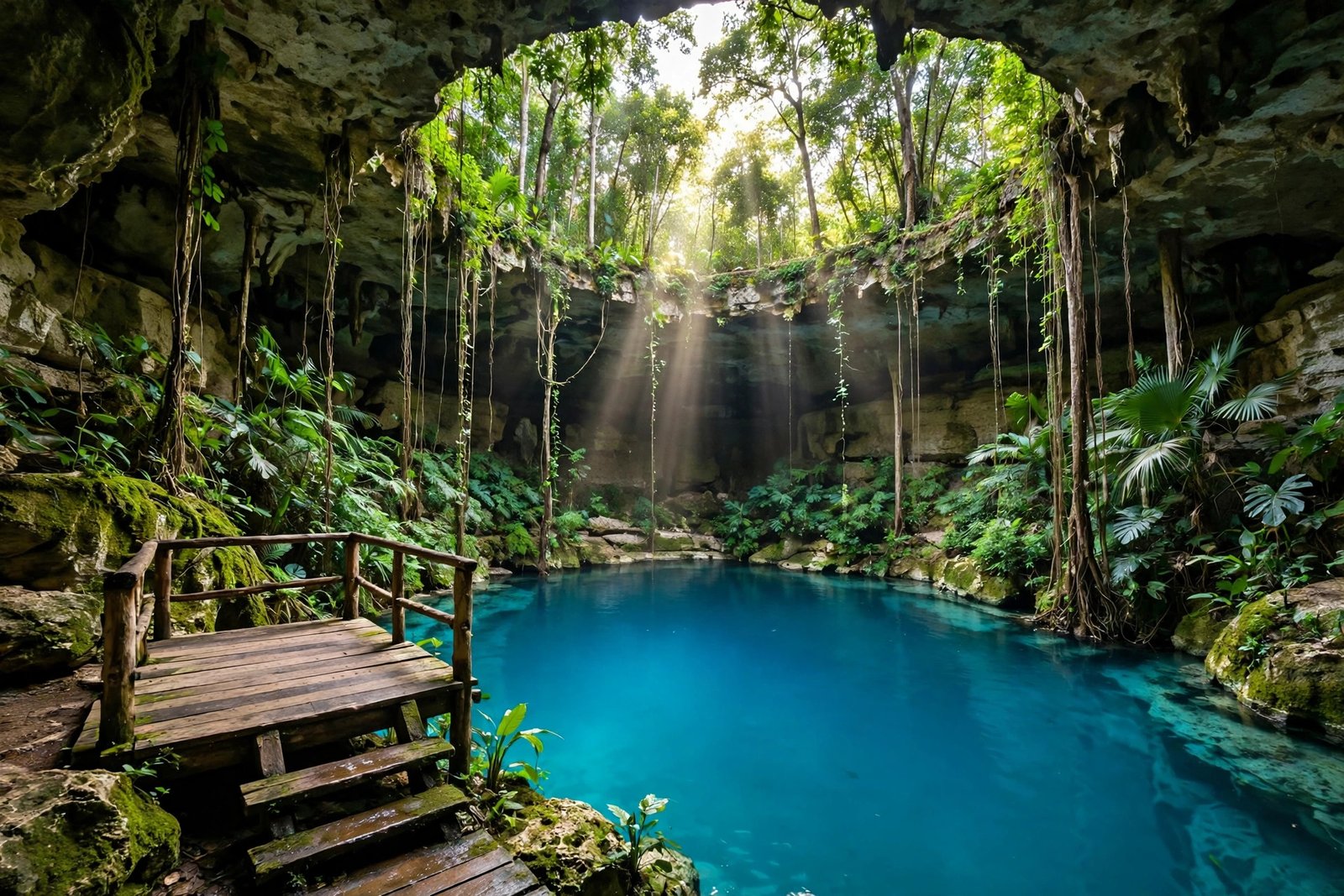
Mérida is regularly called Mexico’s safest city, and it is the perfect base for the Yucatán: colonial mansions, a food scene built on cochinita pibil, and day trips to cenotes — natural sinkholes of clear blue water that cost a few dollars to swim in. From Mérida, Chichén Itzá is about 90 minutes away, but budget for the ticket: foreign visitors now pay 697 pesos (about $38), made up of a 105-peso federal fee plus a 592-peso Yucatán state fee. Go early, before the tour buses arrive, and pair it with a cenote in the afternoon — Ik Kil is the famous one, but the smaller cenotes near Valladolid are cheaper and quieter. Valladolid itself, 30–45 minutes from the ruins, is a lovely, cheap base with dorms from $8–12.
The Caribbean Coast: Cancún, Playa del Carmen and Tulum — Done Cheaply
The Caribbean coast is the most expensive part of Mexico, but it is also where the cheap flights land, so most travellers will pass through it. The trick is to treat Cancún as a gateway, not a destination: stay in downtown Cancún or Playa del Carmen instead of the hotel zone, eat at the taco stands the locals queue for, and use the ADO buses (Cancún to Tulum runs roughly 300–450 pesos) instead of taxis. Playa del Carmen is the best budget beach base at $30–50 a day; Tulum, at $60–100 a day, is the one to visit for a day, not a week — the ruins by the sea are worth the 265-peso ticket, but the beach clubs will eat your budget alive. For the cheapest Caribbean beach of all, look south to Mahahual or north to Holbox, a car-free island of sand streets and flamingos.
Puerto Vallarta and the Pacific Coast: The Other Mexico
Mexico’s Pacific coast is the winter-sun value pick for North Americans: Puerto Vallarta and the Oaxaca coast run $80–150 a night for a room for two, with 28°C days and flights far shorter than the Caribbean for West Coast travellers. Puerto Escondido, the surf town on the Oaxaca coast, runs $30–45 a day and has some of the best waves in the Americas. If you are flying from the US West Coast, the Pacific side is often the cheaper, quicker winter escape — and it is far less crowded than the Riviera Maya.
How Much Does Mexico Cost in 2027? Real Daily Budgets
These are built from 2026 prices published by Mexico budget-travel guides — the most recent figures available as you plan. Prices are per person, in US dollars at roughly 17–18.5 pesos to the dollar. Dollar figures move with the exchange rate, so check the rate before you travel.
Budget Traveller: $25–40 Per Day
- Sleep: Hostel dorms $8–15 a night (San Cristóbal $6–10, Oaxaca $8–12, Mexico City $10–14, Tulum $20–35 in high season).
- Eat: Street tacos $0.75–1.50 each, a comida corrida set lunch $3.50–5.90, market food and supermarket staples $4–6 a day. A full day of street food runs $8–12.
- Move: Mexico City metro 5 pesos ($0.30) a ride, Metrobús 6 pesos, local buses and colectivos $0.50–2, ADO intercity buses $18–59 depending on the route.
- Do: Many museums are free on Sundays for residents; foreign visitors pay 210 pesos (about $11) at the big INAH sites — Teotihuacán, Monte Albán, Palenque. Cenotes run a few dollars each.
A budget day: dorm bed ($10) + street-food breakfast ($2) + comida corrida lunch ($4) + tacos for dinner ($3) + metro and buses ($2) + one sight averaged ($5) = ~$26.
Mid-Range Traveller: $45–70 Per Day
- Sleep: Private room in a guesthouse or budget hotel $25–40 a night; a comfortable double in the Yucatán or Pacific coast $40–65.
- Eat: Restaurant meals $8–15, a nice dinner with mezcal $15–25, good coffee $2–3.
- Move: Uber or DiDi across town $4–11, domestic flights $50–135, a rental car in the Yucatán for a few days.
- Do: Guided tours $10–20, a cooking class or mezcal tasting, a boat trip in Sumidero Canyon.
Two people travelling mid-range typically spend $90–140 a day combined. A two-week trip with flights from the US runs roughly $600–1,400 per person in total — and for the full year-round picture, see our guide to the cheapest places to travel each month of 2027.
What Things Actually Cost (Quick Reference)
- Street tacos: 20–60 pesos ($1.20–3.50) each; a taco meal about $2–3
- Comida corrida (3-course set lunch): 60–100 pesos ($3.50–5.90)
- Mexico City metro: 5 pesos ($0.30); Metrobús 6 pesos; airport Metrobús 30 pesos
- Teotihuacán, Monte Albán, Palenque: 210 pesos (about $11) for foreign visitors
- Chichén Itzá: 697 pesos (about $38) for foreign visitors — 105 federal + 592 Yucatán state fee
- Tulum ruins: 265 pesos (about $14)
- ADO bus Mexico City to Oaxaca: 700–1,000 pesos ($41–59); Cancún to Tulum 300–450 pesos
- Hostel dorm: $8–15 a night outside the resort strip; Tulum $20–35 in high season
- ATM fees: 30–150 pesos per withdrawal — use bank ATMs and withdraw larger amounts less often
- Flights from the US: $150–500 round trip; winter fares to Cancún from $240–347
How to Get to Mexico — and Around It
By Air
Most US travellers fly into Cancún, Mexico City or Puerto Vallarta. Round-trip flights from major US cities run $150–500, with the cheapest winter fares to Cancún ($240–347) in January and February 2027. From the UK, returns to Mexico City or Cancún run roughly £350–550. Book in the Black Friday and Travel Tuesday window at the end of November for the best shot at the lowest fares, and fly midweek — Tuesday and Wednesday departures are consistently cheapest.
By Bus: The ADO Network Is Your Best Friend
Mexico’s first-class ADO buses are comfortable, safe and cheap — reclining seats, air conditioning, onboard films — and they connect every city in this guide. Second-class buses cost less and stop more; overnight buses save a night’s accommodation. Book ADO tickets online or at the terminal, and arrive 30 minutes early: the buses leave on time. In the Yucatán, colectivos (shared vans) are the cheapest way to hop between towns and cenotes.
Getting Around the Cities
In Mexico City, the metro and Metrobús cover almost everything for pennies — buy the rechargeable Movilidad Integrada card (15 pesos) at any metro station. Uber and DiDi are cheap and safer than street taxis in the big cities; agree the price before getting in a street taxi, or use a sitio (official taxi stand). In beach towns, walk or cycle — most are small enough that you will rarely need a taxi at all.
Best Time to Visit Mexico in 2027
- November–April (dry season): The best time overall. Sunny days, 25–30°C on the coasts, cool evenings in the highlands, and the lowest rain. This is also peak season, so book ahead for Christmas and Easter.
- January–February: The value sweet spot. Christmas week rates more than double, then prices drop in mid-January and stay stable through March. If you can travel after the holidays, this is when Mexico is cheapest for the sunshine you get.
- March–April: Spring break season. Expect higher prices and bigger crowds on the Caribbean coast in the peak weeks of 6–27 March 2027 — our cheap spring break destinations 2027 guide shows how to do it without the resort prices. Easter Sunday falls on 28 March 2027, and Holy Week is busy everywhere.
- May–October (rainy season): Afternoon showers, lower prices (25–35% off in September–October), and almost no crowds. The rain usually falls in short bursts, so mornings stay usable — a good trade if your dates are flexible.
For a winter escape, January and February 2027 are the months to aim for — and our best places to travel in January 2027 guide puts Mexico’s winter sun in context against the rest of the map.
The Perfect 10-Day Mexico Itinerary on a Budget
Days 1–3 — Mexico City. Arrive, buy the metro card, and spend day one in the historic centre: the Zócalo, Templo Mayor and the Metropolitan Cathedral. Day two: the National Museum of Anthropology and Chapultepec Park. Day three: a day trip to Teotihuacán — bus from Terminal del Norte, about 80 pesos each way, entry 210 pesos — and an evening in Coyoacán, eating at the market.
Days 4–5 — Oaxaca. Fly or take an overnight ADO bus south. Day four: the markets, the churches and a mezcal tasting. Day five: Monte Albán in the morning, Hierve el Agua in the afternoon.
Day 6 — Oaxaca to San Cristóbal. Long bus day through the mountains (or a short flight). Evening in San Cristóbal’s pedestrian streets, dinner at a market fonda.
Day 7 — San Cristóbal and Palenque. Morning in the indigenous markets, afternoon bus to Palenque. Sleep near the ruins.
Day 8 — Palenque to Mérida. Morning among the jungle temples, then the bus north to Mérida. Evening: the main square, cochinita pibil from a market stall.
Days 9–10 — Mérida and the Yucatán. Day nine: Chichén Itzá at opening time, then a cenote swim in the afternoon. Day ten: a slow morning in Mérida, a final market lunch, and the bus or flight to Cancún for your onward journey. Total intercity bus costs for the ten days: roughly $147–230 per person.
Practical Tips for Mexico in 2027
Money: Pesos, Cash and ATMs
Mexico uses the peso (MXN). Bring pesos, not dollars — you will get a worse rate paying in dollars almost everywhere. ATMs charge 30–150 pesos per withdrawal, so withdraw larger amounts less often and use bank ATMs (Santander and HSBC are usually cheapest). Cards work in hotels, restaurants and supermarkets, but street food, markets, colectivos and rural sites are cash-only. Keep small notes handy: taxi drivers and market vendors rarely have change for large bills.
Entry Fees: The Two-Ticket Trap
Since January 2026, INAH charges foreign visitors double what Mexican nationals pay at the big sites — 210 pesos against 105 at Teotihuacán, Monte Albán and Palenque. In the Yucatán there is a second sting: Chichén Itzá adds a 592-peso state fee on top of the 105-peso federal fee, so foreign visitors pay 697 pesos in total. Free Sundays now apply only to Mexican nationals and foreign residents with ID, not to tourists. Budget the full foreign-visitor price for every site and you will never be caught short.
Food: Eat Where the Locals Queue
The rule that saves the most money in Mexico is also the rule that finds the best food: eat where the locals queue. A taco stand with a line of office workers at lunchtime will beat any restaurant with a view, at a tenth of the price. Make the comida corrida your main meal — a three-course set lunch for $3.50–5.90 — and keep dinner light and cheap. And drink the agua fresca: fresh fruit water for a few pesos, sold everywhere.
Safety: The Honest Picture
Mexico is a big country and safety varies sharply by region, so check your government’s current travel advice for the specific states you plan to visit before you book — advice for Yucatán and Mexico City differs from advice for some border and rural areas. In practice, the tourist trail in this guide — Mexico City, Oaxaca, Guanajuato, San Cristóbal, Mérida and the Yucatán — is travelled by millions of visitors a year. Use the same precautions as any big city: Uber or official taxis at night, keep valuables out of sight, stay in well-lit central areas, and ask your hotel about neighbourhoods to avoid. Our best solo travel destinations guide has more on travelling Mexico alone.
Mexico Travel FAQs
Is Mexico cheap in 2027?
Yes — outside the resort strip. A budget traveller spends $25–40 a day, a comfortable traveller $40–65, and a month costs $900–1,500. The exceptions are Tulum ($60–100 a day) and Cancún’s hotel zone ($80–130 a day), which cost three to five times the highland cities. Choose Oaxaca, Guanajuato or San Cristóbal over the resort strip and your money goes three times further.
How many days do you need in Mexico?
Ten days covers Mexico City, Oaxaca and the Yucatán, which is the itinerary in this guide. Two weeks lets you add Guanajuato and the Pacific coast. With three weeks you can do the full classic route — Mexico City, Oaxaca, San Cristóbal, Palenque, Mérida and the Caribbean coast — at a relaxed pace. Under a week, pick one region: the capital and its surroundings, or the Yucatán.
What is the cheapest city in Mexico for travellers?
San Cristóbal de las Casas, at $20–30 a day, followed by Guanajuato ($22–35) and Oaxaca ($25–38). Mexico City is the best value for what you get — $35–50 a day buys a world-class capital. The most expensive places are Tulum and Cancún’s hotel zone.
Do I need a visa to visit Mexico?
US, UK, Canadian and Australian citizens can enter visa-free as tourists, with the length of stay set by the immigration officer on arrival (up to 180 days). You will be issued a digital entry form (FMM) on arrival. There is a non-resident fee (DNR) of roughly 983 pesos for 2026, usually included in your airfare — check your ticket breakdown if you arrive by land, where it is collected separately. Rules change, so double-check before you book.
When is the best time to visit Mexico on a budget?
January and February. Christmas week resort rates more than double, then prices drop in mid-January and stay stable through March, with the same 28°C sunshine. September–October is even cheaper (25–35% off) but brings afternoon rain. Avoid the spring break peak weeks of 6–27 March 2027 on the Caribbean coast unless you have booked well ahead.
Is it safe to travel in Mexico in 2027?
Millions of tourists visit every year, and the main tourist trail — Mexico City, Oaxaca, Guanajuato, San Cristóbal, Mérida and the Yucatán — is well travelled. Safety varies by region, so check your government’s current advice for the specific states on your route, use official taxis or rideshares at night, and take the normal big-city precautions. If a region’s advice changes, adjust the route rather than cancelling the trip.
Final Thoughts: Go This Winter, Before the Fares Rise
Mexico in the winter of 2026–27 is the rare trip where the timing, the prices and the weather all line up: the cheapest flights in years, the peso still in your favour, and the dry season at its best. Skip the hotel zone, eat where the locals queue, take the ADO bus, and the country that invented the $1 taco will give you one of the best-value trips on the planet. Pack light, carry pesos, and go.
Ready to plan your trip? Compare Mexico with the other winter-sun bets in our cheapest winter sun destinations 2027 guide, check the best places to travel in February 2027 for the peak winter window, and see how a Mexico trip fits a tight budget in our dream budget vacations under $1000 in 2027. Happy travels!