Whitewashed villages spilling down to a blue so bright it looks edited, a gyros wrap for less than a coffee costs back home, and 2,500 years of history you can walk through for the price of a cinema ticket. That is Greece in 2027 — still Europe’s great summer dream, still genuinely affordable if you know where the money goes. This Greece on a budget 2027 guide gives you real daily costs, the best places from Athens to the islands, how to beat the new tourist fees, and a 10-day itinerary that keeps the bill down without missing the magic.
Greece on a Budget 2027: Why It Still Works
First, honesty: Greece is not the dirt-cheap backpacker bargain it was fifteen years ago. Prices on Santorini and Mykonos now rival the French Riviera, and the Acropolis ticket alone costs €30. But step off the two famous islands and Greece remains one of the cheapest places in western Europe — a gyros for €3.50–4.50, a clean guesthouse for €45–90 a night, and slow ferries that cross the Aegean for the price of a takeaway.
What makes 2027 the year to plan carefully? Three things:
- The fees are now real money. Greece’s climate resilience fee runs up to €15 a night at five-star hotels in summer, cruise passengers pay up to €20 a head to step ashore in Santorini or Mykonos, and the Acropolis is €30 with no combined ticket any more. Budget for them — or dodge them by travelling in shoulder season.
- The value gap between islands is huge. A week on Naxos or Paros costs 30–50% less than the same week on Santorini, with beaches that are often better. The smart money in 2027 goes to the second-tier islands.
- Shoulder season is the whole trick. Hotel rates in May average around €117 a night nationally against €189 in August, and the sea is already warm enough to swim in June. Go in May, June or September and you get the Greece of the postcards at a third off the price.
Best Places to Visit in Greece on a Budget
Athens: The City That Rewards Slow Travellers
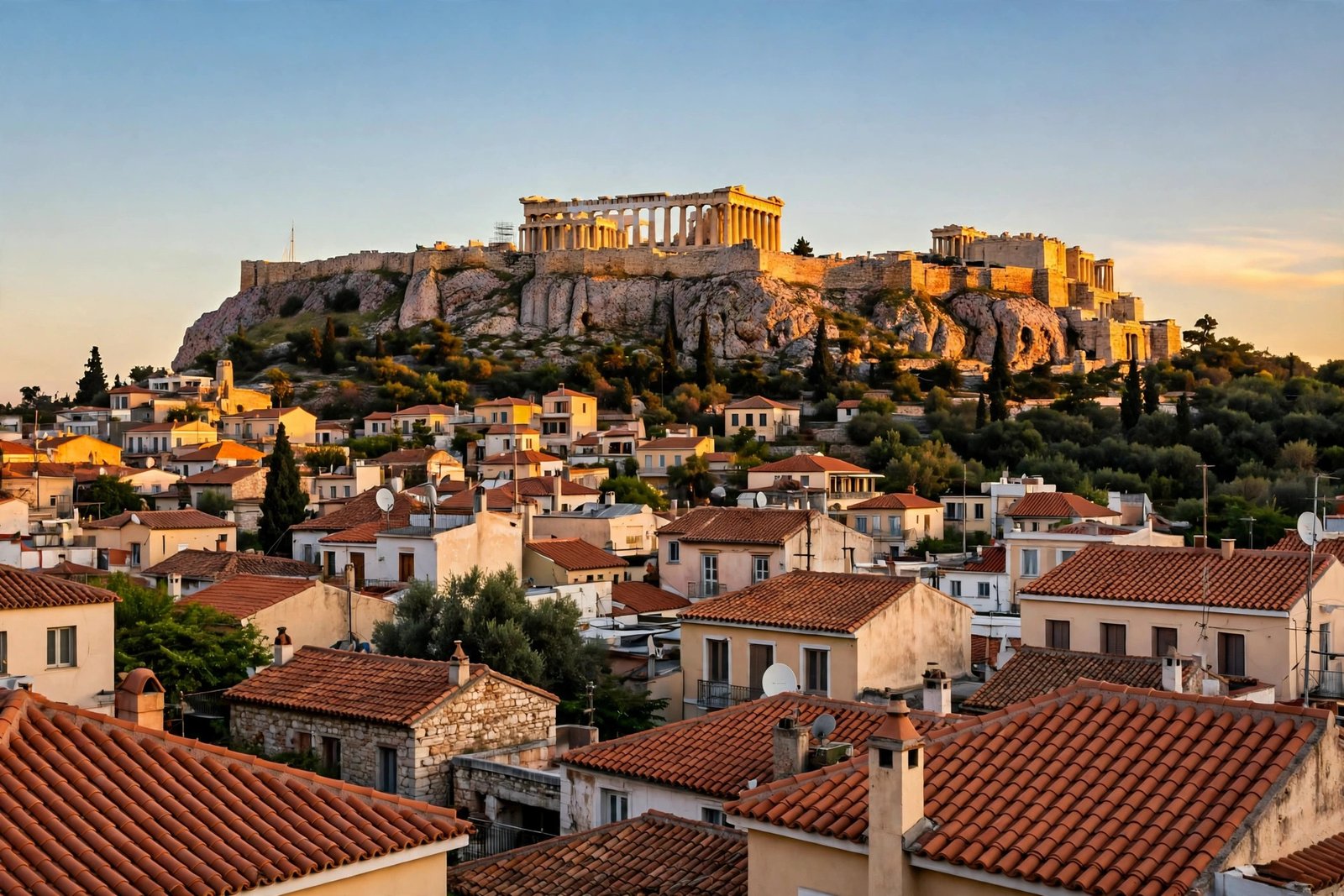
Start in Athens, where the Acropolis glows honey-pink at dusk and the neighbourhoods below it — Plaka, Psyrri, Koukaki — are made for wandering. A dorm bed in central Athens runs €20–35 in summer and drops to €15–22 in winter, and the metro is one of Europe’s cheapest at around €1.20 a ride. The big change for 2027: the old €30 combined ticket is gone. The Acropolis now costs €30 on its own, booked for a timed slot at the Ministry of Culture’s ticket site, and the Acropolis Museum is a separate €20. Pick your sites instead of trying to see them all — the Acropolis plus the Ancient Agora (€20) is the sensible core at €50. And if you can time it, state archaeological sites are free for everyone on the first and third Sundays of each month from November to March.
Santorini: Yes, But Do It Cheaply
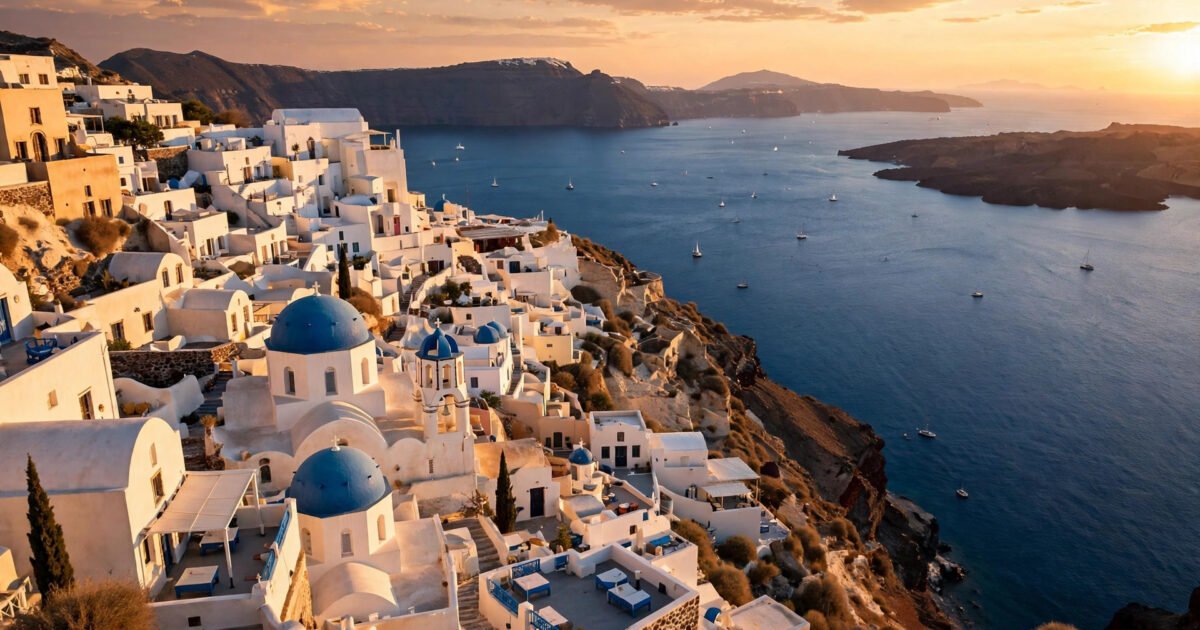
Santorini is the island everyone pictures — whitewashed cubes clinging to a volcanic caldera, blue domes, sunsets that stop traffic in Oia. It is also the most expensive island in Greece, and the one where budget travellers need a plan. Stay in Karterados or Kamari instead of Oia or Fira, eat where the locals eat (a gyros in Fira’s back streets, not a caldera-view table), and take the local bus — €2–3 a ride — instead of taxis that vanish in peak season. The caldera cruise is worth the splurge once, and the black-sand beaches at Perissa and Kamari are free. Better still, treat Santorini as two or three nights, not a week: see the sunset, swim in the caldera, then move on to a cheaper island before the bill bites.
Mykonos: The Party Island on a Budget (Yes, Really)
Mykonos has a reputation for €20 cocktails and beach clubs with minimum spends, and that reputation is earned — on the south coast in August. But the old town of Chora, with its tangled lanes, windmills and Little Venice, costs nothing to wander, and the island’s north-coast beaches are quiet and free. Stay in a guesthouse outside Chora, eat souvlaki standing up, and use the public bus to the beaches instead of taxis. If the party scene is not your thing, skip Mykonos entirely and spend the money on an extra island instead — nobody ever regretted more Naxos.
Naxos and Paros: The Budget Traveller’s Cyclades
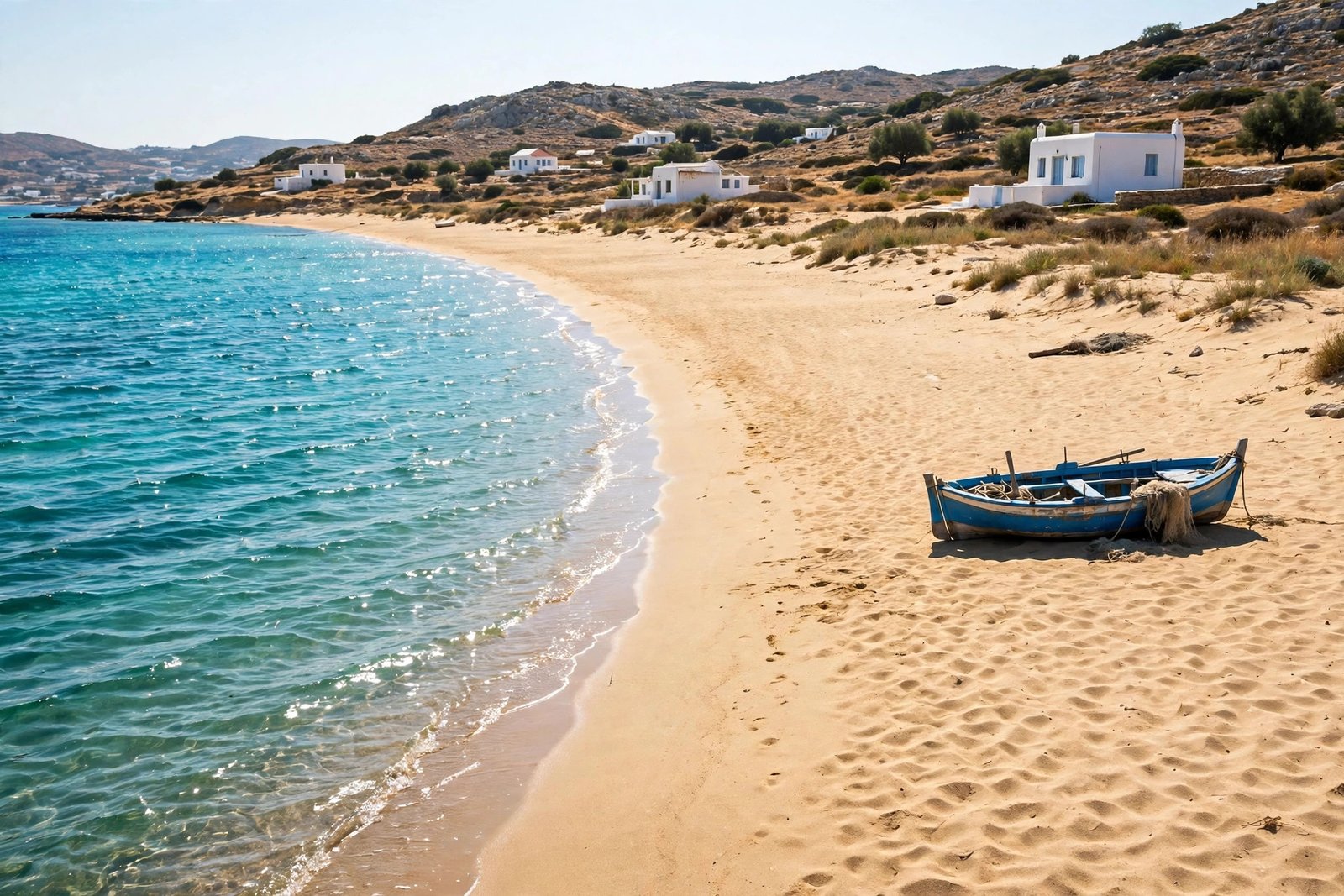
This is where the Santorini alternatives story comes alive. Naxos has the longest sandy beaches in the Cyclades, a mountain village (Apiranthos) that feels untouched, the Portara — a giant marble doorway standing alone by the harbour — and rooms for €35–50 a night for a double in summer. Paros is smaller and prettier, with the fishing village of Naoussa and the golden beach at Kolymbithres. Both islands have good bus networks, family-run tavernas where a meal is €12–20, and ferries that connect to Santorini in under two hours. Anchor your island-hopping here and you will spend half what the Santorini-only crowd spends.
Crete: An Island Big Enough for a Whole Trip
Crete is Greece’s largest island and its best value: a full trip in itself, with two characterful cities (Chania and Heraklion), the Samaria Gorge — one of Europe’s great hikes — and beaches from pink-sand Elafonissi to the palm grove at Vai. Dorms and guesthouses are plentiful, the food is famously good and cheap, and the island’s size keeps prices honest. The ferry from Athens takes an overnight crossing, which doubles as your hotel for the night. Budget travellers can easily spend a week on Crete alone and still feel they have only scratched the surface.
Meteora: Monasteries in the Sky
Inland Greece hides one of Europe’s most extraordinary sights: monasteries perched on top of sandstone pillars hundreds of metres high, built by monks who wanted to be closer to heaven. Meteora is a half-day by train or bus from Athens, the monasteries charge a small entry fee (around €3 each), and the town of Kalambaka below has cheap rooms and tavernas. Visit in May or September, when the light is soft and the crowds are thin, and hike the trails between the monasteries instead of taking the tour bus — the views are better on foot and it costs nothing.
Corfu and the Ionian Islands: Green Greece
The Ionian islands — Corfu, Kefalonia, Lefkada — are greener and softer than the Cyclades, with Venetian old towns, turquoise bays and olive groves instead of white cubes. Corfu Town is a UNESCO-listed maze of Venetian lanes, and Lefkada is connected to the mainland by a causeway, so you can drive there and skip the ferry fare entirely. These islands suit travellers who want beaches and culture without the Cyclades price tag, and they pair well with a few days in Albania, just across the water.
How Much Does Greece Cost in 2027? Real Daily Budgets
These are built from 2026 prices published by Greek hotel surveys, ferry operators and travel guides — the most recent figures available as you plan. Prices are per person, sharing a double room, before international flights.
Budget Traveller: €50–90 Per Day
- Sleep: Hostel dorms €18–45 a night (Athens €20–35 in summer, €15–22 in winter); small family rooms on quieter islands €35–50 for a double.
- Eat: Bakery breakfast €2–3, gyros or souvlaki €3.50–4.50, a taverna main with house wine €12–20. Supermarkets keep costs down — a litre of water €0.50–1.
- Move: Athens metro about €1.20 a ride, island buses €2–4, scooter rental €15–25 a day.
- Do: Beaches are free; the Acropolis €30 is the big-ticket item, most other sites €5–20.
A budget day: dorm bed (€25) + bakery breakfast (€2) + gyros lunch (€4) + taverna dinner (€14) + bus fares (€5) + one sight averaged (€10) = ~€60.
Mid-Range Traveller: €100–180 Per Day
- Sleep: Comfortable hotel or apartment €90–180 a night (double room — couples effectively halve this); add the climate resilience fee of €1.50–15 a night depending on the hotel’s star rating and the season.
- Eat: Restaurant meals €15–30, a nice seafood dinner €25–40, good local wine €4–6 a glass.
- Move: A rental car for a few days (€30–80 a day), high-speed ferries between islands (€70–90), occasional taxis.
- Do: A caldera cruise or guided day trip €50–150, a boat tour, a wine tasting.
Two people travelling mid-range typically spend €200–350 a day combined — comfortable hotels, great food, total freedom. For a full comparison of what that buys across the year, see our guide to the cheapest places to travel each month of 2027.
What Things Actually Cost (Quick Reference)
- Gyros or souvlaki pita: €3.50–4.50 in Athens, €4–6 on the islands
- Freddo espresso: €2.50–4
- Taverna main with house wine: €12–20
- Acropolis entry: €30 (timed slot, book ahead); Acropolis Museum €20
- Conventional ferry Piraeus to Santorini: from about €27–48; high-speed €70–90
- Island bus ride: €2–4
- Scooter rental: €15–25 a day; car rental €30–80 a day
- Climate resilience fee: €1.50 a night at 1–2 star hotels, €10 at 4-star, €15 at 5-star (April–October); much lower in winter
- Cruise passenger fee: up to €20 per person per port call in Santorini and Mykonos in high summer (June–September), €12 in shoulder months, €4 in winter
How to Get to Greece — and Around It
By Air
Athens is the main gateway, with budget carriers flying in from across Europe and the UK. UK return fares run roughly $80–350, US returns $500–1,200, Australian returns $1,000–2,200 — book early and fly midweek for the best prices. Domestic flights from Athens to the islands cost roughly $40–120. The Black Friday and Travel Tuesday fare window at the end of November is one of the best times to book summer 2027 flights, so watch for deals in the weeks after this guide goes live.
By Ferry: The Slow Boat Saves Real Money
Ferries are the soul of Greek island travel — and the biggest single saving available. A slow conventional ferry from Piraeus to Santorini costs roughly €27–48, while the high-speed boat on the same route costs €70–90. The slow boat takes longer, but it is steadier in rough seas and a third of the price. Book the big crossings ahead in July and August, but for shoulder season you can often buy at the port. Island-hopping tip: travel in a loop (Athens → Paros → Naxos → Santorini → Athens) rather than zigzagging, so you never pay for the same crossing twice.
Getting Around on the Islands
Most islands have affordable KTEL bus networks (€2–4 a ride) that cover the main beaches and villages. On bigger islands like Crete, a rental car for two or three days (€30–80 a day) is worth it for the freedom. Scooters (€15–25 a day) are the classic Cyclades choice, but wear a helmet and check the insurance — island roads are narrow and the wind is real. In Athens, the metro and buses cover everything a visitor needs, and the centre is best explored on foot.
Best Time to Visit Greece in 2027
- May–June and September–October: The sweet spot. Warm sea, sunny days in the mid-20s°C, hotel prices 25–40% below peak, and the islands without the August crush. September is the best month of all — the sea is at its warmest and the crowds have gone home.
- July–August: Peak season. Hot (30°C+), lively, and Santorini and Mykonos at their most expensive. Book everything ahead and expect higher prices and full ferries.
- April and November: Great for Athens, Meteora and the mainland; too cool for swimming but perfect for sightseeing, and state sites are free on the first and third Sundays from November to March.
- December–March: Quiet season. Athens is mild and cheap, the islands are sleepy — many hotels and tavernas close — but the cruise fee drops to €4 and you will have the Acropolis almost to yourself.
For the classic beach-plus-culture trip, aim for late May, June or September. If you are still choosing your month, our best places to travel in June 2027 guide shows how Greece stacks up against the rest of the summer map.
The Perfect 10-Day Greece Itinerary on a Budget
Days 1–2 — Athens. Arrive, settle into Koukaki or Psyrri, and spend day one on the Acropolis (book the 8 a.m. slot) and the Acropolis Museum. Day two: the Ancient Agora, the National Archaeological Museum, and dinner in a Psyrri taverna.
Day 3 — Athens to Naxos. Morning ferry from Piraeus (slow boat, about 5–6 hours — bring a book and watch the islands slide past). Evening in Naxos Town, dinner by the harbour, and a walk out to the Portara at sunset.
Days 4–5 — Naxos. Beach day at Agios Prokopios or Plaka, a bus up to the mountain village of Apiranthos, and a hike to the Temple of Demeter. Eat in the villages, where a taverna meal is half the harbour price.
Day 6 — Naxos to Paros. Short, cheap ferry (under an hour). Explore Parikia’s old town, then the fishing village of Naoussa in the evening.
Day 7 — Paros to Santorini. Fast ferry, two hours. Check into Karterados or Kamari, take the bus to Oia for the sunset, and eat back in Fira’s back streets.
Day 8 — Santorini. Morning at the black-sand beach, afternoon caldera cruise if the budget allows, and a final sunset from the castle in Oia — arrive early, it fills up.
Day 9 — Santorini to Athens, then Meteora. Ferry back to Piraeus, then the train or bus north to Kalambaka. Evening in the shadow of the pillars.
Day 10 — Meteora and depart. Morning hiking between the monasteries (entry about €3 each), afternoon train back to Athens for your onward flight. Total overland and ferry transport for the ten days: roughly €150–220 per person if you take slow ferries and buses.
Practical Tips for Greece in 2027
Money: The Euro — and the Fees on Top
Greece uses the euro. Cards work almost everywhere now, but carry cash for small tavernas, buses and island shops. The two fees to budget for: the climate resilience fee, charged per room per night (€1.50 at 1–2 star hotels up to €15 at five-star in April–October, much lower in winter), and the cruise passenger fee if you arrive by ship (up to €20 in Santorini and Mykonos in summer). Neither applies to land-based travellers except the hotel fee, and both drop sharply outside the summer months — another reason to travel in shoulder season.
The Cheapest Greek Islands, Ranked
If the budget is tight, skip Santorini and Mykonos as bases and build your trip around these instead: Naxos and Paros (best all-round value), Crete (biggest and cheapest per day), and Lefkada (drive-in, no ferry). The most underrated destinations list includes several Greek islands that still fly under the radar, and our hidden gems in Europe guide has more quiet corners worth adding to the route.
Food: Eat Like a Local
The cheapest meal in Greece is also one of the best: a gyros or souvlaki pita, €3.50–4.50, is a full lunch. Bakeries sell cheese pie (tyropita) for €2–3, markets sell feta, tomatoes and bread for almost nothing, and a taverna’s set lunch is usually far cheaper than dinner. Drink the house wine — it is good, local and a fraction of the bottled price. And never pay for water in a restaurant when the tap water is fine in most of the country.
Language, SIM Cards and Safety
English is widely spoken in tourist areas. A local SIM with generous data costs a few euros — buy one on arrival at the airport. Greece is generally very safe, including for solo travellers; normal precautions apply, and the biggest risk is sunburn. Tap water is safe in Athens and most towns, though many travellers prefer bottled water on the smaller islands.
Greece Travel FAQs
Is Greece expensive in 2027?
It depends where you go. A budget traveller can manage on €50–90 a day, and a mid-range trip runs €100–180 a day. Santorini and Mykonos cost 30–50% more than Naxos, Paros or Crete, so the islands you choose matter more than anything else. Shoulder season (May–June, September–October) cuts hotel prices by 25–40%.
How many days do you need in Greece?
Seven days covers Athens plus one or two islands. Ten days — Athens, two islands and Meteora — is the sweet spot, and it is the itinerary in this guide. With two weeks, add Crete or Corfu. Under five days, pick Athens plus one island, not a rushed island-hop.
What is the cheapest Greek island to visit?
Naxos and Paros offer the best balance of beauty and price in the Cyclades, with Crete the cheapest of the big islands per day. Lefkada is the cheapest to reach, since you can drive there from the mainland without a ferry. Santorini and Mykonos are the most expensive by a wide margin.
Do I need a visa to visit Greece?
US, UK, Canadian and Australian citizens can enter visa-free for up to 90 days within a 180-day period as tourists. Your passport should be valid at least 3 months beyond your stay. From 2027, check whether the EU’s new EES/ETIAS border system applies to your nationality before you travel, as the rollout has been phased.
Is the Acropolis ticket really €30 now?
Yes. The Acropolis costs €30 all year round since the 1 April 2025 price change, with a €15 reduced ticket, and every ticket is for a timed entry slot booked through the Ministry of Culture’s ticket site. The old €30 combined ticket that covered seven sites is gone — each site now sells its own ticket, so buy only the ones you will actually visit.
When is the best time to visit Greece on a budget?
Late May, June and September. The sea is warm, the weather is in the mid-20s°C, hotel prices are 25–40% below the August peak, the cruise fee is lower, and the islands are busy enough to be lively without being packed. If you want the absolute lowest prices, November to March is cheapest — but many island hotels and tavernas close.
Final Thoughts: Go in 2027, and Go Smart
Greece in 2027 rewards the traveller who plans around the fees and the islands, not the one who books the first Santorini hotel they see. Anchor on Naxos or Paros, take the slow ferry, eat gyros for lunch, travel in June or September — and you will get the Greece of the postcards for a genuinely budget price. The sea is the same blue whether your hotel costs €50 or €500 a night. Pack light, book the Acropolis slot early, and go.
Ready to plan your trip? Compare Greece with the other big summer bets in our best places to travel in 2027 guide, check the cheapest winter sun destinations if you are travelling sooner, and browse the best places to travel in September 2027 for the perfect shoulder-season window. Happy travels!