Picture this: you are sipping mint tea on a rooftop in Marrakech at golden hour, the call to prayer rolling over a sea of ochre rooftops while the Atlas Mountains glow pink in the distance. Dinner — a tagine that was bubbling away for hours — costs less than your morning coffee back home. Tomorrow, a camel is waiting to carry you into the Sahara. That is Morocco, and this Morocco travel guide 2027 is your complete playbook for doing it on a budget. Inside: the best places, real daily costs, a 10-day itinerary, the best time to visit, and practical tips.
Morocco Travel Guide 2027: Why It’s Winter Sun’s Best-Value Bet
Morocco is having a moment, and the numbers prove it. Interest from US travelers has surged since the 2026 World Cup, and as co-host of the 2030 World Cup with Spain and Portugal, Morocco is staying firmly in the travel news cycle. Airlines are responding with new winter routes — Jet2 to Agadir, easyJet holidays to Marrakech — and UK booking data now ranks Morocco among the most-booked winter-sun destinations.
But here is the real reason 2027 is the year to go: value. Morocco remains one of the most affordable winter-sun destinations within easy reach of the US, UK, Canada, and Western Europe. Freshly squeezed orange juice on Jemaa el-Fnaa for pennies, a bowl of harira soup for a dollar or two, a private room in a traditional riad for the price of a hostel dorm in Paris.
What makes 2027 the year to go? Three things:
- The momentum is real. New airline routes and hotel openings mean Morocco is more accessible than ever, while infrastructure for the 2030 World Cup is improving trains, airports, and roads across the country.
- Winter is its prime season. November to February brings mild 15–20°C days, cool evenings, and low prices — perfect sightseeing weather while Europe shivers.
- The value gap is enormous. A week in Morocco costs roughly a third of the same week in Spain or Italy — same sunshine, far richer culture, a fraction of the bill.
Best Places to Visit in Morocco
Marrakech: The Red City
Almost every trip starts in Marrakech, and for good reason. Jemaa el-Fnaa, the city’s main square, transforms every evening into the world’s most chaotic open-air food market — grills, drummers, storytellers, and acrobats. Get lost in the souks (haggling is expected and part of the fun), visit the Bahia Palace and Saadian Tombs, and find calm at the Jardin Majorelle. Budget two to three nights; the medina is best explored on foot.
Fes: The Spiritual Heart
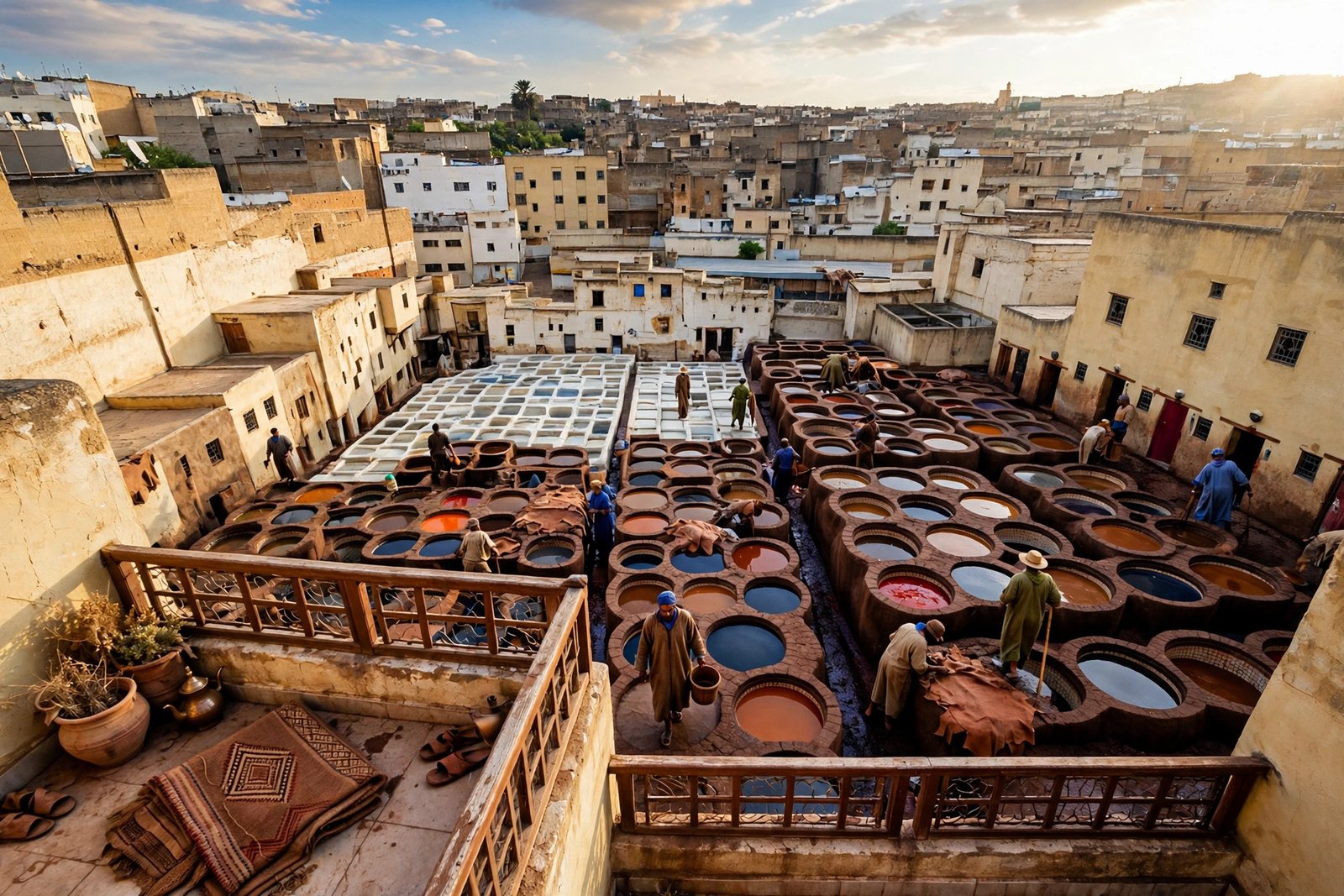
Fes is the Morocco of a thousand years ago, and it never changed. Fes el-Bali, its old medina, is a UNESCO-listed labyrinth of over 9,000 alleyways where donkeys still haul goods. Don’t miss the Chouara Tannery (viewed from the surrounding leather-shop terraces), the Al-Qarawiyyin Mosque and University (one of the world’s oldest universities), and the Bou Inania Madrasa. Hire an official guide for your first morning — it is money well spent.
Chefchaouen: The Blue City
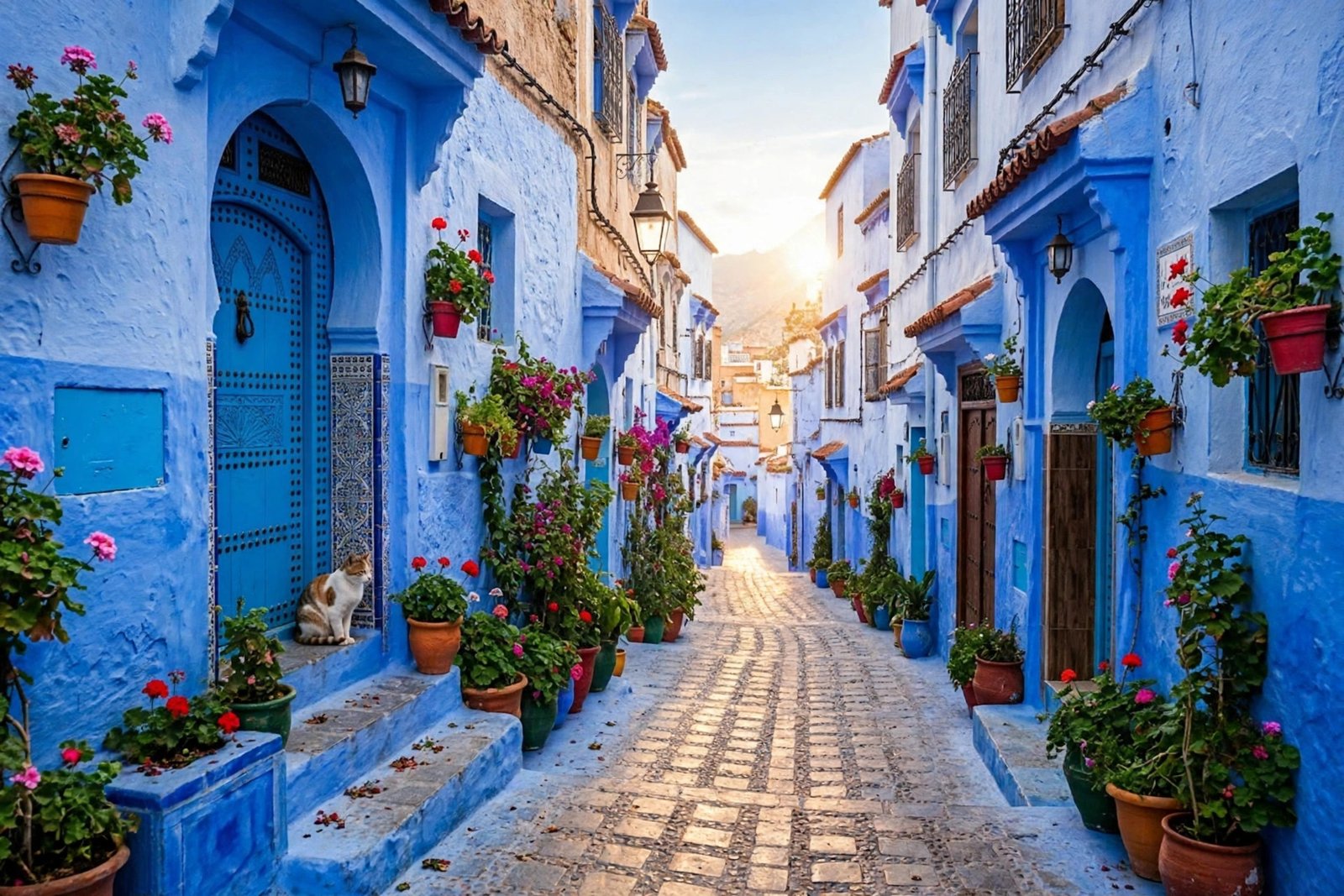
Tucked into the Rif Mountains, Chefchaouen is Morocco’s most photogenic town — nearly every street, staircase, and doorway washed in shades of blue. Come early in the morning to photograph the empty lanes, hike to the Spanish Mosque for sunset views over the blue medina, and buy woven rugs and goat cheese from the mountain villages. One to two nights is perfect.
The Sahara at Merzouga: Erg Chebbi’s Dunes
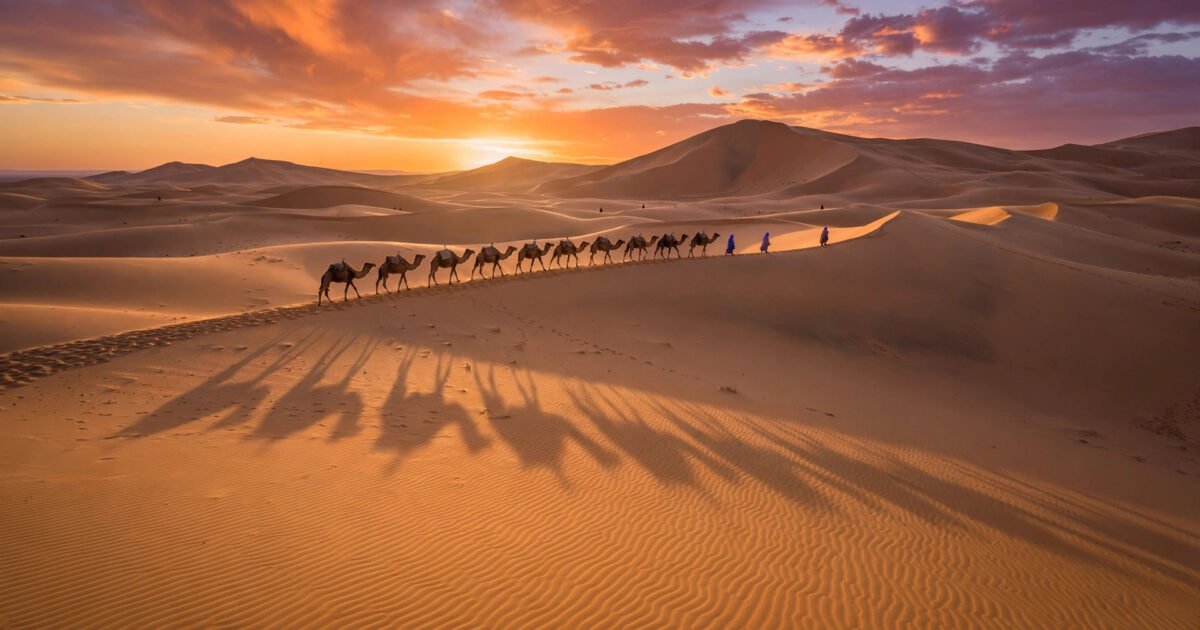
No Morocco trip is complete without a night in the Sahara. The great dunes of Erg Chebbi near Merzouga rise up to 150 meters, and the classic experience is riding a camel in at sunset, drumming around a campfire under a carpet of stars, and waking to sunrise over the dunes. An overnight camel trek with dinner, breakfast, and a Berber camp typically costs $30–80 per person — one of the best-value bucket-list experiences anywhere.
Essaouira: The Windy City by the Sea
Three hours west of Marrakech, Essaouira is the easygoing counterpoint to the inland intensity. A walled port town with a working fishing harbor, white-and-blue medina, and a long sandy beach, it is famous for fresh grilled fish at the harbor stalls, Gnawa music, and year-round wind that makes it Africa’s kitesurfing capital. Ideal for two slow days.
The Atlas Mountains: Berber Villages and Kasbahs
The High Atlas rise dramatically behind Marrakech. Imlil is the gateway to Mount Toubkal (4,167m, North Africa’s highest peak), while the road south crosses the Tizi n’Tichka pass to Aït Benhaddou — the fortified kasbah village where Gladiator and Game of Thrones were filmed. The Todra and Dades gorges, with their towering rust-red canyon walls, are a road-tripper’s dream.
Rabat: The Underrated Capital
Morocco’s actual capital is calm, coastal, and criminally overlooked. The Kasbah of the Udayas, the Hassan Tower, wide boulevards, and a relaxed beach scene make it a lovely stop between Casablanca and the north. Give it a night, or at least a day trip.
Agadir: Winter-Sun Beach Base
If beach time matters, Agadir is Morocco’s purpose-built resort city — 9 kilometers of golden sand, reliable winter sunshine, and new direct winter flight routes making it more accessible than ever. It is less atmospheric than Essaouira, but for December-through-February sunbathing and surf, it is hard to beat.
How Much Does Morocco Cost in 2027? Real Daily Budgets
These reflect current 2026/2027 prices. Morocco uses the dirham (MAD), a closed currency — you cannot buy it before you arrive, so exchange cash or use ATMs on arrival. The exchange rate hovers around 10 MAD to $1 USD, which makes mental math easy: drop a zero and you have the dollar price.
Budget Traveler: $30–60 Per Day
- Sleep: Hostel dorms $8–15 per night; budget riads with private rooms from $20–25.
- Eat: Street tagine $3–6; msemen pancakes or harira soup $1–3; mint tea $1–2; full meal at Jemaa el-Fnaa’s food stalls $3–5.
- Move: Petit taxis $1–4 within cities (insist on the meter); intercity CTM/Supratours buses cheap and comfortable.
- Do: Medinas and souks are free; most palaces, madrasas, and gardens $2–7 entry.
A budget day: dorm bed ($12) + street breakfast ($2) + market lunch ($4) + Jemaa el-Fnaa dinner ($5) + taxis and buses ($5) + one sight ($3) = ~$31.
Mid-Range Traveler: $80–150 Per Day
- Sleep: Beautiful traditional riad $40–80 per night (double room — couples effectively halve this); some include breakfast on a courtyard terrace.
- Eat: Proper restaurant meals $8–15; a seafood dinner at Essaouira’s harbor $10–15; a hammam and massage session $15–30.
- Move: Grand taxis between towns, occasional private transfers, or a rental car (~$25–40/day).
- Do: Guided medina tour $20–40; shared 3-day Sahara desert tour $100–150 all-inclusive.
Two people traveling mid-range typically spend $140–220 per day combined — gorgeous riads, excellent food, total comfort.
What Things Actually Cost (Quick Reference)
- Mint tea in a café: 10–15 MAD (~$1–1.50)
- Street tagine or couscous: 30–60 MAD (~$3–6)
- Fresh orange juice on Jemaa el-Fnaa: 5–10 MAD (~$0.50–1)
- Petit taxi across town: 10–40 MAD (~$1–4)
- Marrakech to Fes train, 2nd class (6.5 hours): from ~200 MAD (~$20) — book ahead on ONCF for the cheapest fares
- Sahara overnight camel trek + Berber camp: $30–80 per person
- Bahia Palace or Jardin Majorelle entry: 30–150 MAD (~$3–15)
- Local SIM with data bundle: 50–120 MAD (~$5–12)
- Hammam (public, self-service): 15–50 MAD (~$1.50–5); tourist hammam with scrub: 150–300 MAD (~$15–30)
Best Time to Visit Morocco in 2027
- November–February: Prime season. Mild days (15–20°C in Marrakech and the coast), cool nights, green landscapes, and the lowest prices. Pack a warm layer for desert nights and Fes.
- March–May and September–October: The sweet spot for everywhere. Warm days, comfortable nights — ideal for the Atlas and coast alike.
- June–August: Peak heat inland (Marrakech can top 40°C) and peak holiday crowds on the coast. The mountains and Essaouira’s breeze offer relief.
For the classic first trip — medinas, Sahara, and coast — aim for November through February, or March to May.
The Perfect 10-Day Morocco Itinerary
Day 1 — Arrive in Marrakech. Settle into a medina riad, then head to Jemaa el-Fnaa as the evening food stalls fire up. Eat your first $4 dinner surrounded by drummers.
Day 2 — Marrakech medina. Bahia Palace in the morning, the souks at midday (haggle hard — start at a third of the asking price), Jardin Majorelle in the afternoon. Sunset mint tea on a rooftop.
Day 3 — Atlas and Aït Benhaddou. Cross the Tizi n’Tichka pass (2,260m) into Berber country. Explore the Aït Benhaddou kasbah in the late-afternoon light. Overnight in the Dades Valley.
Day 4 — Todra Gorges to Merzouga. Walk the towering Todra canyon in the morning, then drive east to Merzouga. Meet your camels at sunset and ride into the Erg Chebbi dunes.
Day 5 — Sahara sunrise, then Fes. Dawn on the dunes, breakfast at camp, then the long but scenic drive north to Fes. Arrive in Fes el-Bali by evening.
Day 6 — Fes medina. Hire an official guide for the morning: the Chouara Tannery, Al-Qarawiyyin, Bou Inania Madrasa. Afternoon on your own in the souks — Fes has Morocco’s best handicrafts at the lowest prices.
Day 7 — Fes to Chefchaouen. Morning bus or grand taxi into the Rif Mountains. Arrive by afternoon; get happily lost in the blue lanes and hike to the Spanish Mosque for sunset.
Day 8 — Chefchaouen to Rabat. Slow morning in Chefchaouen, then travel to the capital. Evening stroll through the Kasbah of the Udayas.
Day 9 — Rabat to Essaouira. Travel day south to the coast (via Marrakech if needed). Evening: grilled fish at Essaouira’s harbor stalls and Gnawa drummers on the ramparts.
Day 10 — Essaouira, then depart. Morning on the beach or in the medina’s art galleries and argan cooperatives. Afternoon transfer to Marrakech (3 hours) for your flight home.
Total overland transport for this loop: roughly $80–120 per person using trains, CTM buses, and shared grand taxis — or $400–600 total with a private driver.
Practical Tips for Morocco
Money: The Closed Dirham
The Moroccan dirham (MAD) is a closed currency — you cannot legally buy it outside Morocco or take large amounts out. Bring euros, dollars, or pounds and exchange on arrival, or simply use ATMs (widely available in cities; they dispense dirhams at fair rates, though your bank may charge a fee). Cash is king in souks, medinas, taxis, and small towns — cards work in riads, restaurants, and malls. Roughly 10 MAD = $1 USD.
SIM Cards and Connectivity
Buy a local SIM at the airport or any phone shop — Maroc Telecom, Orange, and Inwi all compete for tourists. A SIM with a generous data bundle costs roughly 50–120 MAD ($5–12); you will need your passport to register. Wi-Fi is good in riads and cafés, but a local SIM is essential for maps in the medinas and on road trips.
Dress Code
Morocco is a Muslim-majority country, and modest dress earns you respect and far less hassle — especially outside the big tourist zones. Cover shoulders and knees in medinas and rural areas. Beachwear is fine at Agadir and Essaouira’s beaches, but not in town.
Safety, Scams, and Haggling
Morocco is generally safe for tourists, including solo travelers, with violent crime against visitors rare. The real risks are petty: unofficial “guides” who latch on in the medina and demand payment, and taxi drivers who “forget” the meter. A firm, smiling “no, thank you” (la, shukran) handles most of it. In the souks, haggling is expected — offer a third to half of the opening price, keep it friendly, and walk away if needed. Agree all taxi fares before getting in, or insist on the meter.
Morocco Travel FAQs
Is Morocco safe for tourists in 2027?
Yes — including for solo travelers and families. Violent crime against visitors is rare, and tourist areas are well-policed. Take normal precautions against pickpockets in crowded medinas and be firm with touting, and you will be fine.
Do I need a visa to visit Morocco?
US, UK, EU, Canadian, and Australian citizens enter visa-free for up to 90 days — just arrive with a valid passport. Your passport should be valid for the duration of your stay, though six months’ validity is the safest bet as some airlines check. Double-check current rules before booking, as policies can change.
How many days do you need in Morocco?
Ten days covers the classic loop: Marrakech, the Atlas and Aït Benhaddou, a Sahara night, Fes, Chefchaouen, Rabat, and Essaouira. With a week, choose Marrakech + Sahara + one of Fes or Essaouira.
Can you drink the tap water in Morocco?
Most travelers stick to bottled water — it is cheap and everywhere (a 1.5-liter bottle costs about 6 MAD, under $1).
When is the best time to visit Morocco?
November to February for mild winter sun and the lowest prices — Morocco’s prime season. March to May and September to October are excellent all-rounders. Avoid June to August inland unless you love serious heat; the coast and mountains stay pleasant.
Is Morocco cheap to travel?
Very — it is one of the best-value destinations anywhere for winter sun. Budget travelers manage on $30–60 a day, mid-range comfort runs $80–150, and signature experiences like a Sahara overnight ($30–80) cost a fraction of comparable adventures elsewhere.
Final Thoughts: Go in 2027, While the Value Lasts
Morocco in 2027 sits in a rare sweet spot: surging global interest, new flight routes, improving infrastructure — and prices that have not caught up with the hype yet. The World Cup spotlight will only push costs up as 2030 approaches, so the traveler who goes now gets the medinas, the dunes, and the winter sun at yesterday’s prices. Pack light, bring cash in small denominations, and go.
Ready to plan your trip? Pair Morocco with our Egypt travel guide 2027 for the ultimate North Africa combination, browse the most beautiful places to visit for your next adventure, and if winter sun is your thing, check our best Christmas markets in Europe or this 7-day Iceland winter itinerary for the colder end of the season. Happy travels!