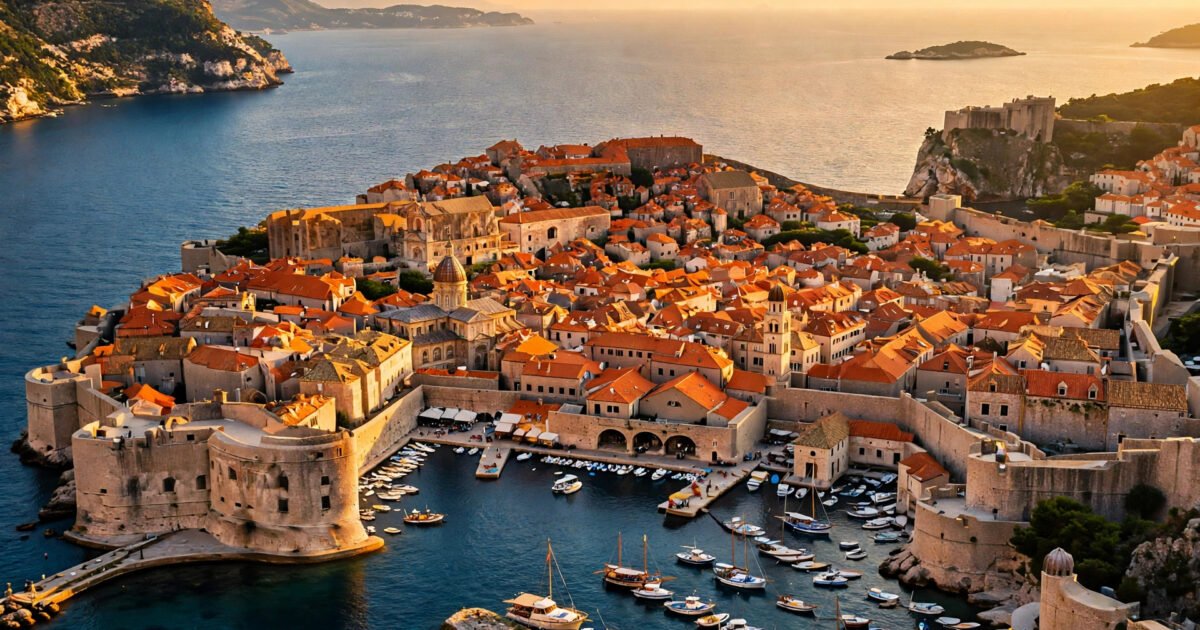
Picture this: a walled medieval city glowing gold above a turquoise Adriatic, waterfalls spilling through a forest so green it looks edited, and a seafood dinner on a harbour promenade for less than a sandwich costs in London. That is Croatia — and this Croatia on a budget 2027 guide is your complete playbook for seeing it without the eye-watering bill. This guide covers the best places, real daily costs, how to get around, the best time to go, a 7-day itinerary, and the money-saving tricks that actually work.
Croatia on a Budget 2027: Is It Still Cheap?
First, honesty: Croatia is not the bargain it was ten years ago. The country switched to the euro on 1 January 2023, prices on the coast have crept up every summer since, and Dubrovnik in August is now one of the most expensive cities on the Mediterranean. But Croatia is still very doable on a budget — if you play it right. The trick is the same one that keeps Europe’s cheapest cities cheap: go in shoulder season, sleep outside the old towns, eat where locals eat, and mix one or two splurges with a lot of free coastline.
What makes 2027 the year to go? Three things:
- The value gap is still real inland and off-season. A dorm bed in Zagreb costs €18–28 all year, and the same Dubrovnik hotel room that costs over €500 for two nights in July drops to around €200 in February — a factor of two to three on the exact same bed.
- The infrastructure is built for budget travel. Cheap long-distance buses, a huge ferry network, and hundreds of family-run sobe (private rooms) mean you can cross the whole country without a car.
- 2027 is the year to book early. Dubrovnik is keeping its cruise-ship fee for 2027 and visitor numbers keep climbing — the travellers who lock in May, June or September rooms now get the best prices before summer demand peaks.
Best Places to Visit in Croatia on a Budget
Dubrovnik: The Pearl of the Adriatic (Done Smart)
Dubrovnik is the reason most people come to Croatia — and the place most likely to wreck a budget. The famous City Walls cost around €40 in high season (they drop to about €20 in December), a dorm bed runs €35–60 in peak summer, and Old Town restaurant mains run €18–40. But Dubrovnik is absolutely worth it if you go cleverly: visit in May, June or September, walk the walls at opening time before the cruise crowds arrive, stay in Lapad or Gruž instead of inside the walls, and eat in the back streets rather than on Stradun. The 1-day Dubrovnik Pass (€40) bundles the walls, 10 museums and city buses — buy it if you plan to do the walls plus two museums, otherwise the walls alone are the better deal.
Free in Dubrovnik: the sunset from the top of Srđ hill (hike the trail up instead of paying €30 for the cable car return), the Banje beach viewpoint, and wandering the Old Town after 8 PM when the day-trippers leave. The city bus costs €2.50 a ride on board, or €5.31 for a 24-hour ticket — and the airport shuttle is €10 one way.
Split: Croatia’s Best-Value Coastal City
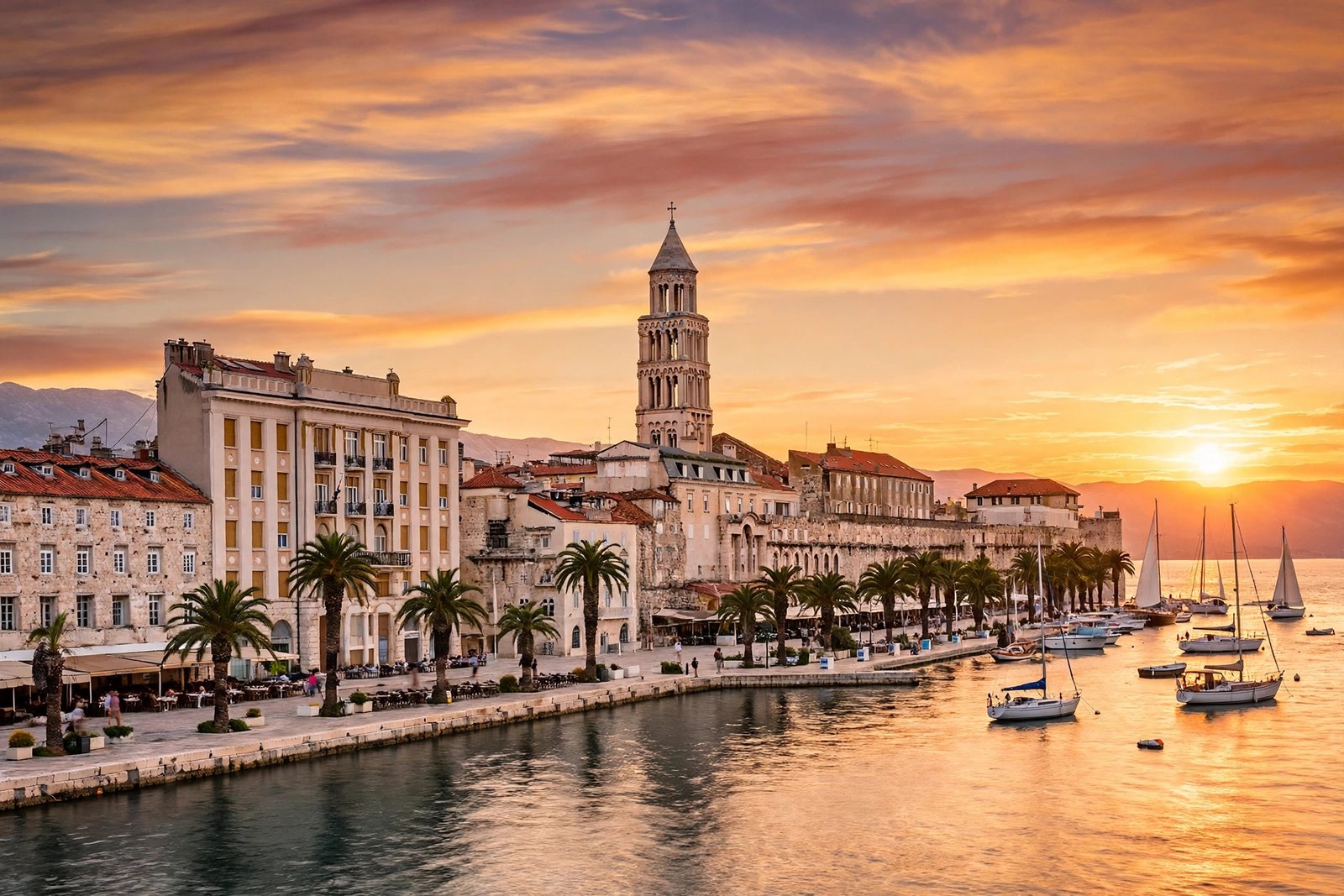
Split is the budget traveller’s Dubrovnik: a 1,700-year-old Roman palace you can walk through for free, a palm-lined Riva promenade, and a ferry port that opens up the whole Dalmatian island chain. Diocletian’s Palace is not a museum behind a ticket desk — it is the living old town, and wandering its marble lanes costs nothing. Climb Marjan Hill for the best sunset view in the city (free), swim at Bačvice beach, and take the ferry to Hvar or Brač for the day. Dorms in Split run about €25–45 in peak summer and far less in shoulder season, and the city makes a perfect base for 2–3 days.
Plitvice Lakes: Croatia’s Greatest Natural Wonder
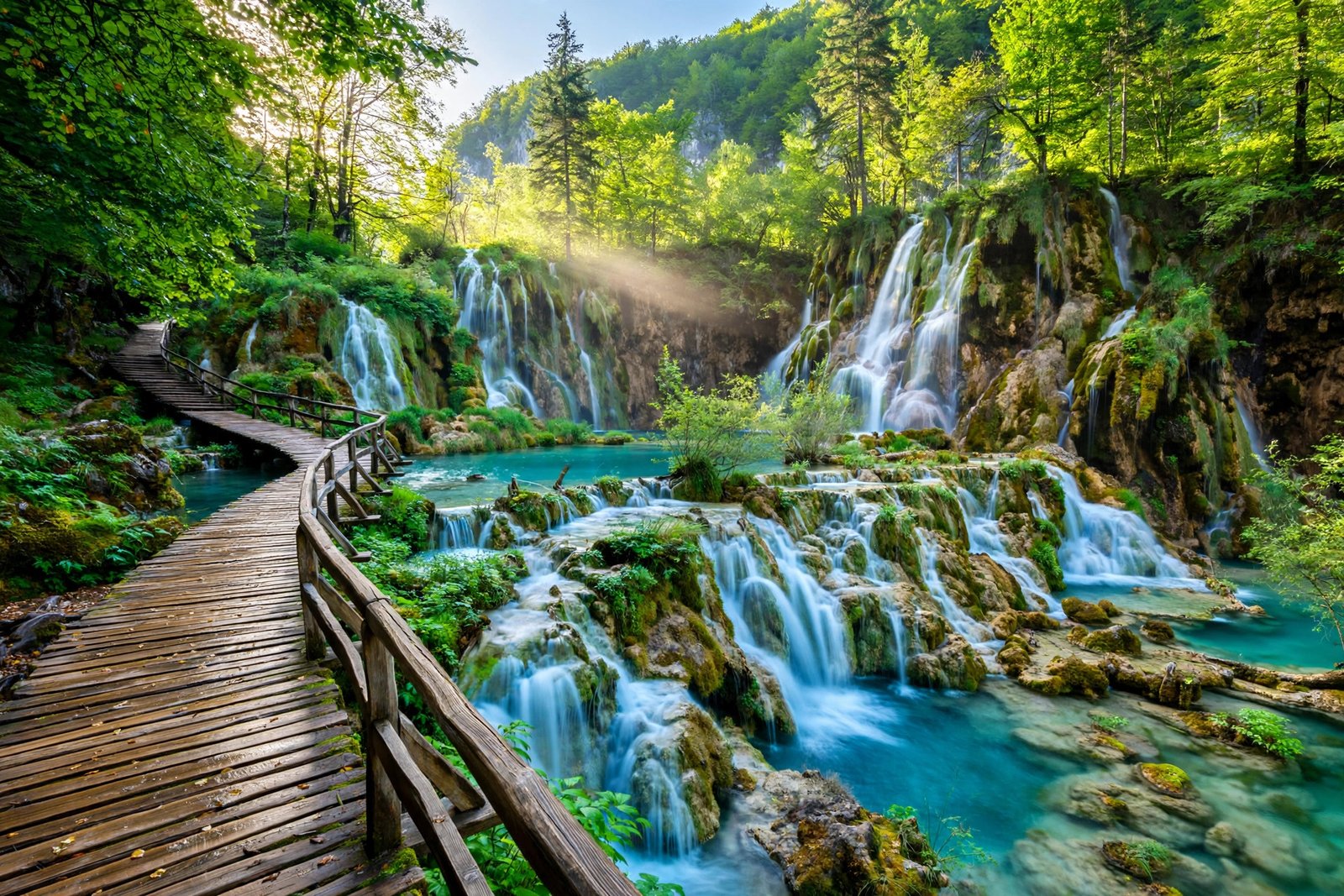
Plitvice Lakes National Park is the single most beautiful place in Croatia — 16 terraced turquoise lakes connected by waterfalls, crossed by wooden boardwalks. It is also the one place where timing changes the price dramatically: a summer ticket costs about €40, spring and autumn around €23.50, and winter only about €10. Go in May, June or October and you get the waterfalls at full flow, the ticket at half price, and the boardwalks without the summer queues. Book your entry slot online in advance — the park caps daily visitors, and summer slots sell out.
Hvar: The Island That Is Cheaper Than Its Reputation
Hvar Town has a party-island reputation and August prices to match — but Hvar the island is a different story. Base yourself in Stari Grad or Jelsa instead of Hvar Town, take the €6–8 Jadrolinija ferry from Split to Stari Grad, and you get lavender fields, quiet coves, and konoba dinners for half the price. The fast catamaran to Hvar Town costs €10–20 and takes about an hour. Even in Hvar Town, the fortress hike (with the best view on the island) costs a few euros, and the Pakleni Islands are a cheap water-taxi ride away.
Zagreb: The Capital Nobody Budgets For (But Should)
Zagreb is the cheapest major stop in Croatia and the easiest place to start. Dorm beds run €18–28 all year, a tram ticket costs under €1, and the Upper Town — St Mark’s Square, the Stone Gate, the funicular — is a compact, walkable delight. The city’s café culture is famously cheap by coastal standards, and the Dolac market is the place to stock up on fruit, cheese and burek for a few euros. Give it two nights: one for the old town, one as a launchpad for Plitvice or the Zagorje hills.
Istria: Rovinj, Pula and the Truffle Hills
Istria, the heart-shaped peninsula in the north-west, is Croatia’s foodie corner — Venetian hilltop towns, Roman ruins in Pula, and truffle country around Motovun. Rovinj is the prettiest town on the coast and noticeably cheaper than Dubrovnik, while Pula’s Roman amphitheatre (one of the best-preserved in the world) costs a fraction of a Rome ticket. Istria pairs beautifully with a trip from Venice or Ljubljana, and it is the warmest corner of Croatia in early spring.
Zadar, Korčula and Krka: The Budget Coast
Zadar is the underrated gem of the Dalmatian coast — a Roman forum, the Sea Organ (waves playing music through stone steps), and the Sun Salutation light show, all free, with prices well below Split and Dubrovnik. Korčula, the walled island town said to be Marco Polo’s birthplace, is a smaller, cheaper Dubrovnik with excellent local wine. And Krka National Park, with its waterfall boardwalks and swimming spots, is Plitvice’s cheaper, more relaxed cousin — a perfect day trip from Split or Šibenik.
How Much Does Croatia Cost in 2027? Real Daily Budgets
These reflect prices reported by fresh November 2026 cost guides. Note that Dubrovnik and Hvar in July–August sit in a different price bracket from the rest of the country — the budget below assumes shoulder season (May–June, September) outside the two most expensive towns.
Budget Traveler: €50–70 Per Day
- Sleep: Hostel dorms €18–28 in Zagreb, €25–45 in Split in peak season (a third less in May, June and September); basic private sobe from €35–50.
- Eat: Bakery burek €2.50–3.50, supermarket lunch €8–12, a plate of ćevapi €9–13, one konoba dinner €14–22.
- Move: City buses €2–2.50 a ride; long-distance buses Zagreb–Split €20–35, Split–Dubrovnik €20–30.
- Do: Beaches and old towns are free; national parks and the Dubrovnik walls are the big-ticket items (€10–40).
A budget day in shoulder season: dorm bed (€25) + bakery breakfast (€3) + supermarket lunch (€8) + konoba dinner (€15) + bus fares (€5) + one sight (€10) = ~€66. In Dubrovnik in high season, the same day runs closer to €110 — which is why the season you pick matters more than anything else.
Mid-Range Traveler: €90–130 Per Day
- Sleep: Comfortable guesthouse or 3-star hotel €50–90 per night in shoulder season (double room — couples effectively halve this); Dubrovnik €100–250 in peak season.
- Eat: Restaurant mains €14–22 on the coast, a nice seafood dinner €25–35; good local wine €4–6 a glass.
- Move: Occasional car rental for island days (~€30–45/day), ferries €6–20, one or two taxis.
- Do: A guided day trip, island boat tour or kayak rental €25–40.
What Things Actually Cost (Quick Reference)
- Burek from a bakery: €2.50–3.50
- Ćevapi with flatbread: €9–13
- Konoba main course on the coast: €14–22
- Espresso in a Zagreb café: ~€1.80; on the Dubrovnik Riva: ~€3–4
- Dubrovnik City Walls (high season): ~€40; December: ~€20
- Dubrovnik Pass (1/3/7 days): €40 / €50 / €60
- Plitvice Lakes ticket: ~€40 summer, ~€23.50 spring/autumn, ~€10 winter
- Dubrovnik cable car return: €30; Lokrum island with boat: €30
- Split–Hvar ferry (foot passenger): €6–8; fast catamaran: €10–20
- Tourist tax: €1.85–2.65 per person per night (higher April–September)
- City bus in Dubrovnik: €2.50 on board, €5.31 for 24 hours, €11.95 for 72 hours
How to Get to Croatia (and Around)
By Air
Zagreb, Split and Dubrovnik all have international airports, and budget carriers (Ryanair, easyJet, Wizz Air) fly in from across Europe — including London, Dublin, Manchester and many German cities. Summer-only routes to Split and Dubrovnik are the cheapest way in; in winter, fly to Zagreb and take the bus south. From the US, Canada or Australia, the cheapest routings usually connect through London, Frankfurt, Vienna or Istanbul. Book flights during the Black Friday and Travel Tuesday fare window (late November) for the best summer 2027 prices.
By Bus and Ferry
Croatia runs on buses: FlixBus and local operators connect Zagreb, Split, Dubrovnik, Zadar and Rijeka for €20–35 between major cities, and the coastal buses are scenic in their own right. The ferry network is the real joy — Jadrolinija’s slow ferries are cheap (€6–8 Split–Hvar) and the catamarans are fast but pricier. There are also overnight ferries from Italy (Bari and Ancona to Split and Dubrovnik), which pair beautifully with our Italy on a budget guide.
By Car
Renting a car for 2–3 days unlocks Istria, the Plitvice back roads and the Pelješac peninsula — roughly €30–45 a day in shoulder season, plus fuel and tolls on the Zagreb–Split motorway. You do not need a car in Dubrovnik, Split or Zagreb (parking is expensive and old towns are pedestrian-only), so rent only for the days you actually drive.
Best Time to Visit Croatia in 2027
- May–June and September: The sweet spot. Sea warm enough to swim (22–25°C), sunny days in the mid-20s, lower prices, and the islands without the August crush. September is the single best month for value.
- July–August: Peak season. Hot (30°C+), lively, and Dubrovnik and Hvar at their most expensive — hotel rooms can cost double or triple the February price. Book months ahead.
- April and October: Great for cities, Plitvice and hiking; the sea is cool but the crowds are gone and park tickets are half price.
- November–March: Quiet season. Zagreb and Istria are still enjoyable and genuinely cheap (Dubrovnik hotel rooms are about 48% below the yearly average in January); many island ferries thin out and coastal restaurants close.
For the classic coast-plus-culture trip, aim for late May, June or September — the same window our best places to travel in May guide recommends for the whole Mediterranean.
The Perfect 7-Day Croatia Itinerary (Budget Version)
Day 1 — Arrive in Zagreb. Explore the Upper Town, St Mark’s Square and the Dolac market. Dinner: ćevapi and a local craft beer in the old town. Sleep in a hostel (€18–28).
Day 2 — Zagreb to Plitvice. Morning bus to Plitvice Lakes (~2.5 hours). Walk the boardwalks all afternoon — go for the upper lakes first, then down to the big waterfall. Sleep near the park or in Zadar.
Day 3 — Zadar. Morning in Zadar: the Sea Organ, the Roman forum, and the old town. Afternoon bus south to Split (~2 hours). Evening on the Riva promenade.
Day 4 — Split. Diocletian’s Palace in the morning, Marjan Hill hike at sunset. Eat in the back streets behind the palace, not on the Riva, and save €10 a meal.
Day 5 — Hvar day trip. Early ferry to Hvar Town, hike to the fortress, swim at a cove, and take the evening catamaran back. Or stay overnight in Stari Grad for half the price.
Day 6 — Split to Dubrovnik. The coastal bus south is one of Europe’s great scenic rides — sit on the right-hand side for the sea views. Arrive in Dubrovnik, drop bags in Lapad, and walk the Old Town after dark when the cruise crowds have gone.
Day 7 — Dubrovnik. Walk the City Walls at opening time, take the boat to Lokrum island for a swim, and finish with a sunset drink above the harbour. Total overland transport for the week: roughly €60–80 per person by bus and ferry.
Practical Tips for Croatia
Money: The Euro and the Tourist Tax
Croatia uses the euro. Cards work almost everywhere, but carry cash for small konobas, market stalls and buses. Accommodation adds a tourist tax of about €1.85–2.65 per person per night (higher from April to September, lower in winter) — it is usually shown on the bill rather than in the room rate, so factor it in. Children under 12 are exempt and 12–17s pay half.
Cruise Crowds and Overtourism Rules
Dubrovnik is keeping its cruise-ship fee for 2027 — ships pay €265 to over €5,300 per arrival depending on size — and the city caps the number of cruise visitors ashore at once. That is good news for independent travellers: the fee has not cut cruise visits, but the crowds are managed better than they were. Your defence is timing: be on the walls at 8 AM or after 5 PM, eat lunch after 2 PM, and visit Lokrum or Cavtat on the days the big ships are in.
Border Checks: EES and ETIAS
Croatia is in the Schengen area. The EU’s Entry/Exit System (fingerprint and photo checks) is now operating at external borders, so allow extra time at the airport on arrival. ETIAS, the new pre-travel authorisation for visa-free visitors, is not yet operating — check whether it applies to you before you travel in 2027, as the launch date has moved before.
Language, SIM Cards and Safety
English is widely spoken in tourist areas and by younger Croatians everywhere. A local SIM with generous data costs just a few euros — buy one on arrival at the airport or a kiosk. Croatia is generally very safe, including for solo travellers; normal precautions apply. Tap water is safe to drink throughout the country.
Croatia Travel FAQs
Is Croatia expensive in 2027?
It depends where and when. Dubrovnik and Hvar in August are expensive — a backpacker day there runs about €110. But the country as a whole is manageable: €50–70 a day in shoulder season with a dorm bed, bakery breakfasts and one sit-down meal, and Zagreb is cheap all year. Croatia is roughly 40% cheaper than an equivalent trip in Italy or France, and much cheaper than Greece’s most famous islands in peak season.
How many days do you need in Croatia?
Seven days covers the highlights: Zagreb, Plitvice, Split and Dubrovnik. With 10 days, add Hvar, Korčula and Istria, or slow down on the islands. Under 5 days, pick either the south coast (Split + Dubrovnik) or the north (Zagreb + Istria) — not both.
Is Croatia cheaper than Greece or Italy?
Yes, outside Dubrovnik in August. Food, transport and accommodation run 20–40% below Italy and below Greece’s headline islands — and Croatia’s national-park and ferry prices are far lower than a Greek island-hopping trip. Compare with our Greece on a budget guide and Italy on a budget guide to plan a combined trip.
Do I need a visa to visit Croatia?
US, UK, EU, Canadian and Australian citizens can enter visa-free for up to 90 days within a 180-day period. Your passport should be valid at least 3 months beyond your stay. Double-check current rules before booking, as policies can change.
Can you drink the tap water in Croatia?
Yes — tap water is safe throughout Croatia, including in Dubrovnik and on the islands. Bring a reusable bottle and skip the bottled water.
What is Croatia famous for?
Dubrovnik’s medieval walls, Plitvice’s turquoise waterfalls, more than 1,200 islands, Diocletian’s Palace in Split, Istrian truffles and wine, and some of the clearest sea water in Europe — all on a coastline shorter than a single long-haul flight from the places reading this guide.
Final Thoughts: Go in 2027, Before the Prices Catch Up
Croatia in 2027 is in a familiar sweet spot: famous enough that the infrastructure is excellent, still affordable enough in shoulder season for real budget travel, and still surprising — the waterfall park, the island you had never heard of, the konoba dinner that costs less than a London lunch. Prices on the coast rise a little every year as crowds grow, so the best time to experience the Adriatic’s best-value coastline is now. Pack light, carry small euro notes, learn to say hvala (thank you), and go.
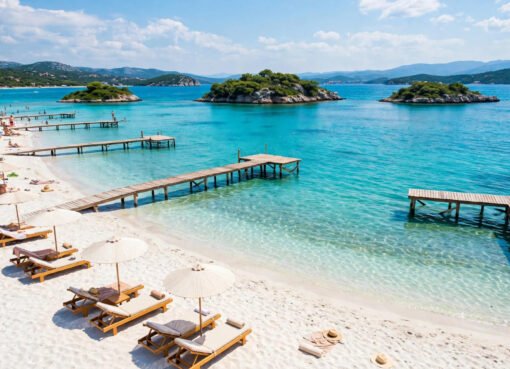
Ready to plan your trip? Start with our guide to cheap places to travel in Europe to see how Croatia stacks up, browse the Albania Riviera beaches if you want an even cheaper Adriatic alternative next door, and explore more of the most beautiful places in the world for your next adventure. Happy travels!