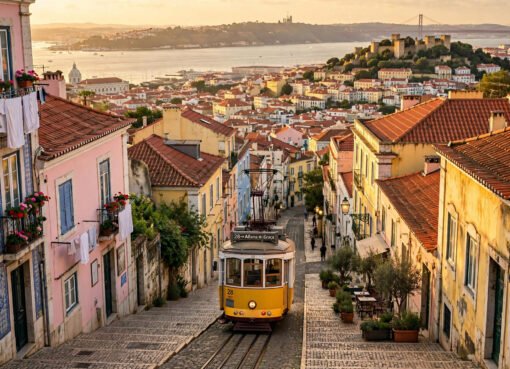
Italy has a reputation problem for budget travellers: everyone assumes it is expensive. The truth is more interesting. This Italy on a budget 2027 guide shows you how to do Rome, Florence, Venice and the south on real money — a backpacker can travel Italy for around €70 a day, and a careful mid-range trip runs far below the prices most people fear. The secret is choosing the right cities, booking trains early, and eating where Italians eat.
2027 is also a genuinely good year to go. The Catholic Jubilee (Holy Year) ended on 6 January 2026 after drawing an estimated 33.5 million pilgrims to Rome, and the post-Jubilee crowds are thinning — U.S. News even named Rome the best place to visit in the world for 2026, citing lighter crowds and restored landmarks. Prices are normalising, the shoulder seasons are back to being shoulder seasons, and if you book flights during the Black Friday and Travel Tuesday fare window, you can lock in some of the cheapest Italy fares of the year. This guide covers real 2027 costs, the best places, a 7-day itinerary, transport, food, and the money-saving tricks that actually work.
Italy on a Budget 2027: Why Go Now?
Three things make 2027 the year to finally do Italy properly. First, the Jubilee crowds are gone. Rome had a record 22.9 million arrivals in 2025, the Jubilee year, and the Vatican area was packed almost every day in April, May and October. With the Holy Year over, the city is returning to its normal rhythm — still busy in May and October, but no longer pilgrimage-level. Second, Italy remains one of the best-value big destinations in Western Europe if you travel smart: a day in Bologna, Naples or Lecce costs 30–40% less than the same day in Rome, Florence or Venice, and the food is often better. Third, the booking window is open right now — Black Friday travel deals run through late November, and fares for January–March 2027 departures from New York to Rome were recently found at a median of $588 return. If Italy is on your list, this is the week to book the flight and leave the rest open.
How Much Does Italy Cost in 2027? Real Daily Budgets
Prices below are per person per day, excluding flights, based on fresh November 2026 cost guides. Note that Italy is one of the few countries where your daily cost depends more on which cities you visit than on how you travel — a day in Rome and a day in Bologna are not the same price.
Backpacker: €70–95 Per Day
Hostel dorm (€25–45 a night, €35–60 in Rome, Florence and Venice-Mestre in summer), street food and supermarket meals (€20–30), local transport (€5–10) and one paid sight a day (€10–20). In the cheaper south — Naples, Puglia, Sicily — you can get by on €50–70 a day. A full four weeks of backpacking Italy comes to roughly $2,300–$3,000 before flights.
Mid-Range: €150–215 Per Day
A B&B or three-star hotel (€70–120, €100–180 in the big three cities), sit-down meals with wine (€40–60), local transport and one or two paid sights (€30–55). Add 30–50% to accommodation prices in Venice, whatever your budget.
What a Week Costs
Ten days in Italy costs most travellers $2,400–$3,800 per person from the United States, flights included. Backpackers doing hostels and street food manage it on about $1,500. Book Venice in June with restaurant dinners every night and you will clear $5,500. The honest middle ground — a week split between Rome, Florence and Venice with hostels, trattorias and advance-booked trains — runs roughly €700–€1,100 on the ground, plus flights.
The City Tax Nobody Budgets For
Every Italian city charges an overnight tourist tax, collected by your hotel or hostel, usually in cash at check-in. Rome charges about €4 a night at the lowest categories up to €10 at five-star hotels, for up to 10 nights. Florence tops out at €8 for luxury hotels, and Venice charges €1–€5 depending on season and lodging. Over a month it adds up to $60–$100, and several cities were debating increases for 2026 and beyond, so expect slightly higher rates in 2027. Ask when you book whether the tax is included in the quoted price — often it is not.
Best Places to Visit in Italy on a Budget
Rome: The Eternal City (3 Days)
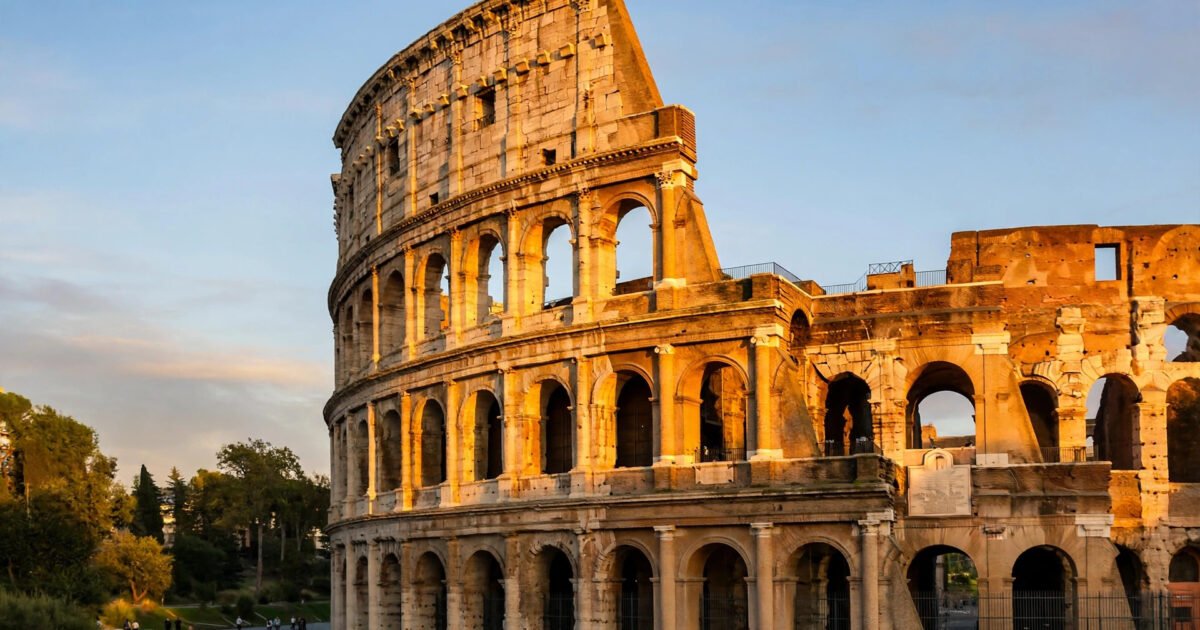
Rome is the most expensive stop on most Italy trips, and also the one you cannot skip. The Colosseum, Roman Forum and Palatine Hill share one ticket (€18), the Vatican Museums cost €20 plus a €5 online booking fee, and the Pantheon, Trevi Fountain and piazzas are free. Book the big tickets at least two weeks ahead — walk-up queues in May and October are brutal. Stay in Trastevere or Testaccio instead of the historic centre: cheaper rooms, better food, and a 15-minute walk to everything. If you want the full low-cost Rome playbook, our December 2027 guide explains why early December — Rome’s cheapest hotel month at about €153 a night on average — is the smartest time to visit the capital.
Florence: Art, and the Cheapest Way to See It
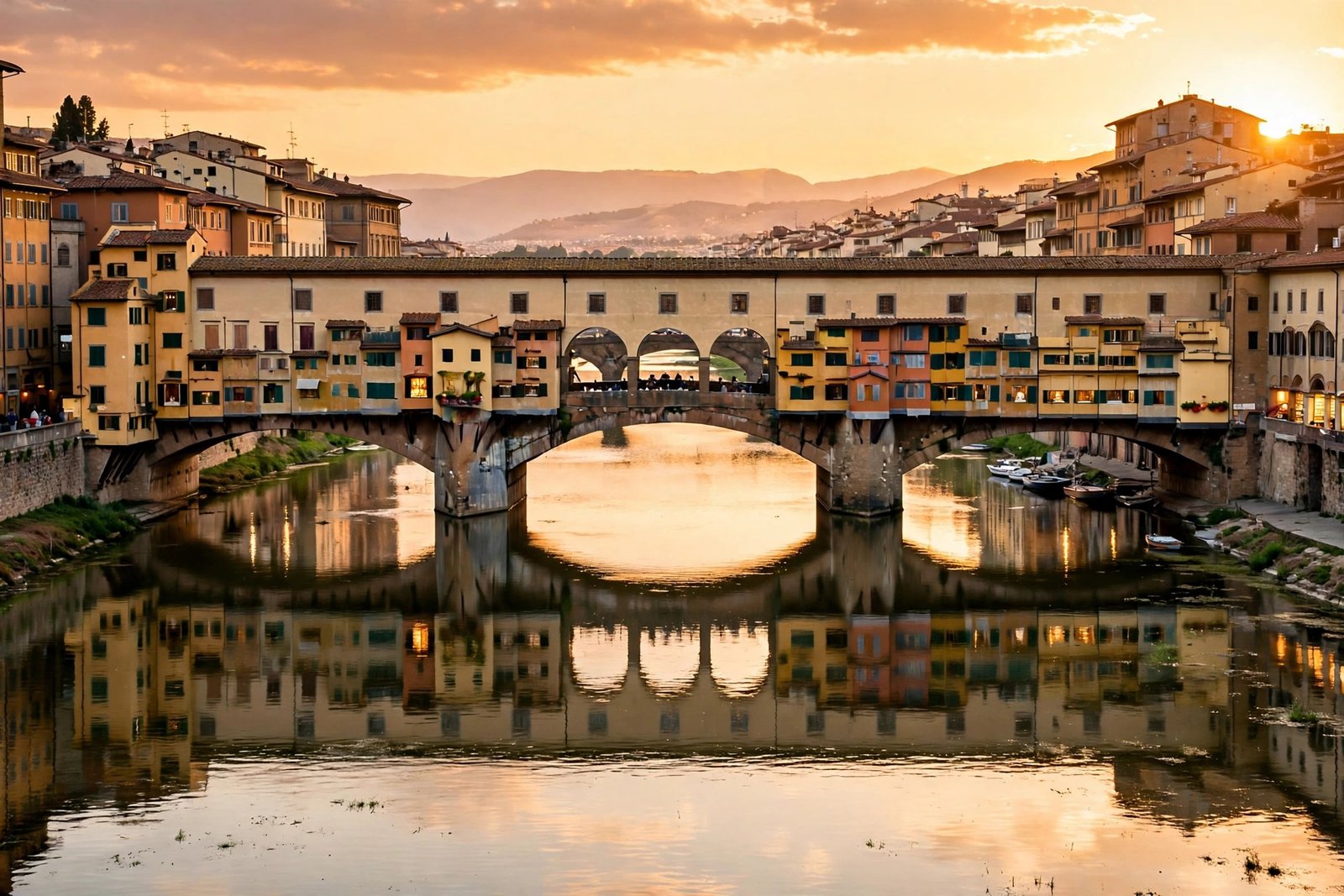
Florence is small, walkable and dense with art — and it punishes unprepared visitors. The Uffizi is €25 (€29 if bought before the day of the visit), the Accademia (home of Michelangelo’s David) needs advance booking, and the Duomo climb is best done at opening time. The budget move is the first Sunday of the month, when state museums are free — if you can stand the queues. Otherwise, Florence rewards the free stuff: the view from Piazzale Michelangelo at sunset, the Rose Garden, the Oltrarno artisan quarter across the river, and the Mercato Centrale upstairs food hall, where a full lunch costs less than a tourist-trap sandwich near the Duomo. Stay in Santa Maria Novella or across the river in Santo Spirito, where rooms run €20–30 cheaper a night than around the Duomo.
Venice: Yes, You Can Afford It
Venice is the city budget travellers fear most, and the one with the clearest workaround: sleep in Mestre, on the mainland, where dorm beds run €35–60 in summer instead of double that on the islands, and take the 10-minute train in. Day-trippers should know about the access fee: in 2026 Venice charged €5 if booked at least four days ahead or €10 later, on about 60 peak days through late July. Overnight guests are exempt but should register, and the city had not decided on the 2027 fee when we checked — check the official access fee page before you go. Once inside, Venice is gloriously cheap on foot: the vaporetto is pricey, so walk, and eat cicchetti (Venetian bar snacks) standing at a bacaro for €1.50–3 a piece instead of sitting down for a €25 tourist-menu lunch. A gondola is €80–90 for 30 minutes — skip it and take the traghetto across the Grand Canal for €2.
Naples: Italy’s Best-Value Big City
Naples is where Italy gets cheap and delicious at the same time. Pizza was invented here and a proper margherita still costs €5–7. The historic centre is a UNESCO site, the National Archaeological Museum holds the best of Pompeii’s treasures, and the metro (designed by famous artists) is a sight in itself. Use Naples as your base for Pompeii (€18, or free on the first Sunday of the month) and the Amalfi Coast by bus or ferry — but sleep in Naples, not Positano, where a room costs three times as much. Daily costs here run €50–70, the cheapest of any major Italian city.
Bologna: Eat Like a Local for Half the Price
Bologna is Italy’s food capital and its best-kept budget secret. The porticoed streets, the university buzz, and the tortellini, tagliatelle al ragù and mortadella that the city invented — all for 30–40% less than Florence, an hour away by train. A full lunch in a traditional osteria runs €12–16, and the city is compact enough to explore entirely on foot. If you are building a trip around food rather than postcards, Bologna deserves two nights that Florence does not.
The Cinque Terre and the Amalfi Coast — On a Budget
Both are famously expensive, and both are doable if you plan them right. In the Cinque Terre, stay in La Spezia (half the price of the villages), buy the Cinque Terre Card — about €20 a day in low season, over €30 at peak — and hike between villages instead of taking the train. On the Amalfi Coast, stay in Salerno or Sorrento, take the public SITA bus instead of a private driver, and visit in May or September when the sea is warm and the crowds are half the size of July. Both coasts are at their best, and cheapest, in the shoulder season.
Puglia and Sicily: The South That Costs Half as Much
If your budget is tight, head south. Puglia — the heel of the boot — has whitewashed towns like Ostuni, the trulli of Alberobello, and beaches that rival Greece, with rooms and meals at roughly half Rome prices. Sicily offers Greek temples at Agrigento, Mount Etna, Palermo’s street food (arancini for €2–3) and a whole island of history for €50–70 a day. For the truly crowd-free corners of the country, pair this with our secret places in Italy guide — 10 towns most tourists never hear about.
Getting Around Italy Cheap: Trains, Buses and the Advance-Booking Rule
Italy’s high-speed network is excellent, and its pricing rewards planning above all else. Book a Frecciarossa or Italo train two to six weeks ahead and Rome–Florence costs €20–35. Walk up on the day and the same seat is €55–90. The pattern repeats everywhere: Rome–Florence €25 booked ahead versus €65 walk-up, Florence–Venice €30 versus €75. Regional trains are cheap, need no reservation, and are perfect for short hops — but they are slow, so use them for day trips, not cross-country runs.
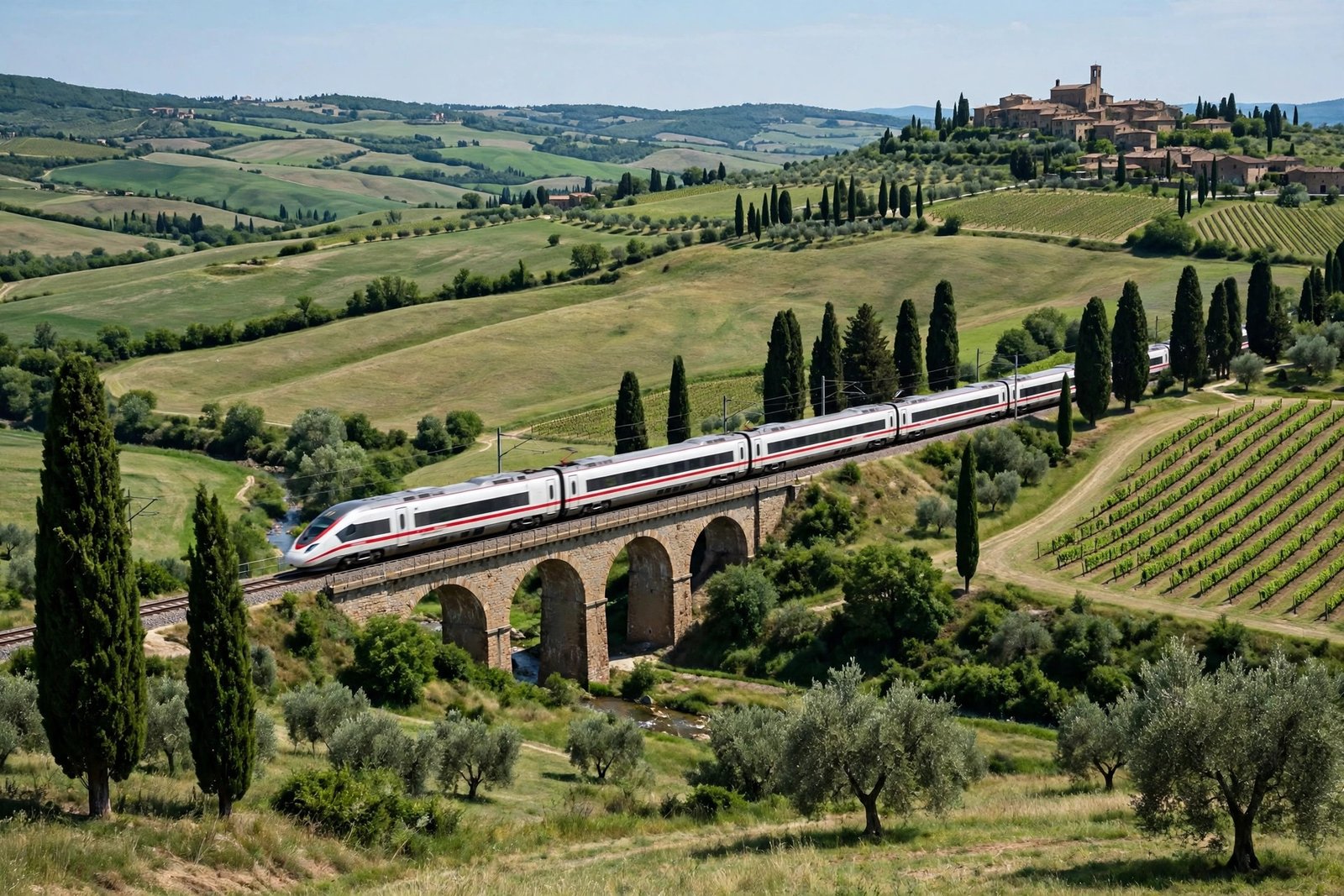
The rules that save the most money: book high-speed trains the moment your dates are fixed (fares only rise), use FlixBus for routes the train does not serve well (Rome–Venice by bus is slower but can cost under €20), and never take a taxi from an Italian airport without checking the fixed fare first — Rome Fiumicino to the centre is a regulated €50, and the Leonardo Express train is €14. For the full money-saving playbook, see our 21 ways to travel cheaper in 2027.
Where to Stay in Italy on a Budget
Hostel dorms run €25–45 a night, higher in Venice and Florence. A B&B or guesthouse costs €70–120, a three-star hotel €100–180, and a four-star or boutique €180–320. The cheapest stays are in the south and in smaller cities; the most expensive are Venice, Florence and the Amalfi Coast. Three tricks that consistently work: book apartments with a kitchen in the south (self-catering cuts food costs in half), stay just outside the historic centre (a 15-minute walk saves €30–50 a night), and travel in November or February, when Rome’s hotel prices are often 30–50% below peak and queues at the big sights are shortest.
Eating Well in Italy for €20–30 a Day
Italian food is the budget traveller’s best friend — if you eat like an Italian. An espresso standing at the bar costs €1.20–1.50; sit down in a tourist square like Piazza San Marco or Piazza Navona and the same coffee can be €8. Restaurants add a coperto (cover charge) of €2–4 per person, which covers bread and the table setting — it is not a scam, but it is charged everywhere, so factor it in. The winning formula: breakfast at the bar (cappuccino and cornetto, €2–3), lunch from a bakery, market or street-food stall (€5–8 for pizza al taglio, panini or focaccia), and dinner in a trattoria away from the main square (€15–20 for pasta, wine and a side). The house wine is usually excellent and costs €4–6 a glass. Avoid restaurants with a tout outside and a menu in six languages with photos — the food is worse and the bill is double.
7-Day Italy Itinerary on a Budget
Days 1–3: Rome. Colosseum and Forum on day one, Vatican Museums and St Peter’s on day two (book the first slot of the day), Trastevere, the Pantheon and the piazzas on day three. Stay in Trastevere or Testaccio.
Days 4–5: Florence. Take the morning high-speed train (booked ahead, €20–35). Uffizi and the Duomo on day four, the Oltrarno quarter, Piazzale Michelangelo at sunset and a day trip to Siena or San Gimignano on day five.
Days 6–7: Venice. Morning train to Venice (booked ahead, €30). Day six for St Mark’s, the Doge’s Palace (€30 online at least a month ahead, €35 at the ticket office) and the back canals; day seven for Murano and Burano by vaporetto, or a slow morning of cicchetti before the train home. Sleep in Mestre to keep the budget intact.
Want to extend? Add two days in Naples and Pompeii (the cheapest leg of the trip) or two days in Bologna for the food. Either way, book the trains first — they are the single biggest variable in the whole budget.
Best Time to Visit Italy in 2027
The best months are mid-April to May and late September to October: warm weather (May averages 23°C in Rome, October 22°C), long days, and manageable crowds. The cheapest months are February–March and November–early December — Rome’s hotels are often 30–50% below peak in November, and early December has the cheapest hotel rates of the year. Avoid mid-July to late August if you can: temperatures above 31°C, the highest hotel prices, and the most crowded sights. Easter 2027 falls on 28 March, so Holy Week will be peak-priced and packed around the Vatican — book early or avoid those exact dates. If you are choosing between months, our cheapest places to travel each month of 2027 guide will help you time the whole year.
Italy Budget Tips That Actually Save Money
- Book trains 2–6 weeks ahead. High-speed fares can triple on the day. This one habit saves more than every other tip combined.
- Drink coffee at the bar. Standing espresso €1.20–1.50; seated in a tourist square, up to €8.
- Go south. Naples, Puglia and Sicily cost 30–40% less than Rome, Florence and Venice for the same quality.
- Use the first Sunday of the month. State museums and archaeological sites are free — arrive early for the queues.
- Sleep in Mestre, not Venice. A 10-minute train ride saves €40–60 a night.
- Eat the lunch menu. Many trattorias offer a fixed lunch for €12–16 that costs €25+ at dinner.
- Carry cash for small things. City taxes, market stalls and small bars are often cash-only.
- Check ETIAS before you travel. The new European entry authorisation still had not launched as of autumn 2026 — check whether it applies to your passport before you book, as the rules are changing.
Italy on a Budget 2027: Frequently Asked Questions
Is Italy expensive in 2027?
Italy is mid-priced by Western European standards. A backpacker can travel on €70–95 a day, a mid-range traveller on €150–215. The south is 30–40% cheaper than Rome, Florence and Venice, and shoulder-season travel cuts hotel prices by a third or more.
How much money do I need for 7 days in Italy?
On the ground, roughly €500–700 as a backpacker, €1,050–1,500 mid-range, plus flights. A week split between Rome, Florence and Venice with hostels, trattorias and advance-booked trains runs about €700–€1,100 before flights.
What is the cheapest month to visit Italy?
February is the quietest and cheapest month, followed by November and early December. Rome’s hotels are often 30–50% below peak in November, and early December has the cheapest average hotel rates of the year (about €153 a night).
Is Venice worth it on a budget?
Yes — if you sleep in Mestre, walk instead of taking the vaporetto, and eat cicchetti standing at a bacaro. Day-trippers should check the 2027 access fee before travelling, as the 2026 fee (€5 booked ahead, €10 later) may change.
Do I need a visa for Italy?
US, UK, Canadian and Australian passport holders do not need a visa for tourist stays of up to 90 days in the Schengen Area. ETIAS, the new entry authorisation, had not launched as of autumn 2026 — check whether it applies before you travel.
How do I get between Rome, Florence and Venice cheaply?
Book high-speed trains 2–6 weeks ahead: Rome–Florence €20–35 and Florence–Venice €30 booked early, versus €65 and €75 walk-up. Regional trains and FlixBus are cheaper still for short hops and off-peak routes.
Italy rewards the traveller who plans ahead and eats where the locals eat. Book the flight in the Black Friday window, book the trains the moment your dates are fixed, and spend the savings on the things that matter — a second gelato, a long lunch in Bologna, a sunset over the Arno. For more trip ideas, browse our 20 best places to travel in 2027 and our 10 dream budget vacations under $1,000.