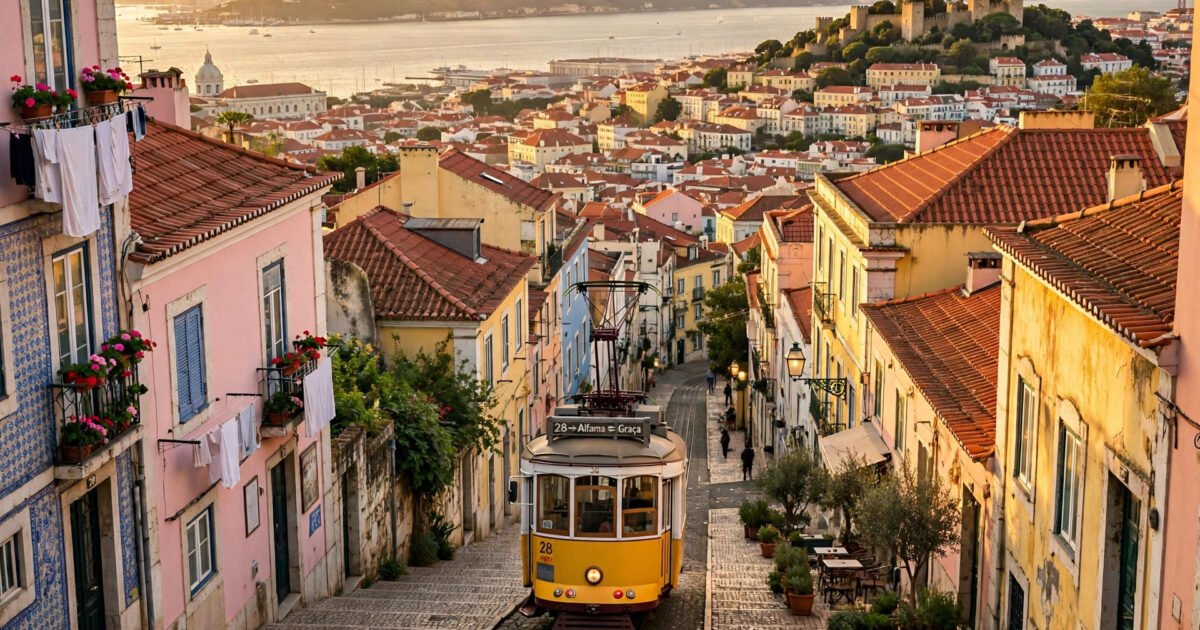
Lisbon on a budget 2027 is still one of the best deals in Western Europe: a capital where a €0.80 espresso at the bar, a €3 bifana and a free sunset over terracotta rooftops are all part of the same afternoon. Prices have risen, but with the right neighbourhood, the right lunch and the right transport card, Lisbon undercuts Paris, London and Amsterdam by a wide margin. Here are the real 2027 costs and a 3-day itinerary that keeps the total in check.
How Much Does Lisbon Cost in 2027?
A backpacker can get by on €65–85 per day: a hostel dorm, the set lunch, walking most places and one or two paid sights. Mid-range is €120–160 per day. The Post Office City Costs Barometer 2026 puts one day per person sharing a central 3-star room at about €127, with half a central 3-star double room at roughly €61.61 per night.
A realistic budget day: a dorm bed in shoulder season, about €25 (€15–25 in winter, €20–40 in high season); coffee and a pastel de nata for €2.50; a prato do dia lunch for €9–12; transport for about €3.60; a sunset beer for €1.50–2.50; and a tasca dinner for €15–18. Add the €4 tourist tax per person per night (age 13+, capped at seven nights, unchanged since September 2024) and the day lands at roughly €65–75. Couples travelling mid-range report spending around £110–160 per day each.
Quick-reference prices for 2027:
- Hostel dorm: €15–25 in winter, €20–40 in high season
- Central 3-star double room (half share): about €61.61 per night
- Tourist tax: €4 per person per night, capped at 7 nights
- Prato do dia set lunch: €9–12
- Bifana (pork sandwich): €3–4
- Espresso at the bar: about €0.80
- Small beer: €1.50–2.50
- Pastel de nata: about €1.30–1.50
- Single metro or tram ride: about €1.80 with a Viva Viagem card
- 24-hour Navegante transport pass: €6.80
- Three-course lunch with wine at a tasca: about £10 per head
November to March is cheapest, with UK flights sometimes as low as £40–60 return, while June to September is busiest and priciest. One metro stop out of the centre can cut a room rate by a third. A proper lunch here costs what a sandwich costs in Paris, which is why Lisbon ranks among the cheapest cities in Europe for 2027.
Best Things to Do in Lisbon on a Budget
Alfama & Tram 28
Alfama, the old Moorish quarter below the castle, is Lisbon at its most atmospheric: narrow lanes, laundry lines, tiny squares and sudden views over the river. Wander for free, then climb toward São Jorge Castle for the panorama. Tram 28 rattles through Alfama, Graça and Estrela for the standard €1.80 fare with a Viva Viagem card. The tram is jammed for much of the day and is a known pickpocket zone, so board at the start of the route and keep your bag in front of you. Walk the route instead, and note cash on the tram costs nearly double the card fare.
Belém
Belém is an easy half-day by tram or train, and several of its best sights are free from the outside. The Jerónimos Monastery cloisters and Belém Tower are the paid highlights, the tower costing around €8–10. Note that Belém Tower reopened in May 2026 after restoration, and entry now runs on timed half-hour slots — book ahead online, as walk-up slots sell out on busy days. The promenade, gardens and Monument to the Discoveries are free, and the original Pastéis de Belém bakery is a €1.50 detour nobody regrets.
Miradouros: Lisbon’s Free Viewpoints
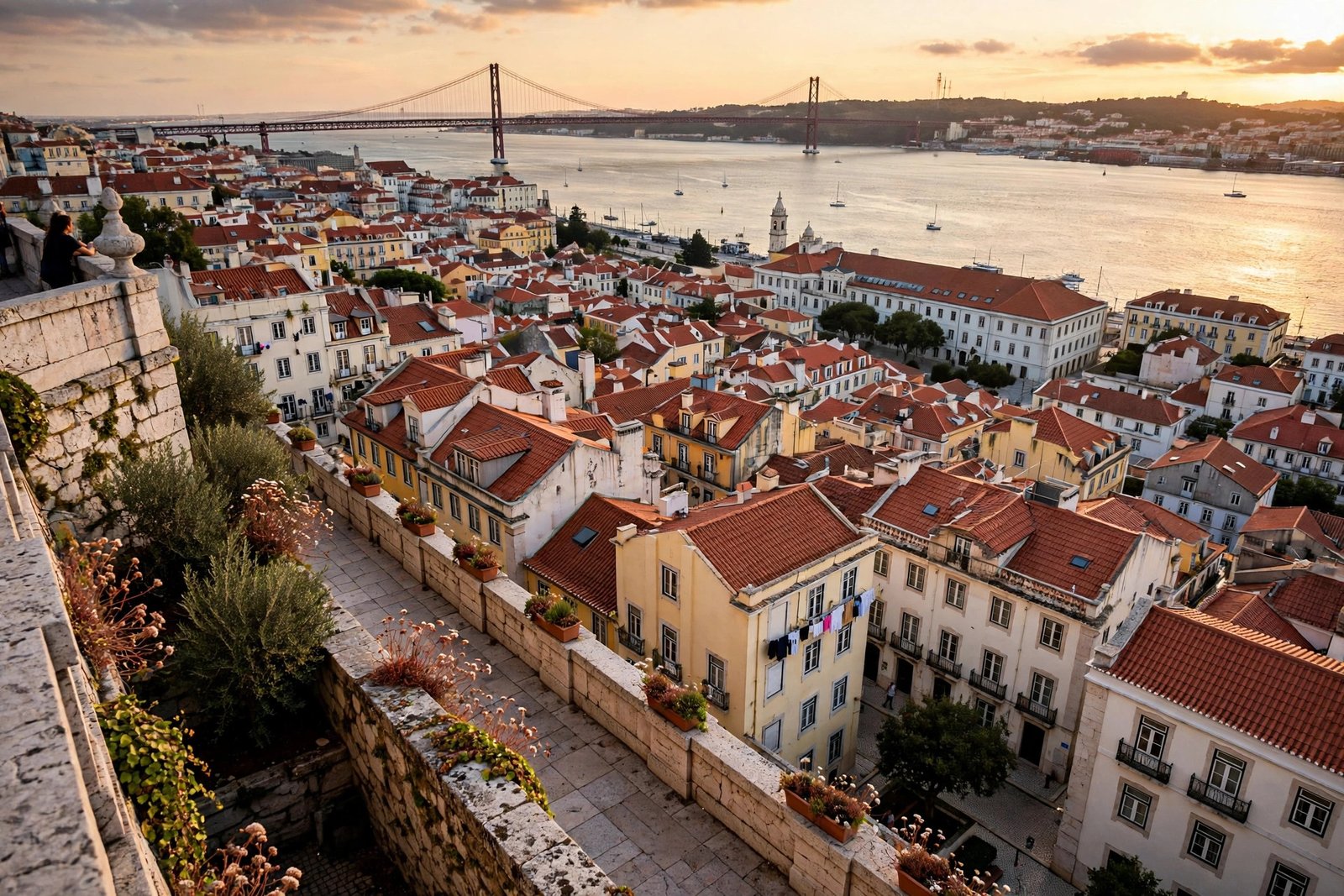
Lisbon’s miradouros — hilltop viewpoints — are the city’s greatest free attraction. Miradouro da Graça offers pines and a castle view; Senhora do Monte, the highest viewpoint, is the finest sunset spot; Santa Luzia above Alfama is the classic postcard; and São Pedro de Alcântara in Bairro Alto fills with locals and musicians at dusk. Bring a €1.50 beer from a corner shop: the best seat in the city, for nothing. They are at their best in April and May — see our best places to travel in May 2027 for where else shines that month.

LX Factory
LX Factory, a converted industrial complex under the 25 de Abril Bridge, is Lisbon’s creative quarter: street art, independent shops, cafés and a Sunday market. Entry is free, and the riverside walk toward Belém is one of the city’s most pleasant free strolls.
Day Trip to Sintra
Sintra, 40 minutes by train from Rossio station, is the classic Lisbon day trip — and entirely doable on a budget. A return train ticket costs around €5, and the town itself is free to wander. The catch is the palaces: Pena Palace costs roughly €14–20, and the Moorish Castle about €8–12, so pick one rather than trying to see them all. The town centre and castle-wall walk are free, and a bakery lunch beats the palace café. Budget about €25–30 for the whole day including transport, one palace and lunch. Portugal rewards slow travel beyond the capital, as our hidden gems in Europe for 2027 guide shows.
Where to Stay in Lisbon on a Budget
Where you sleep decides whether Lisbon feels cheap or pricey, and the rule is simple: the further you stay from the Baixa postcard streets, the better the value. Baixa-Chiado, the downtown grid between Rossio and the river, is the most convenient base and the priciest, with central 3-star doubles around that €61.61 half-share figure and hostels at the top of the range.
Bairro Alto is the nightlife quarter: great for bars and late nights, less great for light sleepers, with hostels and budget guesthouses — stay on a side street. Saldanha, one or two metro stops north of Baixa, is the budget sweet spot: a real local neighbourhood with cheaper rooms, bakeries and tascas, and a ten-minute metro ride to the centre. Parque das Nações, the modern riverside district built for Expo 98, offers excellent-value modern hotels and apartments, a waterfront promenade and the Oceanário, and is a strong pick for families. A basic private double in a guesthouse outside Baixa can be found for €50–70 in the low season. Solo travellers will find more in our best solo travel destinations on a budget for 2027.
Cheap Eats in Lisbon
In Lisbon, eating well and eating cheaply are the same thing — provided you eat where locals eat. Follow the chalkboard: if the menu do dia is chalked on a board outside, in Portuguese, with no photographs and no touting, you have found the right place.
The prato do dia, the set lunch, is the cornerstone of budget eating in Lisbon. For €9–12 you typically get a soup or starter, a main such as grilled sardines, bacalhau or pork, a drink and sometimes coffee. A three-course lunch with wine at a good tasca can come in at around £10 per head. Tascas — small, family-run restaurants — are where you want to be in the evening too: grilled fish, bitoque (steak with egg and chips), hearty stews and carafes of house wine for a few euros a glass.
For snacks, Lisbon is generous. A bifana, the pork sandwich that is the city’s fast food, costs €3–4 and is best eaten standing at a counter with a small beer (€1.50–2.50). A pastel de nata, the custard tart, is about €1.30–1.50 — eat it warm, dusted with cinnamon, and skip the overpriced versions sold next to the main sights. An espresso at the bar costs about €0.80 — double that at a tourist terrace table. Time Out Market in Cais do Sodré is worth one visit for the buzz, but stall prices run higher than a tasca lunch.
One warning every first-timer needs: the couvert is NOT free. The bread, olives and cheese placed on your table are charged, usually €1–3 per person. Decline them politely when they arrive and they will be taken away free. With food this cheap, Lisbon easily fits a dream budget vacation under $1,000 for 2027 — flights included, if you book the winter fares.
Getting Around Lisbon Cheaply
Most of the centre is walkable in under half an hour, and walking is how you find the viewpoints and tascas. For longer hops, buy a rechargeable Viva Viagem card as soon as you arrive: a single metro, tram or bus ride costs about €1.80 with the card, while paying cash on a tram costs nearly double. If you plan to ride more than three times a day, the 24-hour Navegante pass at €6.80 is better value, covering metro, tram, bus and the urban trains within the city zone.
One important warning for 2027: the Glória, Bica and Lavra funiculars and the Santa Justa lift are out of service following the Glória crash of September 2025, so do not plan your route around them. The hills are still climbable on foot, or by metro and bus. If you are comparing transport costs across the continent, our cheapest places to travel each month in 2027 guide breaks down daily budgets city by city.
Best Time to Visit Lisbon on a Budget
Lisbon gets more than 300 days of sunshine a year, so there is no bad month — only cheaper and busier ones. April and May are the best overall months: temperatures of 18–23°C, long evenings, jacaranda trees in bloom and the city buzzing without the summer crush. Book early: the spring booking peak runs February to May. June to September is the busiest stretch, with temperatures of 27–28°C, packed trams and the highest hotel prices; it is also festival season.
November to March is the cheapest time to visit, with daytime temperatures of 12–16°C, far fewer tourists and the lowest fares — flights from the UK can drop to £40–60 return, and hostel dorms fall to €15–25. Pack a light jacket for the evenings. And if Portugal has whetted your appetite for the region, neighbouring Albania is the next budget frontier — see our Albania travel guide for 2027.
3-Day Lisbon Budget Itinerary
Day 1 — Baixa, Chiado and Bairro Alto: Start at Rossio Square and walk the Baixa grid, head up to Chiado for coffee and bookshops, then take a prato do dia lunch (€9–12) in a side-street tasca. Spend the afternoon in Bairro Alto, then eat a bifana dinner at sunset from the miradouro. Estimated spend: €55–70 excluding accommodation.
Day 2 — Alfama, the castle and the river: Walk Tram 28’s route through Alfama in the morning, climb to São Jorge Castle (about €10–15) for the panorama, and have lunch in Graça, where restaurants are cheaper. Finish at Miradouro da Senhora do Monte for sunset. Estimated spend: €60–75 excluding accommodation.
Day 3 — Belém and LX Factory: Take the tram or train to Belém early to beat the queues, book a timed slot for Belém Tower and eat a pastel de nata at the original bakery. After lunch, head to LX Factory, then finish with a farewell tasca dinner. Estimated spend: €65–80 excluding accommodation, including one paid sight.
Lisbon on a Budget 2027: Frequently Asked Questions
Is Lisbon expensive in 2027?
No, not by Western European capital standards. A backpacker can manage on €65–85 a day and a mid-range traveller on €120–160, with set lunches at €9–12, espresso at €0.80 and a 24-hour transport pass at €6.80. It is noticeably cheaper than Paris or London and roughly on a par with Madrid. Avoid central hotels in summer and the main tourist squares, and Lisbon feels affordable.
How many days do you need in Lisbon?
Three full days is the sweet spot: one day for Baixa, Chiado and Bairro Alto, one for Alfama and the castle, and one for Belém plus LX Factory, with a Sintra day trip if you have a fourth day. Two days works if you skip Belém, but you will miss the slow pleasures.
Is Lisbon cheaper than Paris or Madrid?
Yes, cheaper than Paris by a wide margin — a tasca lunch in Lisbon costs what a café sandwich costs in Paris — and slightly cheaper than Madrid on food, drink and transport, though Madrid can match it on accommodation. Daily costs — coffee, beer, pastries, set lunches — run a euro or two less than in either rival.
Do I need cash in Lisbon?
Mostly no — cards are accepted almost everywhere, including on the metro and in most restaurants. Carry a little cash for market stalls, small tascas, kiosk cafés at viewpoints and tips. Carry a €20 note for cash-only spots, and use bank ATMs to avoid fees.
Is the Lisbon Card worth it?
It depends on how many paid sights you plan to visit. The card bundles unlimited transport with free entry to many museums, so it pays off on a sightseeing-heavy day with two or three paid attractions. On a slow day built around free viewpoints, walking and one paid sight, the €6.80 Navegante day pass plus a single ticket is usually cheaper.
What is the one budget mistake to avoid in Lisbon?
Staying in the most central hotel and eating on the main squares. A room one or two metro stops out — Saldanha or Parque das Nações — and lunches at chalkboard tascas instead of tourist-terrace restaurants can save €30–40 a day, which is the difference between a tight trip and a comfortable one.
Lisbon on a budget in 2027 is about spending where the city is at its best. Come in April or May for the best weather, or in winter for the lowest prices, stay a stop out of the centre, eat from the chalkboard, and Lisbon will give you the best value city break in Western Europe.