Turkey is the best-value big destination in the world right now — and it is not close. This Turkey on a budget 2027 guide shows you how to do Istanbul, Cappadocia and the Aegean coast on $35–50 a day as a backpacker or $70–130 mid-range, with cave hotels, Roman ruins, white travertine terraces and a hot-air balloon sunrise thrown in. The weak lira does the heavy lifting: the currency fell about 17% against the dollar in the year to mid-2026, and while lira prices keep drifting upward, dollar and euro prices for visitors have barely moved.
2027 is a particularly good year to go. US, UK, Canadian, Australian and EU passport holders now enter visa-free for up to 90 days — Australia joined the visa-free list in April 2026 — so there is no paperwork and no fee before you fly. The classic loop (Istanbul, Cappadocia, the Aegean coast) is well served by cheap domestic flights and comfortable overnight buses, and the Black Friday and Travel Tuesday fare window in late November is the cheapest time of the year to book. This guide covers real 2027 costs, the best places, a 10-day itinerary, transport, food, and the money traps to avoid.
Turkey on a Budget 2027: Why Go Now?
Three things make Turkey the smartest budget pick for 2027. First, the exchange rate. At roughly 50 lira to the US dollar (October 2026), a lokanta lunch costs a few dollars, a dorm bed €10–15, and a comfortable pension double €30–60. Second, the range: in one trip you get a two-continent city, fairy-chimney valleys, Greek and Roman cities, white travertine terraces and a turquoise coast — no other budget destination packs in this much variety. Third, the timing. Turkey’s best weather is April–May and September–October, exactly when flights and rooms are cheapest, and the booking window for spring 2027 is open right now — our Black Friday travel deals guide explains how to catch the late-November fare sales, when US returns to Turkey were recently found at $810–$1,000, averaging near $890.
How Much Does Turkey Cost in 2027? Real Daily Budgets
Prices below are per person per day, excluding international flights, based on fresh October–November 2026 cost guides. Because inflation is high and menus are reprinted every few months, treat the dollar and euro figures as your anchor and expect the lira numbers to drift upward — the lira figures are the ones that move.
Backpacker: $35–50 Per Day (€31–45)
Hostel dorm (€10–25 a night, €10–15 in Istanbul), lokanta lunches and street food, intercity buses and dolmuş (shared minibuses), and one paid site every other day. A 12-day budget trip costs roughly $1,100–$1,550 per person including a return flight from the US — on the ground, about $300–$540.
Mid-Range: $70–130 Per Day (€62–115)
Boutique hotel or cave room, sit-down meals with a beer, a domestic flight or two, and a paid site or tour most days. Istanbul doubles cost €45–80 at budget level and €80–200 for a boutique or four-star hotel; Cappadocia cave hotels run €90–250, with the balloon-view terraces at the top of the range in April, May, September and October.
The Two Lines That Break the Budget
Two things cost European prices in Turkey, and both are worth knowing about before you go. The big monuments are priced in euros for foreign visitors — Hagia Sophia costs €25, Topkapı Palace around €20–25, and the Cappadocia Open-Air Museum roughly €15–20. And the Cappadocia balloon flight runs €150–350 per person, which is more than three days of backpacking. Budget for both as separate line items, not as part of your daily rate, and the rest of Turkey will feel almost free.
Best Places to Visit in Turkey on a Budget
Istanbul: Two Continents, Four Days Minimum (4 Days)
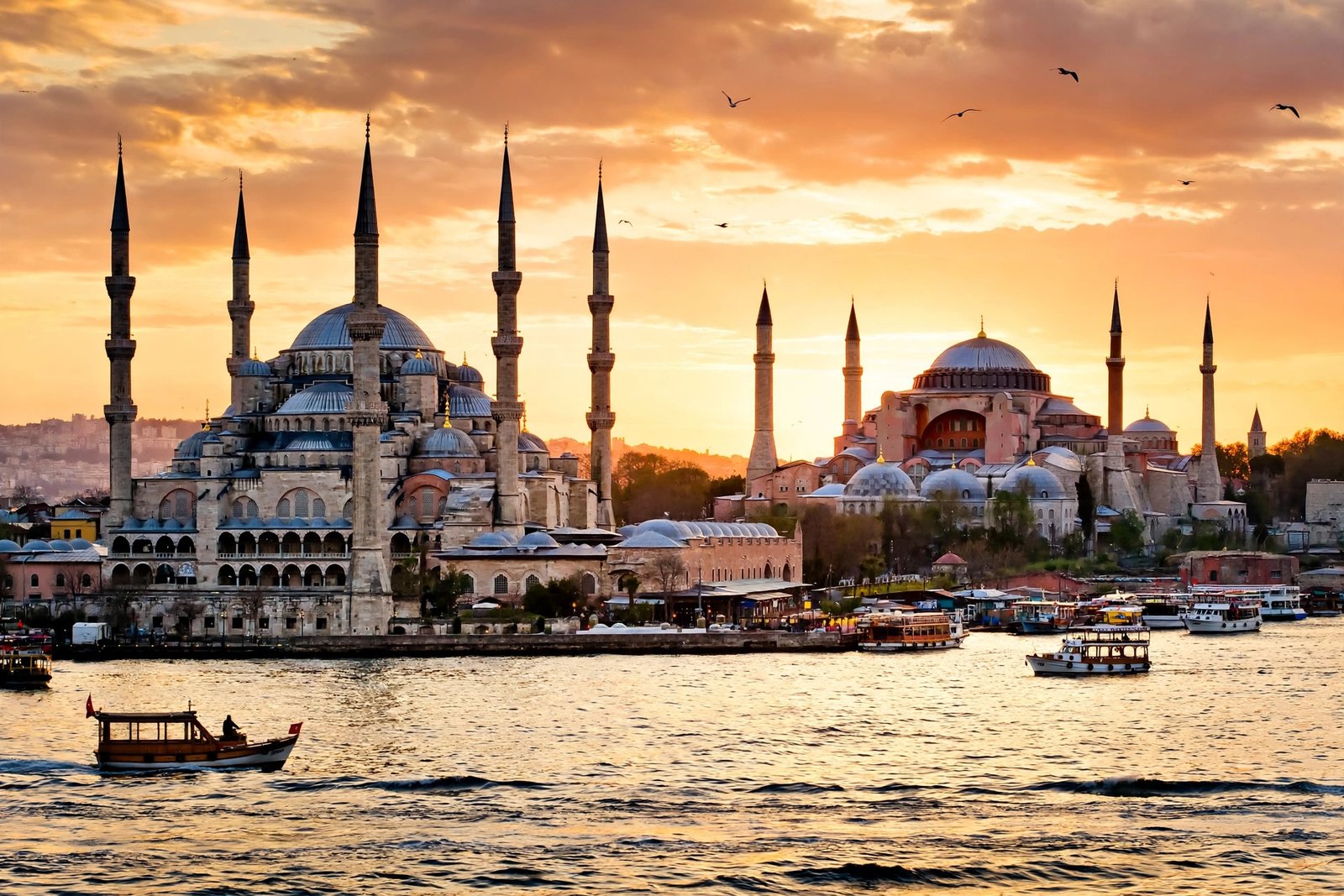
Istanbul deserves four days minimum, and most first-timers give it two and regret it. Sultanahmet holds the Hagia Sophia (€25 for foreign visitors), the Blue Mosque (free) and Topkapı Palace, but sleep in Kadıköy or Beyoğlu, where students argue over tea and the ferry across the Bosphorus doubles as the cheapest cruise you will ever take. A single ride on public transport costs about 35 lira (roughly €0.65) with an Istanbulkart, and the card itself costs around 165 lira. Eat in lokantas — the canteen-style restaurants where locals eat — where a full lunch runs 250–500 lira, and buy simit (sesame bread rings) from street carts for 15–30 lira. Istanbul is the dearest city in Turkey, so treat the low end of the national budget as outside the city.
Cappadocia: Fairy Chimneys and Balloons (3 Days)
Cappadocia is the one place where waking at 4:30 a.m. to watch strangers float past in baskets makes sense. Göreme is the base: cave hostels, carpet sellers, and a rooftop full of tripods at dawn. The balloon flight is €150–350 — expensive, but genuinely unforgettable, and the standard flight is the one to book (the deluxe baskets cost far more for the same sky). Skip the paid balloon if money is tight: walking Rose Valley or the Ihlara Valley canyon floor gives you the same rock with fewer surcharges. The Göreme Open-Air Museum (roughly €15–20) and the underground cities of Derinkuyu and Kaymaklı are the paid sights that matter. Overnight buses from Istanbul take 10–11 hours and cost about €18–28, or fly to Kayseri or Nevşehir for €20–80 if booked in advance — the flight plus a shuttle is often cheaper than the bus once you count the saved night.
Pamukkale: The White Terraces (1 Day)
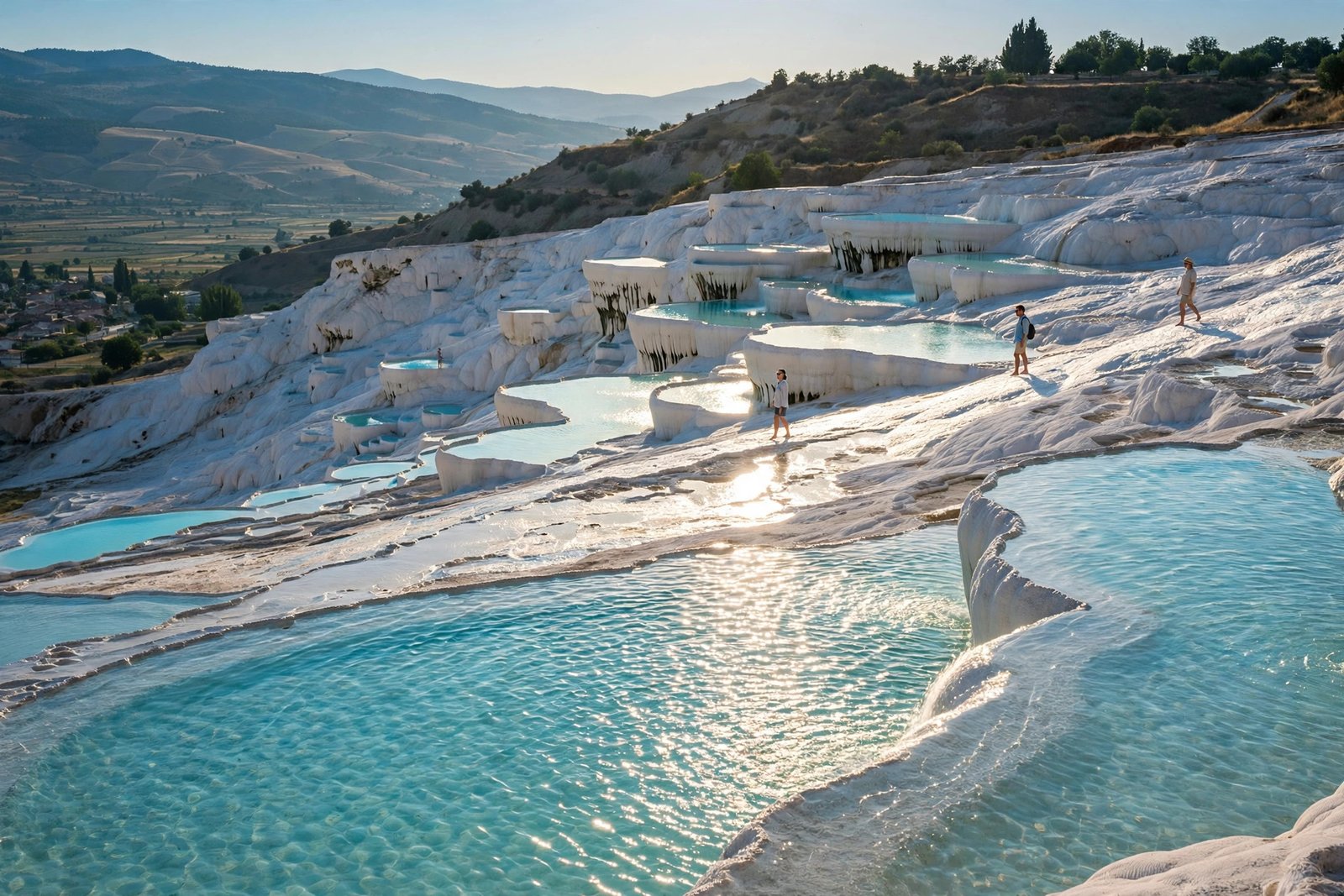
Pamukkale’s white travertine terraces spill down a hillside like a frozen waterfall, and behind them sits Hierapolis, a Roman spa city with a theatre you can walk through for free once you are inside. Come at opening time or late afternoon, when the day-trip buses have left and the pools glow in the low sun. Stay in the village of Pamukkale or nearby Denizli, where pensions are among the cheapest in Turkey.
Ephesus and Selçuk: Rome’s Best-Preserved City (2 Days)
Ephesus is one of the best-preserved Roman cities anywhere — the Library of Celsus, the Great Theatre, streets you can still walk. Base yourself in Selçuk, a sleepy town with pensions at €30–60 a double, a Saturday market, and the Temple of Artemis (one of the Seven Wonders of the ancient world) a short walk away. A pension bed, lokanta meals, a dolmuş and one ruin come to about $40 a day here. If you love ancient sites, pair this with our Egypt travel guide for the other great budget archaeology trip of 2027.
The Turquoise Coast: Antalya, Fethiye and the Lycian Way (3 Days)
Turkey’s southern coast pairs pine-covered mountains with a turquoise sea, and it is where the budget stretches furthest in shoulder season. Antalya’s old town (Kaleiçi) has pensions from €30 a night in spring and autumn; Fethiye is the base for day boat trips (€25–45) and the start of the Lycian Way, a long-distance trail along the coast. Bodrum and Çeşme are the most expensive resorts (€150–400 for a boutique hotel in July and August), while Antalya, Alanya and Side have all-inclusive resorts from about €100 per room per night in shoulder season — which can be cheaper than eating out. If you are choosing between coasts, our places like Bali but cheaper guide covers more warm-water options.
Ankara, Mardin and Safranbolu: The Turkey Nobody Sees
Most visitors never leave the Istanbul–Cappadocia–coast loop, and that is a shame. Ankara has the excellent Museum of Anatolian Civilizations and the cheapest rooms in the country. Mardin’s honey-coloured stone houses stare over the Mesopotamian plain. Safranbolu’s whitewashed Ottoman timber mansions are a UNESCO site you can have almost to yourself. The east and the inland towns cost a third less than Istanbul and the coast — if you have the time, go.
Getting Around Turkey Cheap: Buses, Flights and Ferries
Turkey’s intercity buses are the budget connector: comfortable, reliable, with a steward who will douse your hands in cologne, and cheap. Istanbul to Cappadocia by overnight bus is about €18–28 and takes 10–12 hours; Istanbul to Antalya is about €22–35. Domestic flights cost €20–80 one way if booked in advance — Istanbul to Kayseri for Cappadocia is the classic example — and they save a night of travel. Inside cities, use the metro, tram and ferries with a local transport card (Istanbulkart in Istanbul, about 35 lira a ride). Taxis are €5–15 for most city journeys; always use the meter, and in Istanbul, use the BiTaksi app to avoid the tourist price. Car rental runs €30–60 a day and is worth it for the Lycian coast or Cappadocia’s valleys, where public transport is thin.
Where to Stay in Turkey on a Budget
Hostel dorms cost €10–25 a night, with the top of the range in Istanbul and the cheapest beds in the east. A pension double runs €30–60, a three-star hotel €40–80, a four-star €80–150. Cave hotels in Cappadocia cost €100–250 a room — a unique experience worth the splurge for one or two nights, especially if you book a simple vaulted room rather than a balloon-view terrace. Most hotels quote in euros and charge in lira at the day’s rate, so check the currency before you compare. Book directly with small pensions by message or phone where you can — they often offer a better rate than the booking sites, and they will pick you up from the bus station.
Eating Well in Turkey for €5–10 a Day
Food is where Turkey saves you the most money. Simit from a street cart (15–30 lira), a lokanta lunch (250–500 lira), a kebab plate (400–900 lira), and a meze dinner with raki (1,500–4,000 lira). The rules: eat where locals eat, eat the dish of the day, and never eat in a restaurant with a tout outside. Breakfast is usually included in pensions and is a feast — olives, cheese, tomatoes, honey, bread and tea. Tea is cheap enough to treat as a social obligation, and it is offered everywhere. Drink the tap water only in Istanbul and Ankara; elsewhere, buy bottled water (cheap) or use a filter bottle.
10-Day Turkey Itinerary on a Budget
Days 1–4: Istanbul. Sultanahmet (Hagia Sophia, Blue Mosque, Topkapı, Grand Bazaar) on days one and two, then the Bosphorus ferry, Kadıköy food market and Beyoğlu on days three and four. Sleep in Kadıköy for the best value.
Days 5–7: Cappadocia. Fly or overnight-bus to Göreme. Day five for the Open-Air Museum and sunset in Rose Valley, day six for the balloon flight (or a dawn hike instead) and an underground city, day seven for Ihlara Valley or a slow morning in a cave café.
Days 8–9: Pamukkale and Selçuk. Bus to Pamukkale for the terraces and Hierapolis, then on to Selçuk for Ephesus and the Temple of Artemis.
Day 10: The coast. Finish in Antalya or Fethiye for a boat trip and a swim, then fly home from Antalya or Dalaman. If you have more time, add the Lycian Way or a week on the coast — our cheapest places to travel each month guide will help you pick the season.
Best Time to Visit Turkey in 2027
April–May and September–October are the sweet spots: warm days, cool nights, and the lowest prices. Cappadocia’s balloon season runs best from April to October, when the wind is calmest. The coast is warmest June–September, but July and August bring the highest prices and the biggest crowds — Bodrum and Çeşme double in price. Istanbul works year-round: winter is the cheapest time for a city break, with hotel rates at their lowest and the museums empty. Avoid the Eid holidays if you want quiet — domestic travel spikes and prices rise. For the full seasonal picture, see our 20 best places to travel in 2027.
Visas, Money and Practical Tips
Visa: US, UK, Canadian, Australian, New Zealand, EU and most other Western passport holders enter visa-free for up to 90 days in any 180-day period for tourism — no form, no fee. Australia became visa-free in April 2026 and China in January 2026. If your nationality does need a visa, apply only at the official evisa.gov.tr portal (fees typically $20–60) and avoid copycat sites. Your passport must be valid for at least 150 days from arrival (60 days beyond your permitted stay), with at least one blank page. Rules change — check the Turkish Ministry of Foreign Affairs page before you book.
Money: The lira is the currency, and cash is still king in markets, dolmuş and small restaurants. Cards work in hotels, restaurants and supermarkets. ATMs are everywhere; use bank ATMs rather than standalone machines to avoid fees. Because the lira keeps losing value, prices in lira rise even when dollar prices barely move — so budget in dollars or euros, not lira.
Safety: Turkey is generally safe for tourists, and the main risks are the usual ones — pickpockets in the Grand Bazaar and on crowded trams, taxi scams, and overcharging in tourist areas. Check your government’s travel advice before you go, and avoid the border regions in the far south-east.
Turkey Budget Tips That Actually Save Money
- Book domestic flights early. Istanbul–Kayseri for €20–80 booked ahead beats a 10-hour bus and saves a night.
- Eat in lokantas. A full lunch for 250–500 lira beats a tourist restaurant at three times the price.
- Take the overnight bus. Istanbul–Cappadocia for €18–28 saves a night’s accommodation.
- Skip the balloon if money is tight. Hiking Rose Valley at dawn gives you the same rock for free.
- Travel in shoulder season. April–May and September–October mean the best weather and the lowest prices.
- Use the ferry in Istanbul. The Bosphorus crossing is the cheapest cruise you will ever take.
- Budget monuments separately. Hagia Sophia (€25) and Topkapı (€20–25) are euro-priced — keep them out of your daily rate.
- Stay in Kadıköy, not Sultanahmet. Better food, lower prices, and a ferry ride to the sights.
Turkey on a Budget 2027: Frequently Asked Questions
Is Turkey cheap in 2027?
Yes — Turkey is one of the cheapest big destinations in the world for visitors from the US, UK, Canada, Australia and Europe. A backpacker can travel on $35–50 a day and a mid-range traveller on $70–130, thanks to the weak lira. Only the euro-priced monuments and the Cappadocia balloon cost European prices.
How much money do I need for 10 days in Turkey?
On the ground, roughly $350–500 as a backpacker or $700–1,300 mid-range, plus international flights. A 12-day budget trip including a US return flight costs roughly $1,100–$1,550 per person. Add €150–350 if you want the balloon flight.
Do I need a visa for Turkey?
Most Western passport holders — including US, UK, Canadian, Australian and EU citizens — enter visa-free for up to 90 days in any 180-day period. If your nationality needs one, apply only at evisa.gov.tr. Your passport must be valid for at least 150 days from arrival.
Is Cappadocia worth the balloon flight?
Yes, if you can afford it — it is the single most memorable experience in Turkey. If not, hiking Rose Valley or Ihlara Valley at dawn gives you the same landscape for free, and the Göreme Open-Air Museum (€15–20) is the paid sight that matters most.
What is the best time to visit Turkey?
April–May and September–October for the best weather and prices. The coast is warmest June–September, Istanbul works year-round, and winter is the cheapest time for a city break.
Is Turkey safe for tourists?
Turkey is generally safe for tourists, with the usual big-city risks — pickpockets in crowded areas and taxi scams. Check your government’s travel advice before you go, and avoid the far south-east border regions.
Turkey is the rare destination that is both extraordinary and genuinely cheap — a two-continent city, fairy-chimney valleys, Roman cities and a turquoise coast for the price of a week in Western Europe. Book the flight in the late-November fare window, take the overnight bus to Cappadocia, and spend the savings on the balloon. For more budget inspiration, see our 10 dream budget vacations under $1,000 and our 21 ways to travel cheaper in 2027.