Some places look so perfect they feel Photoshopped. Half-timbered houses leaning over flower-lined canals, a lakeside village pressed against a wall of mountains, a medieval town square that has not changed in 500 years — these are the fairytale places in Europe that make you stop mid-step and reach for your camera. The best part? Most of them are small towns, not capitals, which means smaller prices: family-run guesthouses, bakery breakfasts, and sights you can enjoy for free just by walking around. This guide rounds up 12 fairytale places in Europe that look unreal, with honest budget numbers for each, the cheapest months to go, and how to string them into one affordable trip in 2027.
Why Fairytale Europe Is a Budget Traveler’s Dream
Fairytale towns are almost always cheaper than the famous cities nearby. Colmar costs a fraction of Paris, Hallstatt a fraction of Vienna, and Český Krumlov a fraction of Prague — yet the scenery is arguably better. Small towns mean walkable centers (no metro tickets), free viewpoints, and restaurants that still charge local prices. The other advantage is timing: these places peak in summer and again at Christmas, but the shoulder months — late April to early June and September to early November — bring the same storybook streets with 30–50% lower hotel rates and almost no crowds. Winter has its own magic too: snow-dusted rooftops, Christmas markets, and the lowest prices of the year in January and February, when many of these towns feel like they belong to you alone. Pair this guide with our cheapest cities in Europe for 2027 to keep the whole trip under control, and check the best Christmas markets in Europe if you want to time a visit for December — several towns below host the continent’s most beautiful markets.
12 Fairytale Places in Europe That Look Unreal
1. Colmar, France — The Real-Life Disney Village
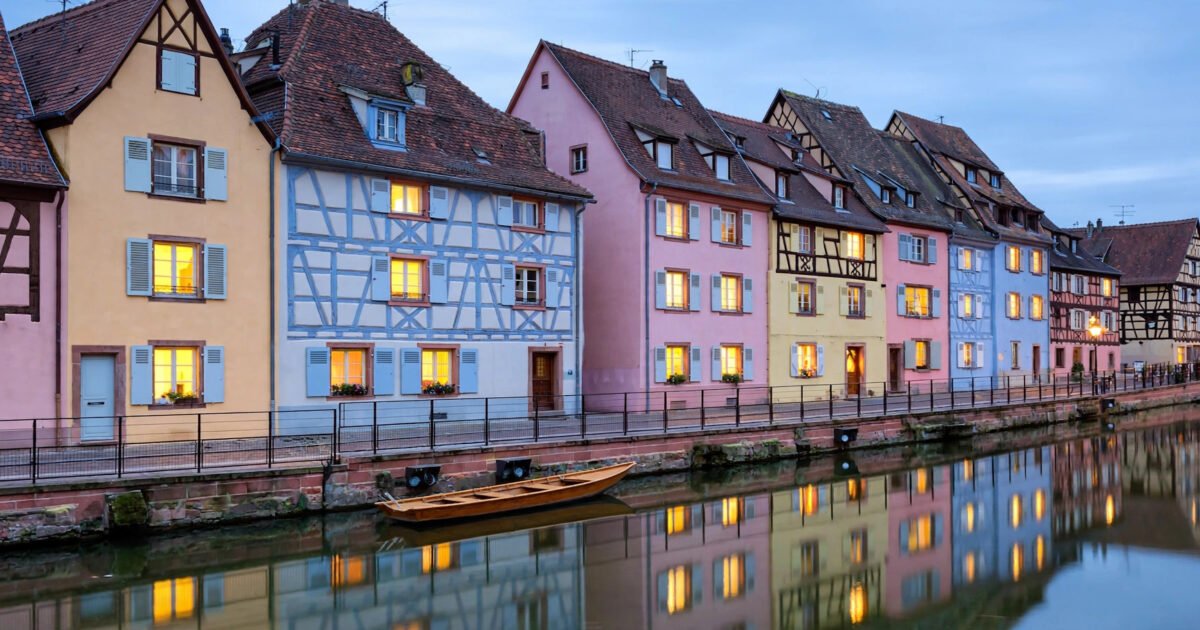
Colmar is the town that inspired Belle’s village in Beauty and the Beast, and the comparison is not marketing: pastel half-timbered houses, flower boxes on every window, and the canals of “Little Venice” reflecting it all at dusk. The old town is compact enough to explore entirely on foot in a day, and the prettiest streets — Rue des Marchands and the Quai de la Poissonnerie — cost nothing to wander. Budget around €55–75 per day: a guesthouse or small hotel €45–70, bakery breakfast €4, tarte flambée lunch €8–12, and a glass of Alsace Riesling €4–6. Visit in late November and the town’s six Christmas markets (23 November–29 December 2026) turn the whole center into a snow globe, or come in January when hotel prices fall by a third and the canals are empty. Trains from Strasbourg take 30 minutes and cost under €15, so pair Colmar with the Alsace wine villages of Eguisheim and Riquewihr below.
2. Hallstatt, Austria — A Lakeside Village Out of a Storybook
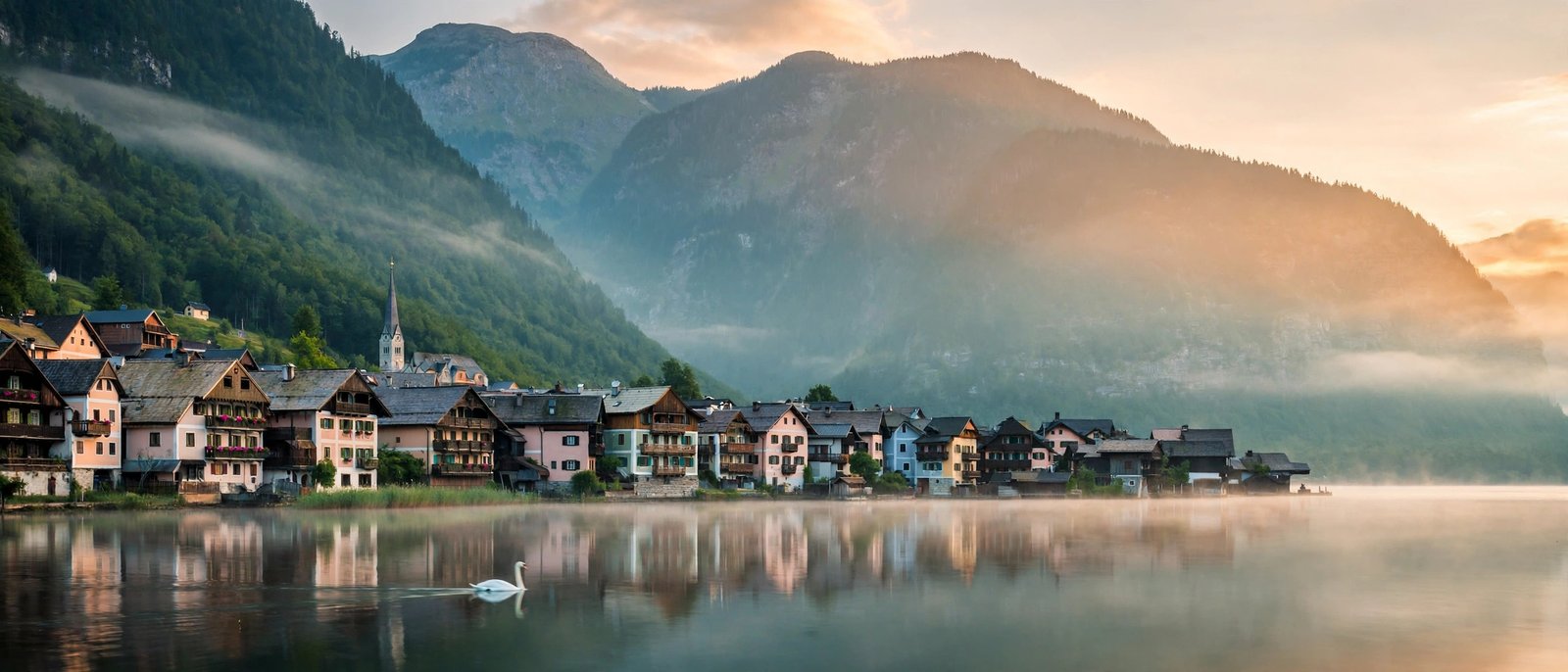
Pressed between the glassy Hallstätter See and the Dachstein mountains, Hallstatt is so beautiful that a full-scale replica was once built in China. Mist rolls over the lake in the morning, swans glide past pastel houses, and the view from the lakeside promenade genuinely looks like a painting. It is tiny — one main street — so arrive by train to Hallstatt station, then take the €4 ferry across the lake for the most magical entrance in Europe. Budget €70–90 per day, mostly because lakeside rooms are pricey; save by staying in nearby Bad Goisern or Obertraun (30–40% cheaper) and visiting Hallstatt as a day trip. The one-day Advent market on 8 December 2026 is a candlelit fairytale, but the cheapest months are January and February, when snow dusts the rooftops and the crowds vanish. Combine it with a budget trip to Vienna, three hours away by train.
3. Rothenburg ob der Tauber, Germany — Germany’s Best-Preserved Medieval Town
Walk through Rothenburg’s Rödertor gate and the 21st century simply stops. This walled Bavarian town is Germany’s best-preserved medieval settlement: crooked half-timbered houses, cobbled lanes, towers you can climb, and the famous Plönlein corner — the most photographed street bend in Germany. The medieval crime museum is €8 and worth every cent, and the town wall walk is free. Budget €50–70 per day: guesthouses €40–60, a hearty Franconian lunch €10–14, and the famous Schneeballen pastry €3. The Reiterlesmarkt Christmas market runs 20 November–23 December 2026, and the Käthe Wohlfahrt Christmas Village shop is open year-round. Stay overnight if you can: day-trippers leave by 6 p.m., and the lamplit streets at night are the real fairytale.
4. Bruges, Belgium — The Venice of the North
Bruges is a medieval city of canals, horse-drawn carriages, and chocolate shops that smell like heaven from a block away. The Markt square with its 83-meter belfry, the canal-side houses of the Rozenhoedkaai, and the quiet beguinage are all free to admire, and the best views in town cost nothing at all. Budget €60–80 per day: hostels from €25, small hotels €55–75, frites €4, a waffle €3–5, and a pot of moules-frites €15–18. Bruges is expensive by Belgian standards in December, when its Winter Glow festival lights up the canals — come in January or February instead for hotel rates 30% lower and the same storybook streets. It is an easy 1-hour train from Brussels (€15 return with a weekend ticket), making it one of the cheapest fairytale day trips in Europe.
5. Český Krumlov, Czechia — A Castle Town Frozen in Time
Český Krumlov is what Prague wishes it still was: a UNESCO-listed old town wrapped in a bend of the Vltava River, overlooked by the second-largest castle in Czechia, with Renaissance houses painted in soft pastels. The castle gardens are free, the climb to the castle tower costs a few euros and delivers the best view in town, and rafting the river in summer costs less than a Prague dinner. Budget €40–55 per day — one of the cheapest entries on this list: hostels €12–18, guesthouses €30–45, a filling Czech lunch with beer €7–10. The koruna’s favorable exchange rate keeps prices low for euro, pound, and dollar holders alike. Come in May or September for warm weather and half the summer crowds, and pair it with Prague (three hours by bus, under €15) for a two-stop Czech trip.
6. Sintra, Portugal — Palaces in the Mist
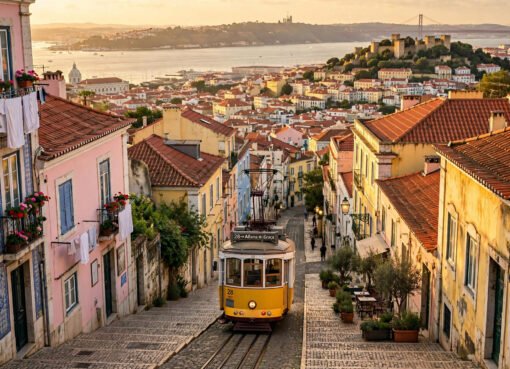
Twenty minutes from the Atlantic and 40 minutes from Lisbon by train, Sintra is where Portuguese royalty built palaces in the clouds. The candy-colored Pena Palace perched on a misty hilltop, the Moorish castle ruins, and the mysterious wells of Quinta da Regaleira — a spiral staircase descending into the earth — make Sintra feel like a fantasy novel. Budget €45–65 per day: Lisbon makes a cheaper base (hostels €18–25), with the €5 return train to Sintra, while palace tickets run €8–14 each and the 434 tourist bus loops the sights for €12. Visit on a weekday and arrive before 10 a.m. to beat the crowds; winter brings mist that makes the palaces look even more unreal, and hotel prices in Lisbon drop sharply. For more on Lisbon’s costs, see our Lisbon on a budget guide.
7. Giethoorn, Netherlands — The Village Without Roads
Giethoorn has no roads in its old center — just canals, thatched-roof cottages, and wooden bridges. Residents and visitors move by boat, bike, or on foot, and the silence (no cars at all) makes the whole place feel like a dream. Renting a small electric “whisper boat” costs around €20–25 per hour split between friends, and it is the single best way to see the village. Budget €60–80 per day if you stay overnight, or visit as a cheap day trip from Amsterdam (2 hours by train and bus, under €25 return). Spring is the prettiest season — flowers everywhere, mild weather — while winter brings frozen canals and almost no visitors. Pack a picnic from a supermarket to keep food costs near zero.
8. Eguisheim, France — The Circular Village That Inspired a Classic
Eguisheim is a tiny Alsatian village built in concentric circles around its castle, with half-timbered houses painted in candy colors and flower boxes on every balcony. It is smaller and quieter than Colmar, 15 minutes away by bus, and it is officially one of France’s “most beautiful villages.” The wine connection is real: this is the birthplace of Alsace wine, and tasting rooms pour local Riesling and Gewürztraminer for €3–5 a glass. Budget €45–60 per day if you stay in Colmar and visit for the afternoon — Eguisheim itself has few hotels, which is exactly why it stays so peaceful. The Christmas market in December is small and local, the opposite of the big-city crowds, and the surrounding vineyards are golden in October.
9. Lake Bled, Slovenia — A Church on an Island in an Emerald Lake
Few views in Europe beat Lake Bled: an emerald lake, a tiny island with a 17th-century church, a castle perched on a cliff above, and the Julian Alps on the horizon. Ring a bell in the island church (tradition says it grants wishes), row a traditional pletna boat across the lake (€18 return), and eat the famous Bled cream cake (€4) at the lakeside café that invented it. Budget €50–70 per day: hostels €20–28, lakeside guesthouses €45–60, and the walk around the lake is free. Slovenia is one of the best-value countries in western Europe, and Bled is an easy 90-minute bus from Ljubljana (€10). Go in May or September for warm weather and lower prices, or in December when the lake sometimes freezes and the Christmas lights come on.
10. Alberobello, Italy — The Town of White Cone Houses
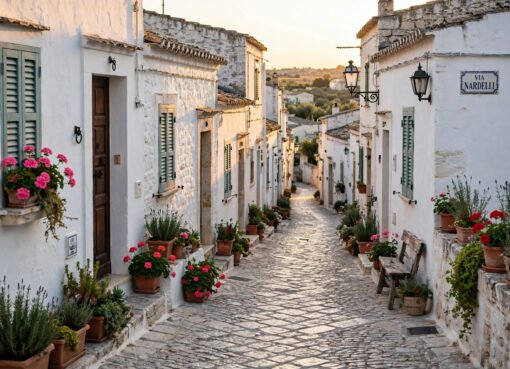
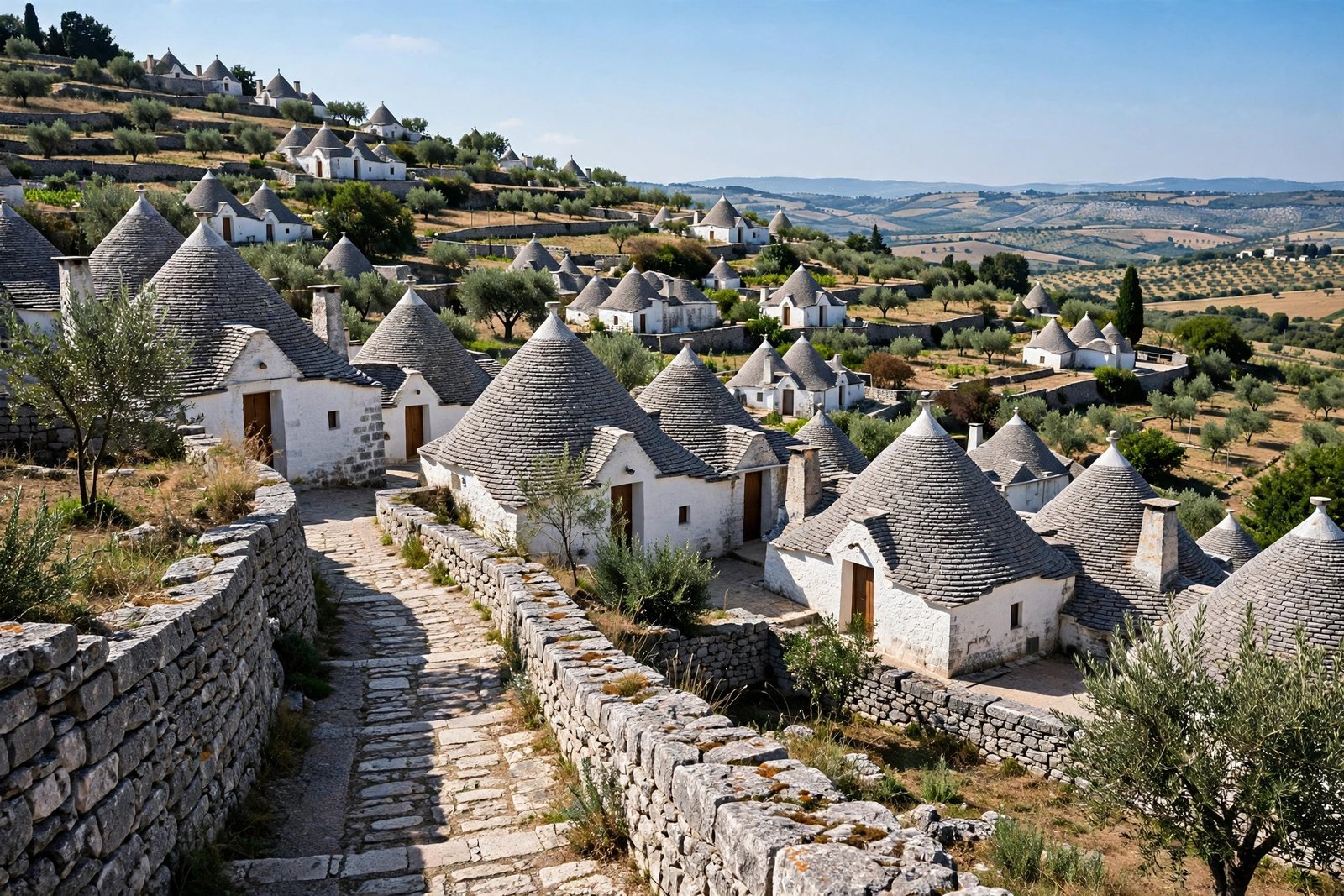
Alberobello, in Puglia, looks like it was built by hobbits: more than 1,000 trulli — whitewashed stone huts with conical grey roofs, some painted with white symbols — packed into two districts that feel like a film set. The Rione Monti district is the famous one; the quieter Aia Piccola district, where people still live in the trulli, is the real magic. Budget €45–65 per day: Puglia is far cheaper than Rome or the Amalfi Coast, with guesthouses €35–50, orecchiette pasta €8–12, and a glass of local Primitivo €3–5. Fly into Bari (budget airlines from across Europe) and take the €5 train to Alberobello. Spring and autumn are ideal; in summer the white stone glows but the crowds and prices climb. Puglia also appears in our secret places in Italy with no crowds guide.
11. Riquewihr, France — The Village That Time Forgot
Riquewihr is the third Alsace village on this list because it earns it: a perfectly preserved 16th-century wine village wrapped in ramparts and vineyards, with a main street so pretty it feels staged. It inspired the village in Beauty and the Beast alongside Colmar, and its Christmas market (27 November–20 December 2026) is one of the most atmospheric in France. Budget €45–60 per day from a Colmar base, with wine tastings at €3–6 and a winstub lunch of choucroute or tarte flambée for €10–14. Visit on a weekday morning before the tour buses arrive, and walk the vineyard path above the village for a free panoramic view that beats any postcard.
12. Bibury, England — The Cotswolds’ Prettiest Village
Bibury’s Arlington Row — a line of 14th-century weavers’ cottages in honey-colored Cotswold stone — is one of the most photographed streets in England, and it appears on the inside cover of British passports. The River Coln runs through the village, trout swim under the footbridge, and the whole place feels like a Jane Austen set. Budget £50–70 per day: Bibury itself is pricey to sleep in, so base yourself in Cirencester or Cheltenham (30–40% cheaper) and visit by bus. Spring and early autumn are best; summer brings coach tours by the dozen. For a longer trip, string Bibury with Bath and the Cotswolds into a slow, cheap rail-and-bus loop — proof that England can be a budget destination if you skip London.
How to Visit Fairytale Europe on a Budget
Fairytale towns reward slow, cheap travel. Stay in the nearest bigger city and day-trip in: Colmar instead of Eguisheim, Vienna instead of Hallstatt, Prague instead of Český Krumlov — the savings on rooms alone can be 30–40% a night. Book trains early: FlixBus and regional rail passes cut intercity costs to €10–20, and many of these towns are free to explore once you arrive. Eat like a local — bakery breakfasts, market lunches, and set menus (menu del día in Spain, plat du jour in France) cost half what tourist-square restaurants charge. Travel in the shoulder seasons (April–June, September–October) or deep winter (January–February) for the lowest hotel rates, and avoid Saturday nights, when small-town hotels charge weekend premiums. Finally, look beyond the famous street: the prettiest corners of every town on this list are one lane away from the crowds, and they are always free. For a full month-by-month cost calendar, see our cheapest places to travel each month of 2027.
A 7-Day Fairytale Route for Under $1,000
Want to see several of these places in one trip? Fly into Frankfurt, take the train to Rothenburg (day 1–2), then Strasbourg and Colmar with day trips to Eguisheim and Riquewihr (day 3–5), and finish in Bruges via Brussels (day 6–7). Hostels and budget guesthouses run €30–55 a night, regional trains and buses €10–20 per leg, food €25–35 a day — a realistic total of $800–950 per person excluding flights, and often less with an early-booked budget flight. In spring, swap Bruges for Lake Bled via Ljubljana; in December, time the route for the Christmas markets and it becomes the most magical week of your year. More route ideas live in our hidden gems in Europe and most underrated destinations guides.
FAQs: Fairytale Places in Europe
What is the most fairytale place in Europe?
Colmar in France is the most-cited answer — it inspired Belle’s village in Beauty and the Beast — with Hallstatt in Austria and Rothenburg ob der Tauber in Germany close behind. All three are small, walkable, and surprisingly affordable outside peak season.
When is the cheapest time to visit fairytale towns in Europe?
January and February are the cheapest months, with hotel rates 30–50% below summer. Late April to early June and September to October offer the best balance of good weather, low prices, and thin crowds.
Are fairytale places in Europe expensive?
Most are cheaper than nearby capitals. Daily budgets run €40–90 depending on the town — Český Krumlov and Alberobello are the cheapest, Hallstatt and Bruges the priciest. Staying in a nearby city and day-tripping in cuts costs by a third.
Which fairytale place is best at Christmas?
Colmar (six markets, 23 November–29 December 2026), Rothenburg (Reiterlesmarkt, 20 November–23 December 2026), and Riquewihr (27 November–20 December 2026) are the top three. Strasbourg, the “Capital of Christmas,” runs 27 November–24 December 2026 and pairs perfectly with Colmar.
Can you visit these places without a car?
Yes — all 12 are reachable by train and bus from major cities, and every old town is walkable. The only exception is Giethoorn, which needs a bus connection from Amsterdam, and Bibury, which is easiest by bus from Cirencester or Cheltenham.
Fairytale Europe is not a fantasy reserved for big budgets. These 12 towns prove that the most beautiful places on the continent are often the smallest — and the cheapest. Pick one for a weekend, or string three into a week, and go in the shoulder season when the streets are yours. The storybook is waiting, and in 2027 it costs less than you think.